[
[
PFAS, or per- and polyfluoroalkyl substances, are a group of human-made chemicals found in everything from food packaging to firefighting foam. Often called “forever chemicals” due to their persistence in the environment, they can affect our health and disrupt our immune system.
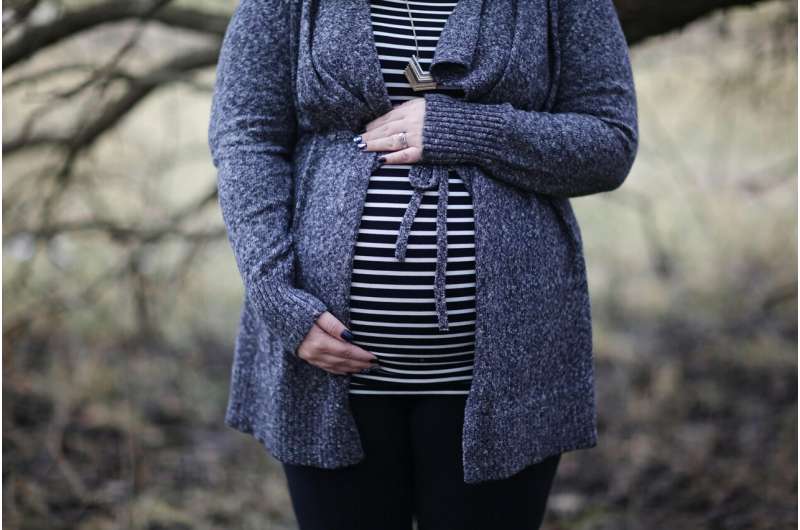
PFAS cross the placenta, so that when a woman is pregnant, she shares some of the PFAS in her body with her unborn child. While most of us are routinely exposed to low levels of PFAS, some communities are exposed to far higher levels from nearby pollution sources, like factories and military fire training areas.
Our new study shows that in one of these at-risk communities, children were more likely to develop asthma if their mothers were exposed to very high PFAS levels during pregnancy.
In 2013, water testing in Ronneby, a town in the southern Swedish county of Blekinge, uncovered extremely high levels of PFAS in one of the town’s two municipal water supplies—more than 200 times higher than the other supply.
The source of the contamination was a type of firefighting foam called aqueous film-forming foam. This chemical mixture containing PFAS is used to extinguish fuel fires. It had been used in firefighting training at a nearby military airbase since the 1980s. Contaminated runoff from the airbase had eventually reached the drinking water. This resulted in high concentrations of two forever chemicals known as PFOS (perfluorooctane sulphonic acid) and PFHxS, among other PFAS.
After that discovery, residents were switched to the town’s other water source. But even though residents now had clean water, their past PFAS exposure could not be reversed.
By measuring PFAS directly in the dried blood spots of newborn babies whose mothers had lived in Ronneby, we have shown that PFAS contamination was already present in these children in the mid-1980s. This exposure persisted, undetected, for over 30 years. When the mothers in our study were pregnant, they had no idea that they were exposed.
Connecting contamination to childhood asthma
In Sweden, all residents are given a unique personal identity number. This can be used to link government registry information like place of birth, residential history, annual income and family relations to hospital records. This enables population-level health research that might not be possible in most other countries.
Using Swedish national health and population registers, we followed 11,488 children who were born between 2006 and 2013 in Blekinge county through to the age of 12. We estimated whether and when children would develop asthma using a combination of medical diagnoses and prescription drug records. Health care is free of charge for children and easily accessible throughout Blekinge county, so most children with asthma receive treatment.
We didn’t have a blood sample from all 11,488 children, so we couldn’t measure their PFAS exposure directly. This lack of measured exposure usually limits how we can study PFAS health effects in children.
But because PFAS exposure in Ronneby depended so strongly on their drinking water source, we could link mothers’ address history to the municipal water distribution records. This enabled us to identify which mothers received contaminated water at their home in the years before they had a child. Presumably, those women had higher PFAS in their body as a result.
We divided mothers into four groups, from background exposure (living outside of Ronneby) to very high exposure (living at a contaminated address continuously for the five years preceding delivery).
Next, we compared the rates of childhood asthma across the four prenatal exposure groups. We also accounted for other factors that could influence asthma risk, including maternal smoking during pregnancy, the child’s birth order and several measurements of socioeconomic status.
We found that children whose mothers had very high PFAS exposure during pregnancy were about 40% more likely to develop asthma than children in the background exposure group.
Children in the intermediate exposure groups did not have a higher risk. We then directly compared very highly-exposed children to a carefully matched group of similar background-exposed children. We found that 27% of the very highly-exposed group developed asthma by age 12, compared to 16% of the background-exposed group.
This study is one of the first to identify a link between PFAS exposure and asthma in childhood. Unlike earlier research, we were able to include children with very high PFAS exposure before birth—and we only saw an effect in this very high group, which may explain the inconsistent results of previous studies.
One possibility is that the potentially harmful effects of PFAS on lung function only occur at very high exposure. Another possibility is that, even if PFAS has an effect at lower levels, it only becomes serious enough for a diagnosis at very high exposure.
Ronneby is not an anomaly. There are more than 13,000 sites across Europe where firefighting foam contamination is likely. Our research offers important insights into the potential health effects of this contamination in affected communities. Asthma is one of the most common chronic diseases in children. If high PFAS exposure contributes to this public health burden, it is a burden that has gone largely unrecognized until now.
Publication details
Annelise J. Blomberg et al, Prenatal exposure to per- and polyfluoroalkyl substances (PFAS) and incidence of asthma and wheeze in childhood: A register-based cohort study in Ronneby, Sweden, PLOS Medicine (2026). DOI: 10.1371/journal.pmed.1004659
Journal information:
PLoS Medicine
This article is republished from The Conversation under a Creative Commons license. Read the original article.
Citation:
Water contaminated with ‘forever chemicals’ during pregnancy linked to an increased risk of childhood asthma (2026, April 12)
retrieved 13 April 2026
from https://medicalxpress.com/news/2026-04-contaminated-chemicals-pregnancy-linked-childhood.html
This document is subject to copyright. Apart from any fair dealing for the purpose of private study or research, no
part may be reproduced without the written permission. The content is provided for information purposes only.

Khamrah by Lattafa for Men - 3.4 oz EDP Spray
4% Off
Ghost Sweetheart Eau de Toilette | Pineapple, Jasmine and Sandalwood | Perfume for Women 50 ml
50% Off
Marc Jacobs Dot Eau De Parfum for Women, 100 ml
42% Off
Ted Baker W Eau de Toilette for Her, Fig Leaf, White Peony and Violet Top Notes, Pink Orchid and Raspberry Middle Notes, 75ml
£11.77 (£15.69 / 100 ml) (as of 16/07/2026 03:58 GMT +01:00 - More infoProduct prices and availability are accurate as of the date/time indicated and are subject to change. Any price and availability information displayed on [relevant Amazon Site(s), as applicable] at the time of purchase will apply to the purchase of this product.)
Ted Baker Woman Pink Eau de Toilette Spray Floral Green Feminine Fragrance, Opening Notes are Fresh Peach, Bergamot and Tangerine with Warm Musk, Vanilla and Vetiver Base, 100ml
11% Off
Vera Wang Princess Eau de Toilette - 30 ml

Choco Musk 50ml Eau De Parfum for men and women | Chocolate Musk by Jannat Aromas
17% Off
Christina Aguilera Signature Eau de Parfum (50ml) Floral, Fruity & Exotic Scent, Luxury Fragrance for Women
9% Off
Calvin Klein - Eau De Toilette CKIN2U - Calvin Klein Women, Ladies Perfume, Women's Perfume, Calvin Klein Perfume, Calvin Klein One - 150 ml
5% Off
Jimmy Choo Flash Eau de Parfum, 60 ml (Pack of 1)
3% Off
Fruit of the Loom Men's Heavy T Shirt, White, XL UK
28% Off
ATNKE LED Lighted Beanie Cap,USB Rechargeable Running Hat Ultra Bright 4 LED Waterproof Light Winter Warm Gifts for Men and Women/Pink
17% Off
Men's 1/4 Zip Pullover UK Sale Clearance, Fleece Sweatshirt Casual Jumper Long Sleeve T-shirt Top Stand Collar Sweater Plain Pullover Sports Leisure Workwear Quarter Zip Sweater Lightweight Jumpers
£5.88 (as of 12/11/2025 00:52 GMT +01:00 - More infoProduct prices and availability are accurate as of the date/time indicated and are subject to change. Any price and availability information displayed on [relevant Amazon Site(s), as applicable] at the time of purchase will apply to the purchase of this product.)
Crevice Cleaning Brush, Bathroom Tile Groove Gap Cleaning Brush,Premium Crevice Cleaning Tool Aluminum Support with 15° Angle Magic Brush, Thin Brush for Home Kitchen
19% Off
Wireless Earbuds, Bluetooth 5.3 Headphones in Ear with HiFi Stereo Deep Bass, 4 ENC Noise Cancelling Mic Wireless Earphones 40H Playtime, Bluetooth Earbuds Dual LED Display, IP7 Waterproof, USB-C
42% Off