[
[
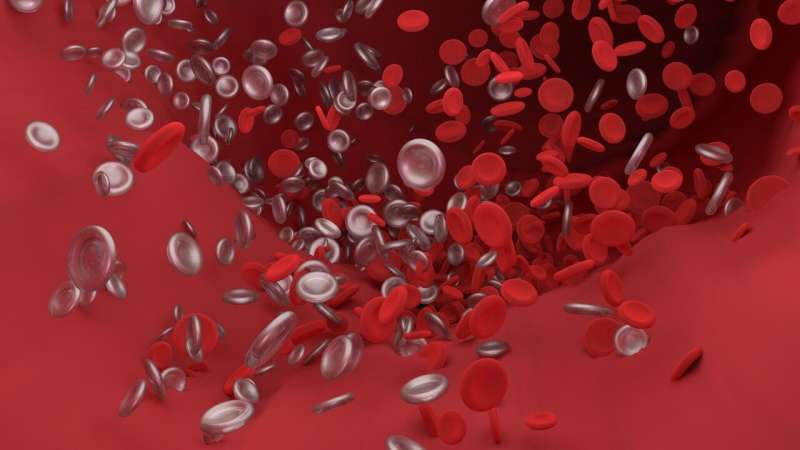
Extending anti-clotting drugs beyond the initial treatment period of at least 90 days after a first blood clot is linked to lower rates of new clots developing compared with stopping treatment, finds a US study published by The BMJ.
Extended treatment was also linked to higher rates of major bleeding (a common side effect of anti-clotting drugs) but the authors say continued use results in an overall “net clinical benefit.”
Guidelines recommend anti-clotting treatment for at least three to six months for patients with venous thromboembolism (VTE) and extended treatment if the VTE has no obvious underlying cause. But there is limited evidence on optimal treatment duration and the long term risk of bleeding is unclear.
Study methods and design
To address this, researchers drew on information from two national US claims databases for 30,554 patients (average age 74 years; 57% women) taking anti-clotting drugs for a first unprovoked VTE (with no obvious underlying cause or reversible risk factors) for at least 90 days.
Using a technique called target trial emulation, which applies the design principles of randomized trials to observational data, they compared rates of hospital admission for recurrent VTE and major bleeding in patients who continued and discontinued treatment.
The average treatment duration was 357 days in the continued group and 105 days in the discontinued group. Other factors, such as existing conditions and medication use, were also taken into account.
Key findings on risks and benefits
After initial anticoagulation of at least 90 days, compared with patients who discontinued treatment, those who continued treatment had markedly lower (81%) rates of recurrent VTE (equivalent to 26 fewer events per 1,000 person-years) and lower death rates (26%), but higher rates of major bleeding (75%).
Continuing treatment was also associated with a greater net clinical benefit (a combined measure of recurrent VTE and major bleeding) regardless of treatment duration, which persisted among those using anti-clotting drugs for at least three years after VTE.
Study limitations and clinical implications
The authors acknowledge some limitations. For example, the data lacked information on over-the-counter drug use, socioeconomic status, laboratory test results, and reasons for discontinuing anti-clotting drugs, which may have introduced bias.
However, they say this is a large study that used rigorous analytical methods and the results are consistent with previous studies on this topic, which “should help inform decisions on continuation of treatment, which should be individualized for each patient with an unprovoked VTE.”
While this study provides clinicians and patients with good insight into the effectiveness and safety of long-term oral anticoagulation treatment, patient preferences are key to weighing the benefits and risks of indefinite treatment, say researchers from Canada in a linked editorial.
They point out that some uncertainty remains, and say additional research to better identify patients who can benefit from continuing oral anticoagulation treatment after a first unprovoked VTE “will help clinicians counsel and support patients who are faced with the prospect of indefinite anticoagulation treatment.”
More information:
Continued versus discontinued oral anticoagulant treatment for unprovoked venous thromboembolism: target trial emulation, The BMJ (2025). DOI: 10.1136/bmj-2025-084380
Citation:
Extending anti-clotting treatment linked to lower rates of new clots (2025, November 12)
retrieved 12 November 2025
from https://medicalxpress.com/news/2025-11-anti-clotting-treatment-linked-clots.html
This document is subject to copyright. Apart from any fair dealing for the purpose of private study or research, no
part may be reproduced without the written permission. The content is provided for information purposes only.

Khamrah by Lattafa for Men - 3.4 oz EDP Spray
4% Off
Ghost Sweetheart Eau de Toilette | Pineapple, Jasmine and Sandalwood | Perfume for Women 50 ml
50% Off
Marc Jacobs Dot Eau De Parfum for Women, 100 ml
42% Off
Ted Baker W Eau de Toilette for Her, Fig Leaf, White Peony and Violet Top Notes, Pink Orchid and Raspberry Middle Notes, 75ml
£11.77 (£15.69 / 100 ml) (as of 07/09/2026 04:59 GMT +01:00 - More infoProduct prices and availability are accurate as of the date/time indicated and are subject to change. Any price and availability information displayed on [relevant Amazon Site(s), as applicable] at the time of purchase will apply to the purchase of this product.)
Ted Baker Woman Pink Eau de Toilette Spray Floral Green Feminine Fragrance, Opening Notes are Fresh Peach, Bergamot and Tangerine with Warm Musk, Vanilla and Vetiver Base, 100ml
11% Off
Vera Wang Princess Eau de Toilette - 30 ml

Choco Musk 50ml Eau De Parfum for men and women | Chocolate Musk by Jannat Aromas
17% Off
Christina Aguilera Signature Eau de Parfum (50ml) Floral, Fruity & Exotic Scent, Luxury Fragrance for Women
9% Off
Calvin Klein - Eau De Toilette CKIN2U - Calvin Klein Women, Ladies Perfume, Women's Perfume, Calvin Klein Perfume, Calvin Klein One - 150 ml
5% Off
Jimmy Choo Flash Eau de Parfum, 60 ml (Pack of 1)
3% Off
Fruit of the Loom Men's Heavy T Shirt, White, XL UK
28% Off
ATNKE LED Lighted Beanie Cap,USB Rechargeable Running Hat Ultra Bright 4 LED Waterproof Light Winter Warm Gifts for Men and Women/Pink
17% Off
Men's 1/4 Zip Pullover UK Sale Clearance, Fleece Sweatshirt Casual Jumper Long Sleeve T-shirt Top Stand Collar Sweater Plain Pullover Sports Leisure Workwear Quarter Zip Sweater Lightweight Jumpers
£5.88 (as of 12/11/2025 00:52 GMT +01:00 - More infoProduct prices and availability are accurate as of the date/time indicated and are subject to change. Any price and availability information displayed on [relevant Amazon Site(s), as applicable] at the time of purchase will apply to the purchase of this product.)
Crevice Cleaning Brush, Bathroom Tile Groove Gap Cleaning Brush,Premium Crevice Cleaning Tool Aluminum Support with 15° Angle Magic Brush, Thin Brush for Home Kitchen
19% Off
Wireless Earbuds, Bluetooth 5.3 Headphones in Ear with HiFi Stereo Deep Bass, 4 ENC Noise Cancelling Mic Wireless Earphones 40H Playtime, Bluetooth Earbuds Dual LED Display, IP7 Waterproof, USB-C
42% Off