


BBC Scotland News

 McTear’s
A Scottish auction house that sold Nazi artefacts has announced it will no longer include Third Reich memorabilia in its collections.
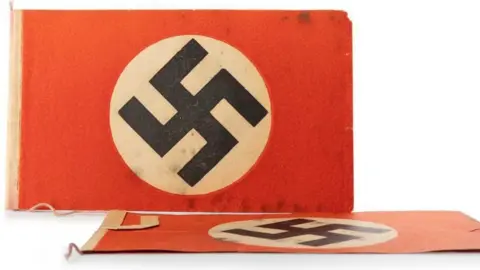
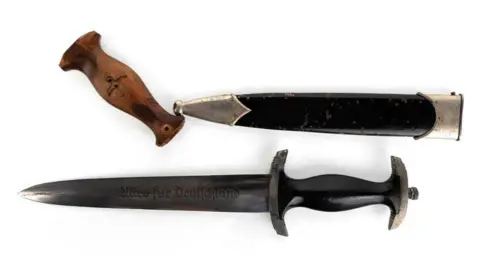
McTear’s auctioned swastika bunting, a military medal, an SS dagger and other fascist artefacts at sale in Glasgow.
The auctioneers initially defended the inclusion of the items, insisting they had been “handled with sensitivity”.
However, McTear’s later announced it would cease the sale of Nazi and SS memorabilia.
 McTear’s
Listed as “Scotland’s only auction dedicated to military history”, the auction was introduced on the McTear’s website as a “piper’s delight” because it included historic bagpipes, as well as artefacts from “Anglo-English” history.
Of the 62 items on sale, 11 were listed as “Third Reich” artefacts.
The Nazi items fetched more than £1,600 in total.
They included a Luftwaffe dress dagger, which sold for £220, and an “SS-type” dress dagger, which did not sell.
An Iron Cross military medal, which came with a swastika pin badge, sold for £300, while Swastika bunting was bought for £50.
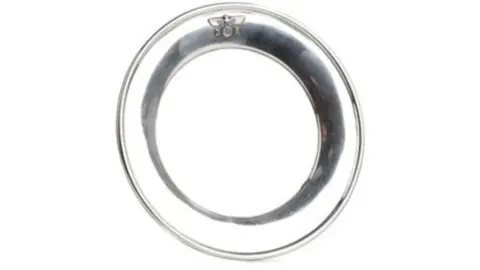
The collection also included four silver plates, emblazoned with the Nazi eagle, said to have been taken from Herman Göring’s personal train dining carriage.
Two of the plates were auctioned for £500 each.
 McTear’s
 McTear’s
Göring, the Luftwaffe chief and high-ranking Nazi, killed himself in 1946 the day before he was due to be hanged for war crimes and crimes against humanity.
A £1 Nazi “propaganda note”, a Hitler Youth book and a “bandit-warfare” badge were also included in the collection.
The note and book sold for a combined £65, while the badge was not purchased.
Second World War Japanese naval binoculars were also auctioned for £1,300, while a war-era Japanese sword went for £360.
A Japanese flag, which McTear’s said was possibly a “Kamikaze flag”, went for £60.
‘Extremely dark era in history’
A McTear’s spokesperson initially defended the auction, saying the items provided “a tangible link to an important – albeit extremely dark – era in our history that should never be forgotten”.
The auction house later added: “That said, we fully understand the sensitivity surrounding the sale of these particular historical items and have now taken the decision to cease the inclusion of Nazi and SS artefacts in future auctions.”
The firm said it did not receive any income in fees from the sale of the Nazi memorabilia.
McTear’s, based in Glasgow, was founded in 1842 and describes itself as Scotland’s “favourite auction house”.
It is not illegal to sell Nazi memorabilia in the UK, but such auctions have been heavily criticised.
In 2019, a Belfast auction house has cancelled the planned sale of Nazi memorabilia after a Jewish community leader described the planned sale as “sick”.
Professor Thomas Weber, chair in history and international affairs at the University of Aberdeen, said while auctions of Nazi memorabilia posed “difficult” ethical questions, they should be allowed to go ahead.
He told BBC Reporting Scotland that in a “perfect world” people would donate the artefacts, but that the “second best” option was for them to be sold at auction.
The Nazi history expert said: “The alternative is that people either just throw this material out when they find it because they are too embarrassed, or they sell them through dark channels.”
He said that without auctions, scholars would be unable to bring together major historical collections which are used to research extremists and for Holocaust remembrance.
BBC News

Khamrah by Lattafa for Men - 3.4 oz EDP Spray
4% Off
Ghost Sweetheart Eau de Toilette | Pineapple, Jasmine and Sandalwood | Perfume for Women 50 ml
50% Off
Marc Jacobs Dot Eau De Parfum for Women, 100 ml
42% Off
Ted Baker W Eau de Toilette for Her, Fig Leaf, White Peony and Violet Top Notes, Pink Orchid and Raspberry Middle Notes, 75ml
£11.77 (£15.69 / 100 ml) (as of 17/10/2026 06:36 GMT +01:00 - More infoProduct prices and availability are accurate as of the date/time indicated and are subject to change. Any price and availability information displayed on [relevant Amazon Site(s), as applicable] at the time of purchase will apply to the purchase of this product.)
Ted Baker Woman Pink Eau de Toilette Spray Floral Green Feminine Fragrance, Opening Notes are Fresh Peach, Bergamot and Tangerine with Warm Musk, Vanilla and Vetiver Base, 100ml
11% Off
Vera Wang Princess Eau de Toilette - 30 ml

Choco Musk 50ml Eau De Parfum for men and women | Chocolate Musk by Jannat Aromas
17% Off
Christina Aguilera Signature Eau de Parfum (50ml) Floral, Fruity & Exotic Scent, Luxury Fragrance for Women
9% Off
Calvin Klein - Eau De Toilette CKIN2U - Calvin Klein Women, Ladies Perfume, Women's Perfume, Calvin Klein Perfume, Calvin Klein One - 150 ml
5% Off
Jimmy Choo Flash Eau de Parfum, 60 ml (Pack of 1)
3% Off
Fruit of the Loom Men's Heavy T Shirt, White, XL UK
28% Off
ATNKE LED Lighted Beanie Cap,USB Rechargeable Running Hat Ultra Bright 4 LED Waterproof Light Winter Warm Gifts for Men and Women/Pink
17% Off
Men's 1/4 Zip Pullover UK Sale Clearance, Fleece Sweatshirt Casual Jumper Long Sleeve T-shirt Top Stand Collar Sweater Plain Pullover Sports Leisure Workwear Quarter Zip Sweater Lightweight Jumpers
£5.88 (as of 12/11/2025 00:52 GMT +01:00 - More infoProduct prices and availability are accurate as of the date/time indicated and are subject to change. Any price and availability information displayed on [relevant Amazon Site(s), as applicable] at the time of purchase will apply to the purchase of this product.)
Crevice Cleaning Brush, Bathroom Tile Groove Gap Cleaning Brush,Premium Crevice Cleaning Tool Aluminum Support with 15° Angle Magic Brush, Thin Brush for Home Kitchen
19% Off
Wireless Earbuds, Bluetooth 5.3 Headphones in Ear with HiFi Stereo Deep Bass, 4 ENC Noise Cancelling Mic Wireless Earphones 40H Playtime, Bluetooth Earbuds Dual LED Display, IP7 Waterproof, USB-C
42% Off