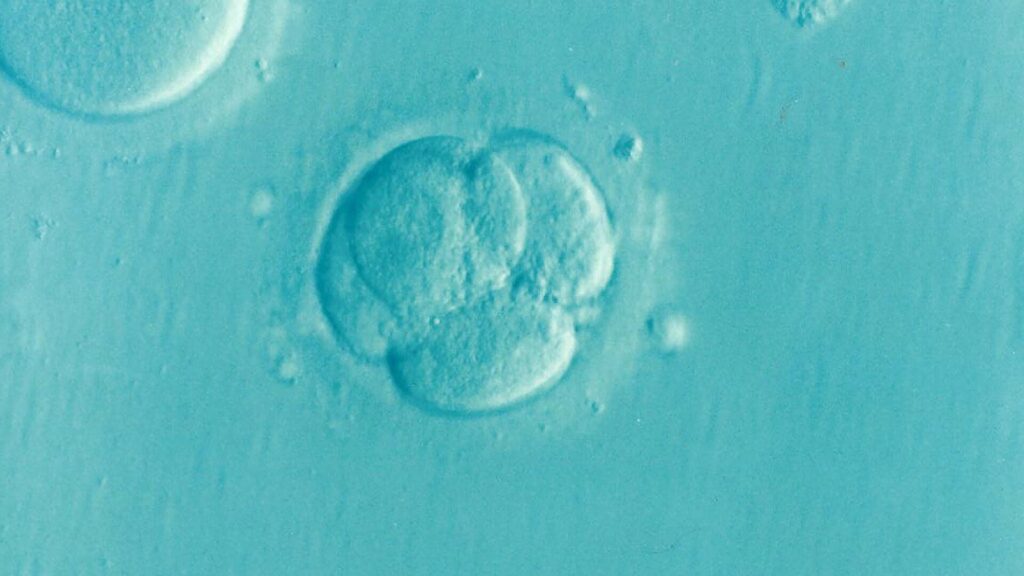
A molecule present in elevated levels in the uterine lining could play a key role in a person’s ability to become pregnant, new findings suggest.
The research, led by Professor Eva Dimitriadis from the Department of Obstetrics, Gynaecology and Newborn Health at the University of Melbourne and Royal Women’s Hospital, could unlock new avenues for targeted treatment and future research into unexplained infertility. It is published in the Proceedings of the National Academy of Sciences.
In the paper, the research team identified that the miR-124-3p molecule was elevated in the uterine lining, called the endometrium, in women with unexplained infertility, potentially contributing to making the endometrium inhospitable to embryo attachment. Before an embryo can implant, the endometrium goes through changes to become receptive to an embryo in a short time window in the menstrual cycle.
Professor Dimitriadis explained that targeted therapies to reduce this molecule could help patients undergoing IVF achieve higher rates of success.
“We found that some women with unexplained fertility have high levels of the molecule called miR-124-3p in their uterine lining,” Professor Dimitriadis said.
“We believe this molecule disrupts the normal function of cells and prevents the embryo from attaching. By identifying dysregulated miR-124-3p levels as a potential cause of embryo implantation failure, we can develop targeted interventions to improve the endometrial lining at the time embryos implant and enhance the chances of successful pregnancy for a significant number of people.”
To validate their hypothesis, the team developed a new way to control the molecule in the uterine lining of mice. When artificially elevated specifically and only at the time the embryos were to implant, the embryos failed to firmly attach and implant.
The study was also undertaken in human cells, where lowering the level of the molecule in endometrial cells in people with problems becoming pregnant made it easier for the embryos to attach. This means that targeting miR-124-3p could become a new way to both diagnose and treat uterine related infertility.
“We demonstrated that we can control this molecule only in the uterine lining of mice during the most important time for embryos to attach. This led to failure of embryo implantation,” Professor Dimitriadis said.
“The study highlights the potential of targeting miR-124-3p as a new way to diagnose and treat infertility related to uterine issues, offering a new direction in this area of research. It could serve as a biomarker to identify women with endometrial-driven infertility.”
Academics from Monash IVF, the Hudson Institute of Medical Research, Monash University, University of Cambridge and Jenderal Soedirman University contributed to this research.
More information:
Wei Zhou et al, Dysregulated miR-124-3p in endometrial epithelial cells reduces endometrial receptivity by altering polarity and adhesion, Proceedings of the National Academy of Sciences (2024). DOI: 10.1073/pnas.2401071121
Citation:
New findings could help offer future treatments for unexplained infertility (2024, October 15)
retrieved 15 October 2024
from https://medicalxpress.com/news/2024-10-future-treatments-unexplained-infertility.html
This document is subject to copyright. Apart from any fair dealing for the purpose of private study or research, no
part may be reproduced without the written permission. The content is provided for information purposes only.

Khamrah by Lattafa for Men - 3.4 oz EDP Spray
4% Off
Ghost Sweetheart Eau de Toilette | Pineapple, Jasmine and Sandalwood | Perfume for Women 50 ml
50% Off
Marc Jacobs Dot Eau De Parfum for Women, 100 ml
42% Off
Ted Baker W Eau de Toilette for Her, Fig Leaf, White Peony and Violet Top Notes, Pink Orchid and Raspberry Middle Notes, 75ml
£11.77 (£15.69 / 100 ml) (as of 07/06/2026 03:29 GMT +01:00 - More infoProduct prices and availability are accurate as of the date/time indicated and are subject to change. Any price and availability information displayed on [relevant Amazon Site(s), as applicable] at the time of purchase will apply to the purchase of this product.)
Ted Baker Woman Pink Eau de Toilette Spray Floral Green Feminine Fragrance, Opening Notes are Fresh Peach, Bergamot and Tangerine with Warm Musk, Vanilla and Vetiver Base, 100ml
11% Off
Vera Wang Princess Eau de Toilette - 30 ml

Choco Musk 50ml Eau De Parfum for men and women | Chocolate Musk by Jannat Aromas
17% Off
Christina Aguilera Signature Eau de Parfum (50ml) Floral, Fruity & Exotic Scent, Luxury Fragrance for Women
9% Off
Calvin Klein - Eau De Toilette CKIN2U - Calvin Klein Women, Ladies Perfume, Women's Perfume, Calvin Klein Perfume, Calvin Klein One - 150 ml
5% Off
Jimmy Choo Flash Eau de Parfum, 60 ml (Pack of 1)
3% Off
Fruit of the Loom Men's Heavy T Shirt, White, XL UK
28% Off
ATNKE LED Lighted Beanie Cap,USB Rechargeable Running Hat Ultra Bright 4 LED Waterproof Light Winter Warm Gifts for Men and Women/Pink
17% Off
Men's 1/4 Zip Pullover UK Sale Clearance, Fleece Sweatshirt Casual Jumper Long Sleeve T-shirt Top Stand Collar Sweater Plain Pullover Sports Leisure Workwear Quarter Zip Sweater Lightweight Jumpers
£5.88 (as of 12/11/2025 00:52 GMT +01:00 - More infoProduct prices and availability are accurate as of the date/time indicated and are subject to change. Any price and availability information displayed on [relevant Amazon Site(s), as applicable] at the time of purchase will apply to the purchase of this product.)
Crevice Cleaning Brush, Bathroom Tile Groove Gap Cleaning Brush,Premium Crevice Cleaning Tool Aluminum Support with 15° Angle Magic Brush, Thin Brush for Home Kitchen
19% Off
Wireless Earbuds, Bluetooth 5.3 Headphones in Ear with HiFi Stereo Deep Bass, 4 ENC Noise Cancelling Mic Wireless Earphones 40H Playtime, Bluetooth Earbuds Dual LED Display, IP7 Waterproof, USB-C
42% Off