[
[

Bioengineering professor and The Grainger College of Engineering’s Dean, Rashid Bashir, led a team of researchers in a project that’s resulted in new technology that offers rapid, highly sensitive detection of multi-drug-resistant bacteria and other pathogens at low concentrations.
This research was featured in an article in the Proceedings of the National Academy of Sciences (PNAS).
Researchers designed a CRISPR-based test that rapidly detects low levels of pathogen genetic material in blood. This is done without the need for nucleic acid amplification.
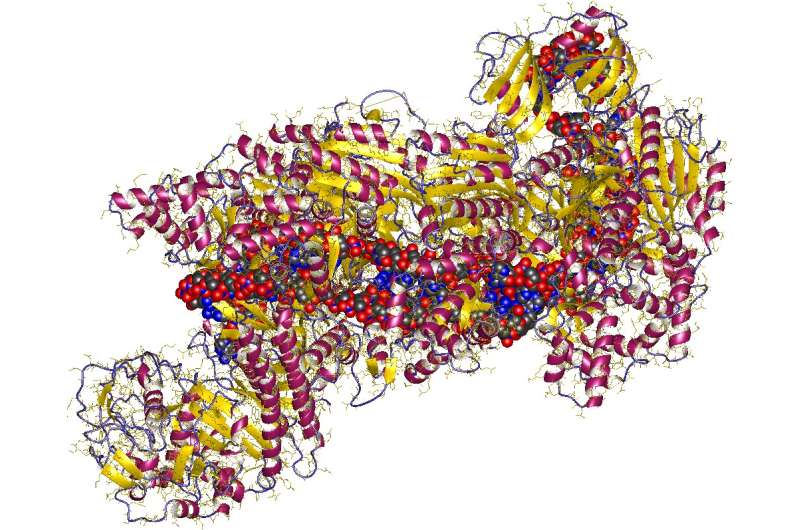
In CRISPR/Cas-based diagnostic tests, guide RNAs bind pathogen DNA or RNA, triggering Cas enzymes to become active and cleave the reporter nucleic acids that fluoresce when cleaved. However, the single CRISPR-based technique does not detect pathogens at low levels without a preamplification step.
Bashir’s team created a CRISPR-based diagnostic test that bypasses that amplification step by combining two CRISPR/Cas units in a complex called CRISPR-Cascade. One unit contains a guide RNA specific for a pathogen nucleic acid of choice and a Cas protein. When the Cas cleaves specially engineered nucleic acids that are added to the system, parts of the nucleic acids are free to bind and activate a second CRISPR/Cas, triggering a positive feedback loop that results in a high signal-to-noise ratio.
The test demonstrated unprecedented sensitivity. It also detected multi-drug-resistant Staphylococcus aureus DNA without prior amplification at concentrations that were orders of magnitude lower than the limit of a test using a single Cas. The test provided a simple “yes/no” result for the presence of any one pathogen in samples spiked with four common bloodstream pathogens.
The researchers said these results could be used toward developing highly sensitive CRISPR-based diagnostic tests that can detect pathogens in minutes without nucleic acid amplification.
More information:
Jongwon Lim et al, Amplification-free, OR-gated CRISPR-Cascade reaction for pathogen detection in blood samples, Proceedings of the National Academy of Sciences (2025). DOI: 10.1073/pnas.2420166122
Citation:
New CRISPR-based diagnostic test detects pathogens in blood without amplification (2025, March 15)
retrieved 15 March 2025
from https://medicalxpress.com/news/2025-03-crispr-based-diagnostic-pathogens-blood.html
This document is subject to copyright. Apart from any fair dealing for the purpose of private study or research, no
part may be reproduced without the written permission. The content is provided for information purposes only.

Khamrah by Lattafa for Men - 3.4 oz EDP Spray
4% Off
Ghost Sweetheart Eau de Toilette | Pineapple, Jasmine and Sandalwood | Perfume for Women 50 ml
50% Off
Marc Jacobs Dot Eau De Parfum for Women, 100 ml
42% Off
Ted Baker W Eau de Toilette for Her, Fig Leaf, White Peony and Violet Top Notes, Pink Orchid and Raspberry Middle Notes, 75ml
£11.77 (£15.69 / 100 ml) (as of 12/10/2026 06:34 GMT +01:00 - More infoProduct prices and availability are accurate as of the date/time indicated and are subject to change. Any price and availability information displayed on [relevant Amazon Site(s), as applicable] at the time of purchase will apply to the purchase of this product.)
Ted Baker Woman Pink Eau de Toilette Spray Floral Green Feminine Fragrance, Opening Notes are Fresh Peach, Bergamot and Tangerine with Warm Musk, Vanilla and Vetiver Base, 100ml
11% Off
Vera Wang Princess Eau de Toilette - 30 ml

Choco Musk 50ml Eau De Parfum for men and women | Chocolate Musk by Jannat Aromas
17% Off
Christina Aguilera Signature Eau de Parfum (50ml) Floral, Fruity & Exotic Scent, Luxury Fragrance for Women
9% Off
Calvin Klein - Eau De Toilette CKIN2U - Calvin Klein Women, Ladies Perfume, Women's Perfume, Calvin Klein Perfume, Calvin Klein One - 150 ml
5% Off
Jimmy Choo Flash Eau de Parfum, 60 ml (Pack of 1)
3% Off
Fruit of the Loom Men's Heavy T Shirt, White, XL UK
28% Off
ATNKE LED Lighted Beanie Cap,USB Rechargeable Running Hat Ultra Bright 4 LED Waterproof Light Winter Warm Gifts for Men and Women/Pink
17% Off
Men's 1/4 Zip Pullover UK Sale Clearance, Fleece Sweatshirt Casual Jumper Long Sleeve T-shirt Top Stand Collar Sweater Plain Pullover Sports Leisure Workwear Quarter Zip Sweater Lightweight Jumpers
£5.88 (as of 12/11/2025 00:52 GMT +01:00 - More infoProduct prices and availability are accurate as of the date/time indicated and are subject to change. Any price and availability information displayed on [relevant Amazon Site(s), as applicable] at the time of purchase will apply to the purchase of this product.)
Crevice Cleaning Brush, Bathroom Tile Groove Gap Cleaning Brush,Premium Crevice Cleaning Tool Aluminum Support with 15° Angle Magic Brush, Thin Brush for Home Kitchen
19% Off
Wireless Earbuds, Bluetooth 5.3 Headphones in Ear with HiFi Stereo Deep Bass, 4 ENC Noise Cancelling Mic Wireless Earphones 40H Playtime, Bluetooth Earbuds Dual LED Display, IP7 Waterproof, USB-C
42% Off