


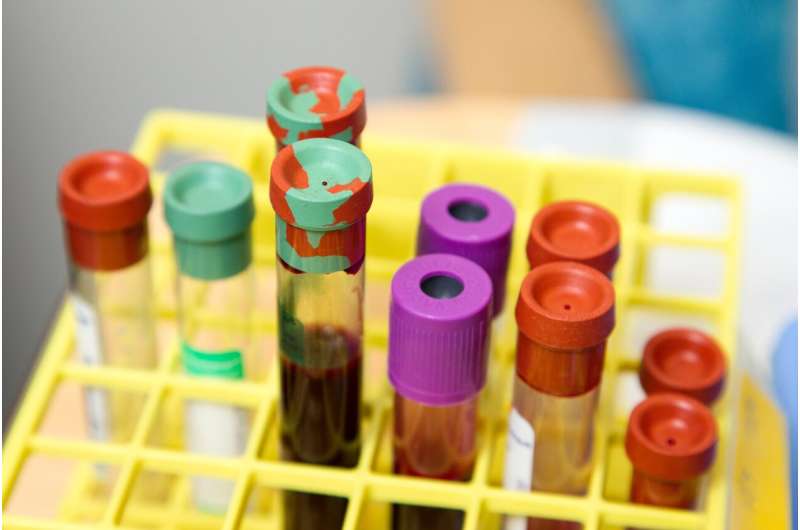
By 2050, the global population of adults 60 and older will approximately double, leading to upward of 153 million dementia cases. That’s why University College Cork neuroscience professor Yvonne Nolan and Ph.D. student Sebastian Dohm-Hansen Allard are investigating the relationship between dementia risks and what’s in your blood.
Human brains do not change at a constant rate. During certain times in our lives—childhood, adolescence and very old age—they change much more quickly. Now, according to Nolan and Allard, your brain might also start changing at a must faster pace because of what is in your blood. But it might be a good thing for science.
It is important for scientists to detect risk factors for cognitive decline before a patient reaches old age, when it is often too late to intervene. Scanning a patient for early risk factors when they are in their 40s to 50s can allow medical practitioners to act within a reasonable window of opportunity.
“So, how do we detect changes without having to give everyone an expensive brain scan? As it turns out, the contents of blood may cause the brain to age,” Nolan and Allard reported to the Conversation.
“With time, our cells and organs slowly deteriorate, and the immune system can react to this by starting the process of inflammation,” they said. “Inflammatory molecules can then end up in the bloodstream, make their way to the brain, interfere with its normal functioning and possibly impair cognition.”
Scientists at Johns Hopkins and the University of Mississippi put this concept to the test in a 2019 study, where researchers analyzed the presence of inflammatory molecules in the blood of middle-aged adults with enough precision to be able to predict cognitive changes 20 years down the line.
“‘Middle aging’ may be more consequential for our future brain health than we think,” Nolan and Allard said. “The hurried ticking of the clock could be slowed from outside the brain. For example, physical exercise confers some of its beneficial effects on the brain through blood-borne messengers. These can work to oppose the effects of time. If they could be harnessed, they might steady the pendulum.”
2024 The Atlanta Journal-Constitution. Distributed by Tribune Content Agency, LLC.
Citation:
Is your blood aging your brain? It might increase your dementia risk (2024, March 24)
retrieved 24 March 2024
from https://medicalxpress.com/news/2024-03-blood-aging-brain-dementia.html
This document is subject to copyright. Apart from any fair dealing for the purpose of private study or research, no
part may be reproduced without the written permission. The content is provided for information purposes only.

Khamrah by Lattafa for Men - 3.4 oz EDP Spray
4% Off
Ghost Sweetheart Eau de Toilette | Pineapple, Jasmine and Sandalwood | Perfume for Women 50 ml
50% Off
Marc Jacobs Dot Eau De Parfum for Women, 100 ml
42% Off
Ted Baker W Eau de Toilette for Her, Fig Leaf, White Peony and Violet Top Notes, Pink Orchid and Raspberry Middle Notes, 75ml
£11.77 (£15.69 / 100 ml) (as of 05/10/2026 05:15 GMT +01:00 - More infoProduct prices and availability are accurate as of the date/time indicated and are subject to change. Any price and availability information displayed on [relevant Amazon Site(s), as applicable] at the time of purchase will apply to the purchase of this product.)
Ted Baker Woman Pink Eau de Toilette Spray Floral Green Feminine Fragrance, Opening Notes are Fresh Peach, Bergamot and Tangerine with Warm Musk, Vanilla and Vetiver Base, 100ml
11% Off
Vera Wang Princess Eau de Toilette - 30 ml

Choco Musk 50ml Eau De Parfum for men and women | Chocolate Musk by Jannat Aromas
17% Off
Christina Aguilera Signature Eau de Parfum (50ml) Floral, Fruity & Exotic Scent, Luxury Fragrance for Women
9% Off
Calvin Klein - Eau De Toilette CKIN2U - Calvin Klein Women, Ladies Perfume, Women's Perfume, Calvin Klein Perfume, Calvin Klein One - 150 ml
5% Off
Jimmy Choo Flash Eau de Parfum, 60 ml (Pack of 1)
3% Off
Fruit of the Loom Men's Heavy T Shirt, White, XL UK
28% Off
ATNKE LED Lighted Beanie Cap,USB Rechargeable Running Hat Ultra Bright 4 LED Waterproof Light Winter Warm Gifts for Men and Women/Pink
17% Off
Men's 1/4 Zip Pullover UK Sale Clearance, Fleece Sweatshirt Casual Jumper Long Sleeve T-shirt Top Stand Collar Sweater Plain Pullover Sports Leisure Workwear Quarter Zip Sweater Lightweight Jumpers
£5.88 (as of 12/11/2025 00:52 GMT +01:00 - More infoProduct prices and availability are accurate as of the date/time indicated and are subject to change. Any price and availability information displayed on [relevant Amazon Site(s), as applicable] at the time of purchase will apply to the purchase of this product.)
Crevice Cleaning Brush, Bathroom Tile Groove Gap Cleaning Brush,Premium Crevice Cleaning Tool Aluminum Support with 15° Angle Magic Brush, Thin Brush for Home Kitchen
19% Off
Wireless Earbuds, Bluetooth 5.3 Headphones in Ear with HiFi Stereo Deep Bass, 4 ENC Noise Cancelling Mic Wireless Earphones 40H Playtime, Bluetooth Earbuds Dual LED Display, IP7 Waterproof, USB-C
42% Off