 [
[

Advanced liver disease (ALD) occurs when significant scarring causes the liver to lose function. Patients with ALD often have serious health challenges but have limited access to palliative care that could improve their quality of life. A new multicenter trial led by Manisha Verma, MD, and Victor Navarro, MD, at Jefferson Einstein Philadelphia Hospital demonstrates a new approach that could potentially transform access to palliative care for patients with ALD and address a major care gap. The research is published in the journal JAMA Internal Medicine.
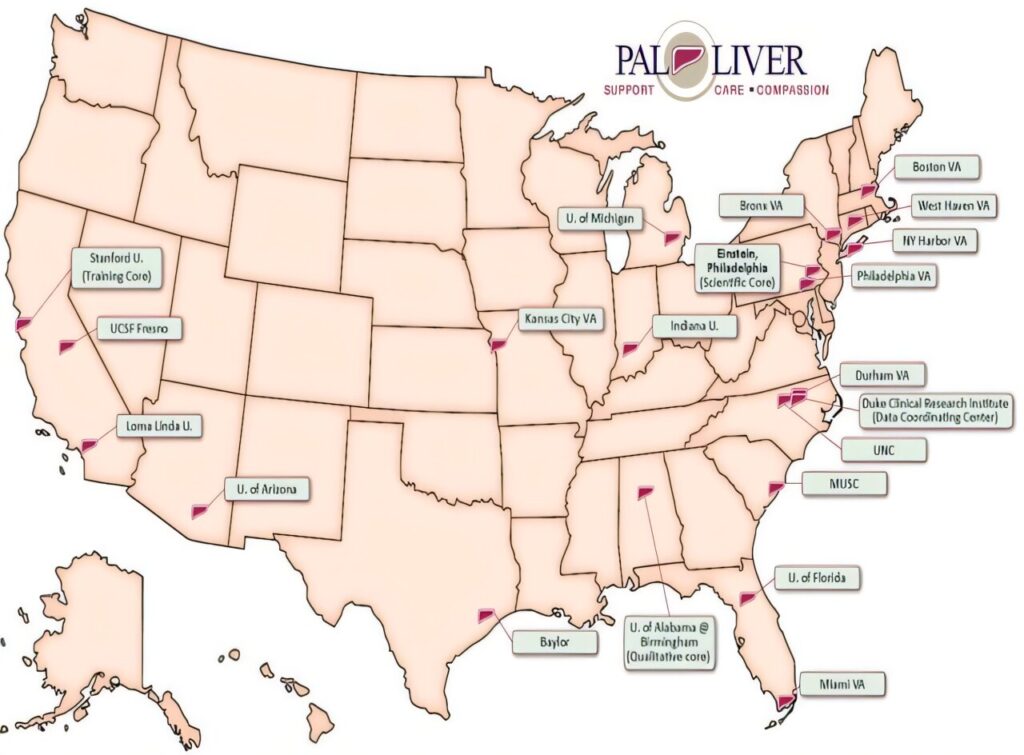
In the PAL LIVER trial, a large, cluster-randomized study conducted across 19 U.S. centers, researchers evaluated whether hepatologists trained in primary palliative care could match the effectiveness of palliative care specialists in delivering quality-of-life benefits to patients with ALD, including those with decompensated cirrhosis and liver cancer. With 935 patients enrolled, this was one of the largest trials to date in liver disease palliative care.
Palliative care was provided to patients (559 caregivers are also included in the study) over four monthly visits by either a palliative care specialist utilizing a standard checklist or by a hepatologist trained to deliver palliative care using the same standardized checklist. The work found that quality of life improved significantly in both groups over three months, with care delivered by hepatologists matching that of palliative specialists in improving quality of life. Symptom burden improved similarly in both groups, and short-term mortality was also comparable between groups.
“These results challenge traditional care models,” says Dr. Verma, associate chair and director of research for the Department of Medicine at Jefferson Einstein Philadelphia Hospital and first author of the study. “We’ve demonstrated that non-specialists can effectively deliver structured palliative care with the appropriate training.”
The approach could be a timely, scalable solution in the face of a growing workforce shortage in palliative care. “By embedding palliative care within hepatology clinics, this would allow earlier and more widespread access for patients who might otherwise not receive it,” adds Dr. Verma.
Furthermore, patients reported higher satisfaction with hepatologist-delivered care. This suggests patients may value receiving palliative care from clinicians already managing their liver disease, with improved continuity and coordination in their care. The team developed a patient and caregiver research advisory board with participants from multiple centers, who contributed to the study throughout.
“Our patient-centered trial has the ability to significantly transform the patient experience for those suffering with ALD,” says senior author Dr. Navarro, chief clinical officer for the central region of Jefferson Health.
The researchers plan to scale the integration of palliative care into routine hepatology practice, by developing standardized training for providers and comprehensive patient education. The team also hopes to leverage artificial intelligence-driven approaches to enhance the adoption and dissemination of the model.
Dr. Verma and Dr. Navarro, both faculty at Sidney Kimmel Medical College, also reiterate that this integrated model could also be extended to other advanced chronic diseases, including chronic heart, kidney and lung disease. With a rapidly aging population and therefore an increased burden of serious illnesses, more than 13.7 million people in the U.S. could benefit from palliative care. The PAL LIVER trial lays the foundation to meet these growing needs.
Publication details
Manisha Verma et al, Palliative Care Intervention for Patients With End-Stage Liver Disease, JAMA Internal Medicine (2026). DOI: 10.1001/jamainternmed.2026.0571
Journal information:
JAMA Internal Medicine
Key medical concepts
Clinical categories
Citation:
Expanding access to palliative care for patients with advanced liver disease (2026, April 13)
retrieved 13 April 2026
from https://medicalxpress.com/news/2026-04-access-palliative-patients-advanced-liver.html
This document is subject to copyright. Apart from any fair dealing for the purpose of private study or research, no
part may be reproduced without the written permission. The content is provided for information purposes only.

Khamrah by Lattafa for Men - 3.4 oz EDP Spray
4% Off
Ghost Sweetheart Eau de Toilette | Pineapple, Jasmine and Sandalwood | Perfume for Women 50 ml
50% Off
Marc Jacobs Dot Eau De Parfum for Women, 100 ml
42% Off
Ted Baker W Eau de Toilette for Her, Fig Leaf, White Peony and Violet Top Notes, Pink Orchid and Raspberry Middle Notes, 75ml
£11.77 (£15.69 / 100 ml) (as of 29/08/2026 04:41 GMT +01:00 - More infoProduct prices and availability are accurate as of the date/time indicated and are subject to change. Any price and availability information displayed on [relevant Amazon Site(s), as applicable] at the time of purchase will apply to the purchase of this product.)
Ted Baker Woman Pink Eau de Toilette Spray Floral Green Feminine Fragrance, Opening Notes are Fresh Peach, Bergamot and Tangerine with Warm Musk, Vanilla and Vetiver Base, 100ml
11% Off
Vera Wang Princess Eau de Toilette - 30 ml

Choco Musk 50ml Eau De Parfum for men and women | Chocolate Musk by Jannat Aromas
17% Off
Christina Aguilera Signature Eau de Parfum (50ml) Floral, Fruity & Exotic Scent, Luxury Fragrance for Women
9% Off
Calvin Klein - Eau De Toilette CKIN2U - Calvin Klein Women, Ladies Perfume, Women's Perfume, Calvin Klein Perfume, Calvin Klein One - 150 ml
5% Off
Jimmy Choo Flash Eau de Parfum, 60 ml (Pack of 1)
3% Off
Fruit of the Loom Men's Heavy T Shirt, White, XL UK
28% Off
ATNKE LED Lighted Beanie Cap,USB Rechargeable Running Hat Ultra Bright 4 LED Waterproof Light Winter Warm Gifts for Men and Women/Pink
17% Off
Men's 1/4 Zip Pullover UK Sale Clearance, Fleece Sweatshirt Casual Jumper Long Sleeve T-shirt Top Stand Collar Sweater Plain Pullover Sports Leisure Workwear Quarter Zip Sweater Lightweight Jumpers
£5.88 (as of 12/11/2025 00:52 GMT +01:00 - More infoProduct prices and availability are accurate as of the date/time indicated and are subject to change. Any price and availability information displayed on [relevant Amazon Site(s), as applicable] at the time of purchase will apply to the purchase of this product.)
Crevice Cleaning Brush, Bathroom Tile Groove Gap Cleaning Brush,Premium Crevice Cleaning Tool Aluminum Support with 15° Angle Magic Brush, Thin Brush for Home Kitchen
19% Off
Wireless Earbuds, Bluetooth 5.3 Headphones in Ear with HiFi Stereo Deep Bass, 4 ENC Noise Cancelling Mic Wireless Earphones 40H Playtime, Bluetooth Earbuds Dual LED Display, IP7 Waterproof, USB-C
42% Off