[
[
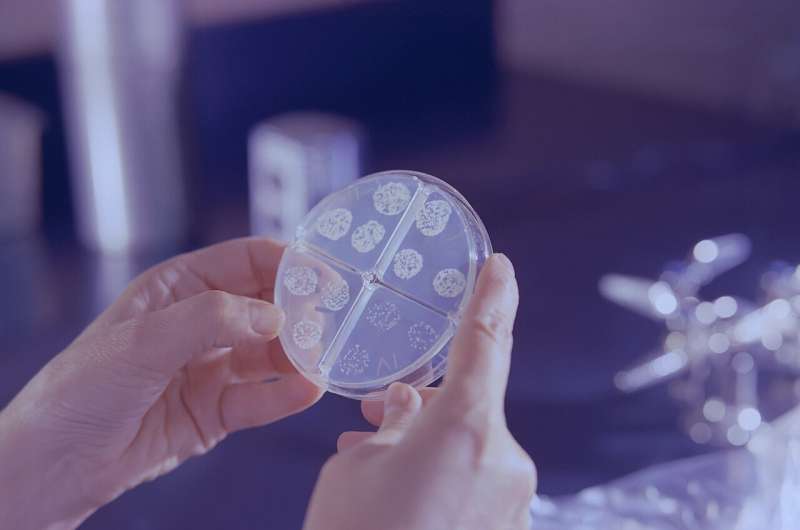
Scientists have long known that the immune system plays a key role in aging. As people age, they have weaker responses to vaccination, greater risks of infection and higher levels of inflammation. A new study led by UCLA Health researchers used results of a routine clinical lab test to measure not only immune responsiveness but also how it links directly to a patient’s long-term mortality.
The results, published in GeroScience, give researchers a tool to study the immune function of larger populations of patients, using a lab test that physicians already use regularly: tuberculosis screening tests called interferon gamma release assays (IGRAs).
The methods researchers used could indicate how well an immune system—especially the adaptive immune system, including T cells—can mount a response to an array of threats.
What the study did
Researchers analyzed the records (stripped of identifying information) of more than 16,000 people who had a negative or indeterminate IGRA test with the VA Greater Los Angeles Healthcare System. And they didn’t actually look at the patients’ TB results; instead, they analyzed results in the control data.
The control mechanism’s main purpose is to ensure the TB test is valid by exposing the patient’s blood to phytohemagglutinin (PHA), which usually triggers a strong immune response and may reveal the patient’s baseline immune performance.
What they found
After excluding those who were sick with other illnesses, researchers then linked these control results to patients’ survival. They discovered that patients with low immune responses had a 10% higher mortality over five years. Even after accounting for age and chronic illnesses, this link remained.
What this means for patients
Broadly, the results give physicians a gauge for predicting mortality in patients—based on immune responses, which in the future could be a prognostic marker for common medical conditions.
Another potential use is for would-be organ transplant patients. As these tests are routinely given to people being considered for transplants, they could help predict the outcome of the transplant and even help physicians fine-tune the immuno-suppression they administer. The same information could help cancer patients undergoing immunotherapy.
What’s next
Studies linking these test results to different health outcomes and in other types of patients are needed to turn this into a clinical tool. Studies are also needed to understand what the tests are revealing about the immune system itself.
The stimulus used in the tests broadly affects T cells—differently than how they respond to a specific virus or bacterium—so what happens downstream is important to know. Researchers also would like to know the specific mechanisms that are causing mortality, aside from the correlation with age and frailty.
More information
Benjamin Seligman et al, Immune activation from M. tuberculosis screening tests predicts mortality, GeroScience (2026). DOI: 10.1007/s11357-026-02221-y
Key medical concepts
Clinical categories


Citation:
Data hidden in tuberculosis screening tests shed light on patients’ overall mortality (2026, May 12)
retrieved 12 May 2026
from https://medicalxpress.com/news/2026-05-hidden-tuberculosis-screening-patients-mortality.html
This document is subject to copyright. Apart from any fair dealing for the purpose of private study or research, no
part may be reproduced without the written permission. The content is provided for information purposes only.

Khamrah by Lattafa for Men - 3.4 oz EDP Spray
4% Off
Ghost Sweetheart Eau de Toilette | Pineapple, Jasmine and Sandalwood | Perfume for Women 50 ml
50% Off
Marc Jacobs Dot Eau De Parfum for Women, 100 ml
42% Off
Ted Baker W Eau de Toilette for Her, Fig Leaf, White Peony and Violet Top Notes, Pink Orchid and Raspberry Middle Notes, 75ml
£11.77 (£15.69 / 100 ml) (as of 19/06/2026 03:33 GMT +01:00 - More infoProduct prices and availability are accurate as of the date/time indicated and are subject to change. Any price and availability information displayed on [relevant Amazon Site(s), as applicable] at the time of purchase will apply to the purchase of this product.)
Ted Baker Woman Pink Eau de Toilette Spray Floral Green Feminine Fragrance, Opening Notes are Fresh Peach, Bergamot and Tangerine with Warm Musk, Vanilla and Vetiver Base, 100ml
11% Off
Vera Wang Princess Eau de Toilette - 30 ml

Choco Musk 50ml Eau De Parfum for men and women | Chocolate Musk by Jannat Aromas
17% Off
Christina Aguilera Signature Eau de Parfum (50ml) Floral, Fruity & Exotic Scent, Luxury Fragrance for Women
9% Off
Calvin Klein - Eau De Toilette CKIN2U - Calvin Klein Women, Ladies Perfume, Women's Perfume, Calvin Klein Perfume, Calvin Klein One - 150 ml
5% Off
Jimmy Choo Flash Eau de Parfum, 60 ml (Pack of 1)
3% Off
Fruit of the Loom Men's Heavy T Shirt, White, XL UK
28% Off
ATNKE LED Lighted Beanie Cap,USB Rechargeable Running Hat Ultra Bright 4 LED Waterproof Light Winter Warm Gifts for Men and Women/Pink
17% Off
Men's 1/4 Zip Pullover UK Sale Clearance, Fleece Sweatshirt Casual Jumper Long Sleeve T-shirt Top Stand Collar Sweater Plain Pullover Sports Leisure Workwear Quarter Zip Sweater Lightweight Jumpers
£5.88 (as of 12/11/2025 00:52 GMT +01:00 - More infoProduct prices and availability are accurate as of the date/time indicated and are subject to change. Any price and availability information displayed on [relevant Amazon Site(s), as applicable] at the time of purchase will apply to the purchase of this product.)
Crevice Cleaning Brush, Bathroom Tile Groove Gap Cleaning Brush,Premium Crevice Cleaning Tool Aluminum Support with 15° Angle Magic Brush, Thin Brush for Home Kitchen
19% Off
Wireless Earbuds, Bluetooth 5.3 Headphones in Ear with HiFi Stereo Deep Bass, 4 ENC Noise Cancelling Mic Wireless Earphones 40H Playtime, Bluetooth Earbuds Dual LED Display, IP7 Waterproof, USB-C
42% Off