Sonja JessupLondon home affairs correspondent

 BBC
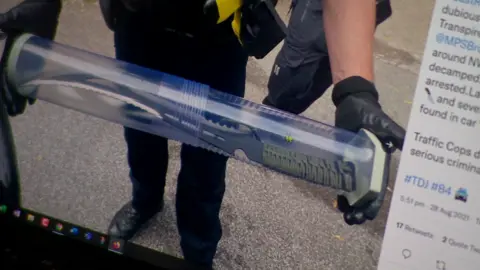
BBCFrom machetes to zombie knives, social media posts shared by police displaying the kind of weapons they’re seizing from London’s streets have been designed to shock.
But some young people have warned that, rather than making communities safer, it could actually be increasing the danger.
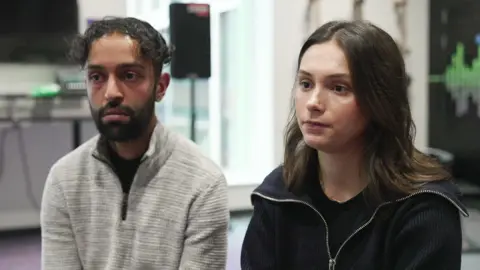
“In some cases, these images are being used for intelligence purposes,” Bipin Khanal, a former young adviser to London’s Violence Reduction Unit, told me.
He said he was aware of young people resharing those images and discussing how to “protect themselves”.
“It’s a misconception that carrying a knife protects you, but some people aren’t informed of such things,” the 27-year-old said.
“They see a scary image online and they want to pick one up too.”
In October, following a three year campaign by City Hall’s Young People’s Action Group (YPAG), the Metropolitan Police agreed to reform its policy on sharing images of knives on social media.
 Metropolitan police
Aged between 16 and 24 years old, the role of YPAG members is to advise and scrutinise the work of the violence reduction unit (VRU), which selects applicants who have “lived experience of exploitation, school exclusion and violence”.
Concern over the Met’s social media posts has been a key topic.
“We’d see really, really violent weapons like knives with serrated blades and stuff being shown to young kids, while also showing where they were found,” said Mr Khanal.
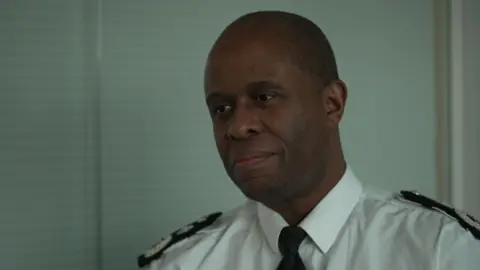
Deputy Assistant Commissioner Matt Ward said that, in the past, the Met had hoped the images would “give parents knowledge and information” so they could talk to their children.
“We also wanted to show knives so people understand when we use our stop and search powers, the importance of them and the kind of weapons we’re recovering as a result of using those powers properly,” he added.
But YPAG members argued that even if the posts were aimed at adults, children were resharing them in a very different way.
“So what would happen is, pictures of those knives, that were being posted by the Met, were being posted on meme pages that we all follow,” explained 21-year-old Leonita Metaj.
She said the weapons would “either be ridiculed” by some who boasted they had bigger knives, “or caused fear”.
“We understand the police want to show the good work they’re doing and we do support that,” Mr Khanal said.
“I think there’s a better way to go around it, and showing really graphic images, scaring communities, is not the angle we wanted to take.”
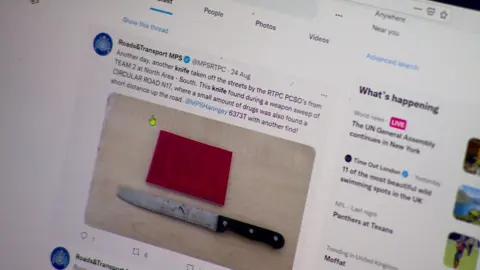
“It doesn’t need to be posted,” added Ms Metaj. “You can still put across that message, but through the use of statistics rather than actually taking a picture of that knife and in some cases as well measuring the knife alongside.”
 Twitter
Mr Ward praised YPAG for highlighting how such images could make young people feel “more inclined to carry a knife” – and the impact they could have on those who had been victims themselves.
The updated Met Police policy now states:
• Seized knife crime images will only be published when absolutely necessary to inform the public, and only with prior approval.
• Images must be contextualised within broader initiatives such as Sceptre, the national police anti-knife campaign, rather than shared in isolation.
• Messaging will prioritise the positive work of officers, successful interventions, and the safety of young people, rather than focusing on the weapons themselves.
Mr Ward said he believed the new policy “gets the right balance” between being “transparent about the dangers” but also “recognising the risks of showing images outside of the proper context”.
He said the force would focus instead on talking about the harm knife crime causes and “what families and young people can do working with us” to reduce the problem.
Asked why it had taken the Met three years to make the changes, Mr Ward said studies into the effect of sharing the knives had provided “mixed” results and the force had wanted to seek a wide range of views on the subject.
In June 2022, the VRU commissioned research, led by University College London, to investigate the impact that knife imagery has on young people.
The survey of 300 young Londoners found that it did not make them more fearful, or more likely to carry a knife, but neither did it appear to encourage them to think about the deadly consequences of doing so.
It suggested that this may be because some young people have become desensitised to the images and suggested further research be carried out.
The VRU then held a study with a smaller group, including a survey of 34 young people who’d been directly affected by knife crime.
18 of them said the images would make them feel unsafe, worried or afraid.
17 of them thought the images would make them less likely to carry a knife, however three said it would make them more likely to do so.
 Henry family via Met Police
Following the research, the Met invited YPAG members to New Scotland Yard to discuss their findings.
“Being a young person walking into places like New Scotland Yard, at the start I was a bit apprehensive,” Mr Khanal told me. “I wasn’t completely sure they were going to listen to us.”
But he said that their presentation, in front of senior officers, was well received.
YPAG members were then asked to carry out further sessions to share their research with frontline officers, as well as other community members.
Although the number of young people losing their lives to homicide in London has fallen to its lowest level in more than a decade, campaigners against knife crime have said far more needs to be done to protect them.
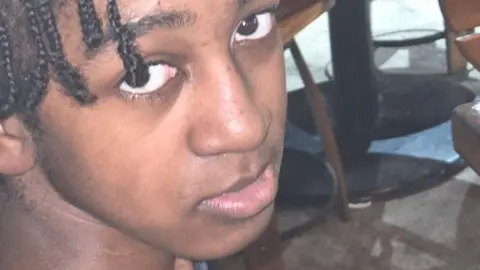
Eight teenagers have been killed this year, including 15-year-old Adam Henry, who was fatally stabbed in Westbourne Road, Islington, on 9 December.
The Met Police Commissioner told the London Policing Board this month that the Met was charging around 85 children every month with weapons offences.
‘Bridge that gap’
Following their research, Mr Khanal and Ms Letaj have both gone on to work for the charity StreetDoctors, which recently launched a film campaign aiming to teach teenagers about the dangers of carrying a weapon.
The Fatal Question, which is being shown in hundreds of cinemas across the UK, attempts to address a “deadly myth” among young people, who believe they should carry a knife to “defend” themselves, that there is a “safe place” to stab someone.
Mr Ward said feedback from officers suggested they found YPAG’s research “insightful” and some had not previously considered the posting of weapon imagery “from a young person’s perspective”.
“We could visibly see the shock in their face,” Mr Khanal told me.
Ms Metaj added it had been “a bit frustrating” that the information had come as a surprise to some officers.
“When actually, with a normal conversation, meeting grassroots community organisations, you would be able to find that out yourselves.”
“I think we were all aware that there was a bit of a disconnect between local communities and the Met,” agreed Mr Khanal. “I think it’s up to us to try to bridge that gap.”
He added that it was “too early” to judge the impact the new approach has had, but is pleased that he has not seen any images of knives being shared in the same way.
Ms Metaj agreed. “If we just protect one young person, then that policy change has spoken for itself.”
BBC News

Khamrah by Lattafa for Men - 3.4 oz EDP Spray
4% Off
Ghost Sweetheart Eau de Toilette | Pineapple, Jasmine and Sandalwood | Perfume for Women 50 ml
50% Off
Marc Jacobs Dot Eau De Parfum for Women, 100 ml
42% Off
Ted Baker W Eau de Toilette for Her, Fig Leaf, White Peony and Violet Top Notes, Pink Orchid and Raspberry Middle Notes, 75ml
£11.77 (£15.69 / 100 ml) (as of 03/06/2026 03:26 GMT +01:00 - More infoProduct prices and availability are accurate as of the date/time indicated and are subject to change. Any price and availability information displayed on [relevant Amazon Site(s), as applicable] at the time of purchase will apply to the purchase of this product.)
Ted Baker Woman Pink Eau de Toilette Spray Floral Green Feminine Fragrance, Opening Notes are Fresh Peach, Bergamot and Tangerine with Warm Musk, Vanilla and Vetiver Base, 100ml
11% Off
Vera Wang Princess Eau de Toilette - 30 ml

Choco Musk 50ml Eau De Parfum for men and women | Chocolate Musk by Jannat Aromas
17% Off
Christina Aguilera Signature Eau de Parfum (50ml) Floral, Fruity & Exotic Scent, Luxury Fragrance for Women
9% Off
Calvin Klein - Eau De Toilette CKIN2U - Calvin Klein Women, Ladies Perfume, Women's Perfume, Calvin Klein Perfume, Calvin Klein One - 150 ml
5% Off
Jimmy Choo Flash Eau de Parfum, 60 ml (Pack of 1)
3% Off
Fruit of the Loom Men's Heavy T Shirt, White, XL UK
28% Off
ATNKE LED Lighted Beanie Cap,USB Rechargeable Running Hat Ultra Bright 4 LED Waterproof Light Winter Warm Gifts for Men and Women/Pink
17% Off
Men's 1/4 Zip Pullover UK Sale Clearance, Fleece Sweatshirt Casual Jumper Long Sleeve T-shirt Top Stand Collar Sweater Plain Pullover Sports Leisure Workwear Quarter Zip Sweater Lightweight Jumpers

Crevice Cleaning Brush, Bathroom Tile Groove Gap Cleaning Brush,Premium Crevice Cleaning Tool Aluminum Support with 15° Angle Magic Brush, Thin Brush for Home Kitchen
19% Off
Wireless Earbuds, Bluetooth 5.3 Headphones in Ear with HiFi Stereo Deep Bass, 4 ENC Noise Cancelling Mic Wireless Earphones 40H Playtime, Bluetooth Earbuds Dual LED Display, IP7 Waterproof, USB-C
42% Off