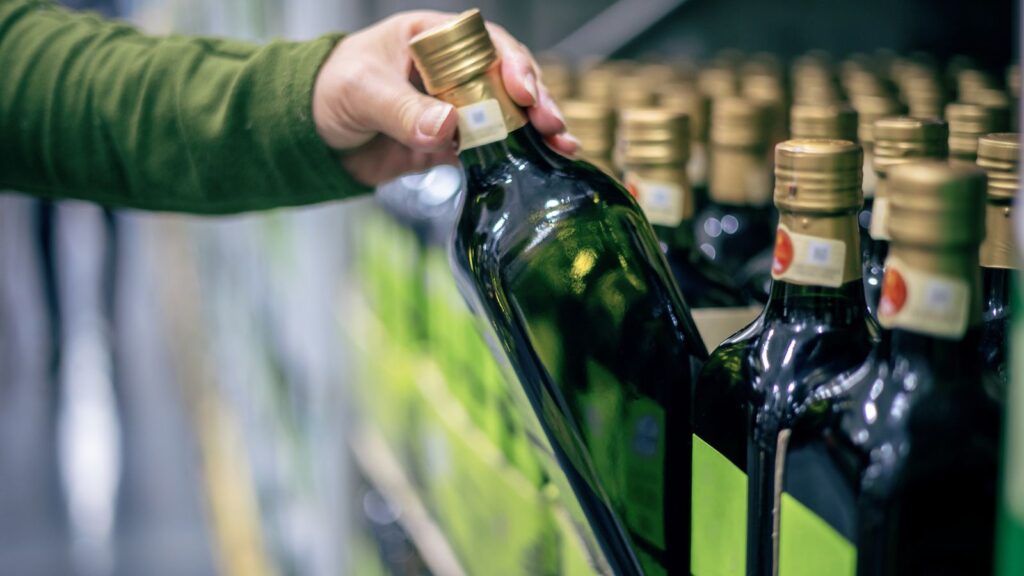
What do an Oscar-winning actress and your grocery bill have in common? More than you might think.
This particular drama is set in the rolling groves of Puglia, where olive trees have stood for centuries before a quiet crisis began unfolding 18 years ago.
That’s when Xylella, a bacterial disease, is thought to have arrived from Costa Rica. Since then, it has destroyed 21 million trees – and no cure has yet been found.
Dame Helen Mirren has witnessed all this up close. The olive grove at her farmhouse in Puglia was decimated by Xylella, forcing her to rip out around 100 trees and replace them with a resistant variety.
Read more like this in our award-winning Money blog
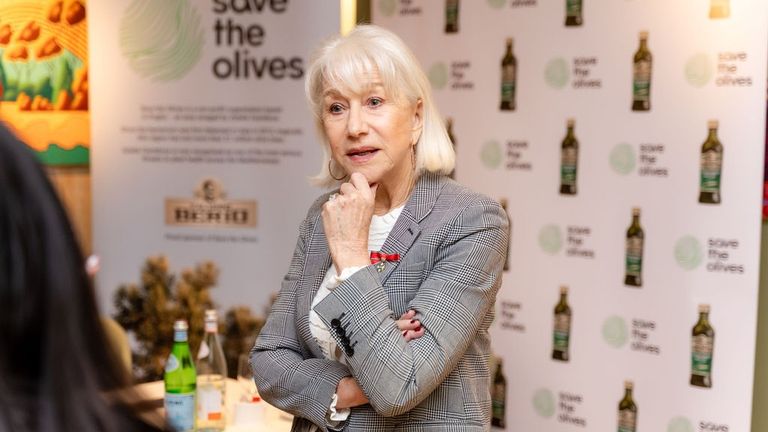
‘People are paying an awful lot of money for a very fancy label’ Dame Helen Mirren says
Spurred on by the lack of assistance and understanding of the disease, the 80-year-old set up the charity organisation Save the Olives to share information and figure out a way to fight the disease.
The non-profit is now focused on creating a new species of olive tree that is resistant to Xylella and able to create a rich-tasting olive oil.
It has funded a specialised greenhouse and bought a field to allow experts to carry out experiments on the species later this year.
If successful, the hope is Italy’s olive industry can be saved – and a knock-on effect could be lower food prices in the UK and across Europe.
“So many of these orchards were small orchards owned by a family,” Mirren told the Money blog.
“They were helpless. They didn’t have the finances to sort of fight this. And the whole world seemed to be ignoring it.
“It’s the saddest, most terrible thing, to see a tree like that, completely dead. It’s just awful.”
Read more:
Supermarkets ‘taking mickey’ with olive oil prices
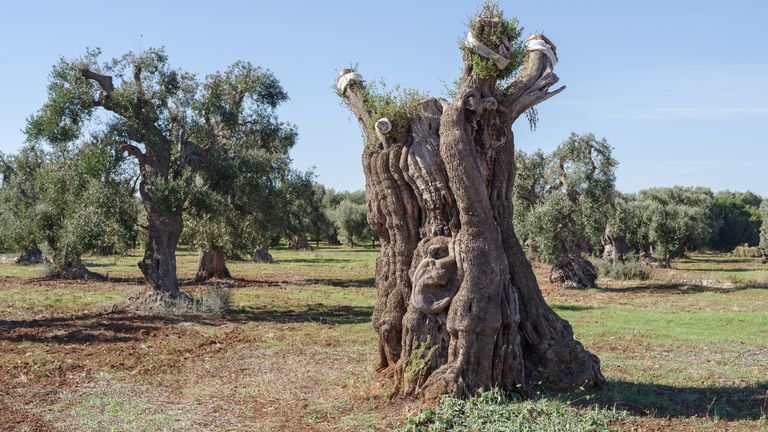
Olive trees hit by bacteria Xylella fastidiosa in Lecce, Puglia region, Italy. Pic: iStock
It is thought Xylella first arrived in Italy in 2008 on an infected coffee plant, but it was not recognised by Italian authorities until 2013.
Xylella contributed to Italy’s olive oil output dropping from 600,000 tonnes in the 1990s to 250,000 tonnes in the 2020s, according to the International Olive Council.
That, along with poor harvests in Spain, has helped push up prices for consumers for whom olive oil is now a staple.
“I love the fact that olive oil has become so much part of British cuisine,” Mirren said. “When I was a child, you could only buy olive oil in Boots to pour down your ears when you had an earache. It was a medicine; it wasn’t anything to eat.”
She added: “People are paying an awful lot of money for a very fancy label, basically. They will pay less when we eradicate the disease, definitely.”
Filippo Berio boss Walter Zanre said he didn’t see the disease creating a global supply problem, providing Spain continues to see its crop improve, but he does think it will “inevitably push up the price” of Italian food.
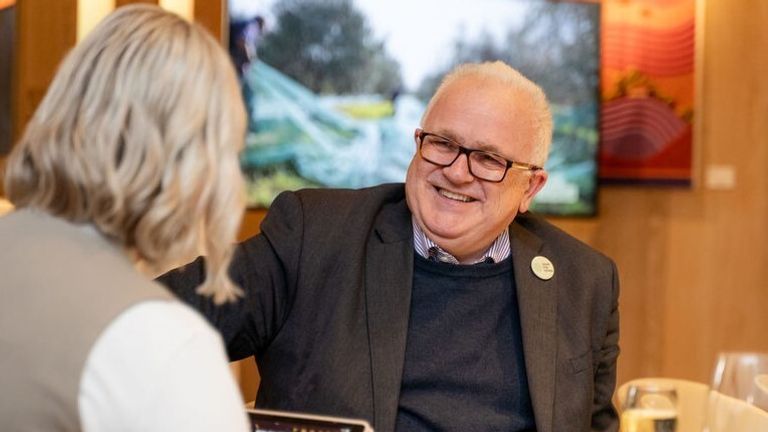
Filippo Berio boss Walter Zanre says ‘we’re never going to get back to where we were’
He called on the Italian government and the European Union to do more.
“They should be helping those small growers, and nothing has been done. They ignore it as an industry,” he said.
The Italian government has previously made grants available to small farmers affected by the disease.
Are we going to get back to low prices?
Zanre doesn’t think we’re going to see prices come back down to the lows of the 2010s, but he does think we could get back within 10% to 15% of those prices.
With war in the Middle East causing energy prices, production costs and high inflation fears to spike, he warned that “everything costs more, so we’re never going to get back to where we were”.
But, he added, “all it needs is one big crop and a glut and everything will be back on the floor again”.
With higher prices causing Britons to slightly move away from expensive products, Zanre said Filippo Berio was hoping to boost sales with new innovative products and sales techniques.
Read more from Sky News:
Why don’t experts agree on overpaying your mortgage?
The government’s political dilemma on student loans
The company is diversifying its portfolio further, with vinegars, pestos and pasta sauces already seeing huge growth. It is launching more balsamic glazes and is looking to expand into salad dressings and “mayonnaise-type products”.
It recently introduced a squeezy bottle of olive oil, which Zanre expects is a “bit of a niche” product that will “never really come alive” but hopes will reel in a younger audience.
To do that, it is going to start selling a bundle of squeezy bottles on TikTok.
“It’s heritage, quality, authenticity and those are all the values that come from those dark glass bottles. I don’t think a squeezy bottle gives you heritage and authenticity, but it does address a new, younger consumer,” he said.
Source link

Khamrah by Lattafa for Men - 3.4 oz EDP Spray
4% Off
Ghost Sweetheart Eau de Toilette | Pineapple, Jasmine and Sandalwood | Perfume for Women 50 ml
50% Off
Marc Jacobs Dot Eau De Parfum for Women, 100 ml
42% Off
Ted Baker W Eau de Toilette for Her, Fig Leaf, White Peony and Violet Top Notes, Pink Orchid and Raspberry Middle Notes, 75ml
£11.77 (£15.69 / 100 ml) (as of 11/07/2026 03:56 GMT +01:00 - More infoProduct prices and availability are accurate as of the date/time indicated and are subject to change. Any price and availability information displayed on [relevant Amazon Site(s), as applicable] at the time of purchase will apply to the purchase of this product.)
Ted Baker Woman Pink Eau de Toilette Spray Floral Green Feminine Fragrance, Opening Notes are Fresh Peach, Bergamot and Tangerine with Warm Musk, Vanilla and Vetiver Base, 100ml
11% Off
Vera Wang Princess Eau de Toilette - 30 ml

Choco Musk 50ml Eau De Parfum for men and women | Chocolate Musk by Jannat Aromas
17% Off
Christina Aguilera Signature Eau de Parfum (50ml) Floral, Fruity & Exotic Scent, Luxury Fragrance for Women
9% Off
Calvin Klein - Eau De Toilette CKIN2U - Calvin Klein Women, Ladies Perfume, Women's Perfume, Calvin Klein Perfume, Calvin Klein One - 150 ml
5% Off
Jimmy Choo Flash Eau de Parfum, 60 ml (Pack of 1)
3% Off
Fruit of the Loom Men's Heavy T Shirt, White, XL UK
28% Off
ATNKE LED Lighted Beanie Cap,USB Rechargeable Running Hat Ultra Bright 4 LED Waterproof Light Winter Warm Gifts for Men and Women/Pink

Men's 1/4 Zip Pullover UK Sale Clearance, Fleece Sweatshirt Casual Jumper Long Sleeve T-shirt Top Stand Collar Sweater Plain Pullover Sports Leisure Workwear Quarter Zip Sweater Lightweight Jumpers
£5.88 (as of 12/11/2025 00:52 GMT +01:00 - More infoProduct prices and availability are accurate as of the date/time indicated and are subject to change. Any price and availability information displayed on [relevant Amazon Site(s), as applicable] at the time of purchase will apply to the purchase of this product.)
Crevice Cleaning Brush, Bathroom Tile Groove Gap Cleaning Brush,Premium Crevice Cleaning Tool Aluminum Support with 15° Angle Magic Brush, Thin Brush for Home Kitchen
19% Off
Wireless Earbuds, Bluetooth 5.3 Headphones in Ear with HiFi Stereo Deep Bass, 4 ENC Noise Cancelling Mic Wireless Earphones 40H Playtime, Bluetooth Earbuds Dual LED Display, IP7 Waterproof, USB-C
42% Off