
 [
[
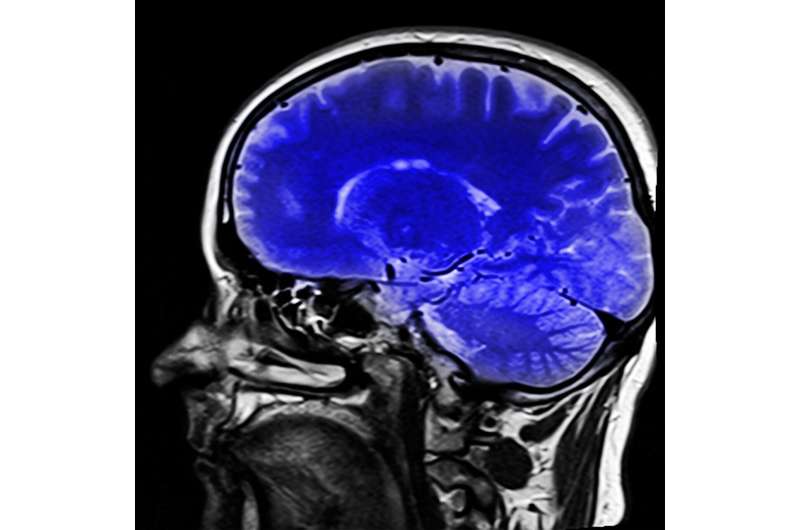
A new brain imaging study led by researchers at the Center for Addiction and Mental Health (CAMH), published in eBioMedicine, provides the strongest evidence to date that long COVID is associated with injury to dopamine-releasing neurons in the brain—a finding that may explain symptoms such as lack of motivation due to fatigue, slowed movement and memory difficulties, and could open the door to new treatment strategies.
Long COVID is estimated to affect 5% of the world’s population and is characterized by a wide range of persistent and sometimes debilitating symptoms, including brain-related ones such as fatigue, brain fog, memory problems or low mood, that continue for at least three months following the initial COVID-19 infection.
Despite its prevalence, no evidence-based treatments currently exist, largely due to limited understanding of the underlying brain pathology.
Brain scans point to dopamine loss
In the new study, researchers used positron emission tomography (PET) brain imaging to measure a well-established marker of dopamine neuron integrity in people with long COVID and healthy individuals.
The team found significantly lower levels of the imaging marker—indicating reduced dopamine nerve terminal density—across all major regions of the striatum, the brain structure that plays a central role in motivation, movement and thinking, in people with long COVID compared with healthy individuals. Specifically, lower markers in the ventral striatum were associated with greater loss of motivation, marker reductions in the dorsal putamen were associated with slowed movement speed, and marker loss in the caudate putamen was linked to memory difficulties.
“Our findings provide compelling evidence that long COVID involves the loss of dopamine-releasing neurons,” says Dr. Jeffrey Meyer, senior scientist at the Brain Health Imaging Center, Canada Research Chair, and senior author of the study.
“This kind of injury is well known to produce symptoms like lack of motivation and motor slowing, and may contribute to memory difficulties in other neurological conditions. Our results suggest a similar process is occurring in long COVID.”
Building on earlier evidence
The findings build on the team’s earlier work showing that people with long COVID have elevated levels of inflammation in the brain, especially in regions that are rich in dopamine-releasing neurons.
“We know that inflammation can injure dopamine neurons. While our earlier research showed high levels of inflammation in those regions, this study provides direct evidence that the dopamine neuron marker is reduced in the same regions—and that this loss correlates with patients’ symptoms,” explains Meyer.
The study represents a notable shift in how long COVID may be understood and treated. Previous studies predominantly focused on brain inflammation and immune changes that occur during long COVID, with almost no clinical trials targeting the dopamine-releasing neurons.
“These results indicate that long COVID is, at least in part, a disorder of the brain’s dopamine system,” adds Meyer. “This suggests that repurposing medications that augment the function of dopamine-releasing neurons, including dopamine precursors and inhibitors of dopamine metabolism, could be a promising approach.”
Hope and a trial ahead
For individuals affected by long COVID, the new findings offer hope.
“For five years I have been seeking answers about what happened to me after I contracted COVID in 2021,” says Susan Deuville, lived experience research adviser to Meyer. “It was a crushing loss of the life I had and the person I was before. Meyer’s research brings hope. It also validates what long COVID sufferers have always known—long COVID is real and the effects are devastating.”
Based on the new findings, the team plans to launch a clinical trial targeting dopamine function to help with memory, motivation and fatigue in people with long COVID in the next couple of months, in collaboration with University Health Network (UHN), as part of the hospitals’ partnership to help bridge the gap between mental and physical health care.
Publication details
Loss of vesicular monoamine transporter 2 in striatum of long COVID and relationship to neuropsychiatric symptoms, EBioMedicine (2026). DOI: 10.1016/j.ebiom.2026.106339
Journal information:
EBioMedicine
Who’s behind this story?

Sadie Harley

Citation:
New study provides first evidence of dopamine system injury in the brain of long COVID patients (2026, July 10)
retrieved 10 July 2026
from https://medicalxpress.com/news/2026-07-evidence-dopamine-injury-brain-covid.html
This document is subject to copyright. Apart from any fair dealing for the purpose of private study or research, no
part may be reproduced without the written permission. The content is provided for information purposes only.

Khamrah by Lattafa for Men - 3.4 oz EDP Spray
4% Off
Ghost Sweetheart Eau de Toilette | Pineapple, Jasmine and Sandalwood | Perfume for Women 50 ml
50% Off
Marc Jacobs Dot Eau De Parfum for Women, 100 ml
42% Off
Ted Baker W Eau de Toilette for Her, Fig Leaf, White Peony and Violet Top Notes, Pink Orchid and Raspberry Middle Notes, 75ml
£11.77 (£15.69 / 100 ml) (as of 10/07/2026 03:55 GMT +01:00 - More infoProduct prices and availability are accurate as of the date/time indicated and are subject to change. Any price and availability information displayed on [relevant Amazon Site(s), as applicable] at the time of purchase will apply to the purchase of this product.)
Ted Baker Woman Pink Eau de Toilette Spray Floral Green Feminine Fragrance, Opening Notes are Fresh Peach, Bergamot and Tangerine with Warm Musk, Vanilla and Vetiver Base, 100ml
11% Off
Vera Wang Princess Eau de Toilette - 30 ml

Choco Musk 50ml Eau De Parfum for men and women | Chocolate Musk by Jannat Aromas
17% Off
Christina Aguilera Signature Eau de Parfum (50ml) Floral, Fruity & Exotic Scent, Luxury Fragrance for Women
9% Off
Calvin Klein - Eau De Toilette CKIN2U - Calvin Klein Women, Ladies Perfume, Women's Perfume, Calvin Klein Perfume, Calvin Klein One - 150 ml
5% Off
Jimmy Choo Flash Eau de Parfum, 60 ml (Pack of 1)
3% Off
Fruit of the Loom Men's Heavy T Shirt, White, XL UK
28% Off
ATNKE LED Lighted Beanie Cap,USB Rechargeable Running Hat Ultra Bright 4 LED Waterproof Light Winter Warm Gifts for Men and Women/Pink
17% Off
Men's 1/4 Zip Pullover UK Sale Clearance, Fleece Sweatshirt Casual Jumper Long Sleeve T-shirt Top Stand Collar Sweater Plain Pullover Sports Leisure Workwear Quarter Zip Sweater Lightweight Jumpers
£5.88 (as of 12/11/2025 00:52 GMT +01:00 - More infoProduct prices and availability are accurate as of the date/time indicated and are subject to change. Any price and availability information displayed on [relevant Amazon Site(s), as applicable] at the time of purchase will apply to the purchase of this product.)
Crevice Cleaning Brush, Bathroom Tile Groove Gap Cleaning Brush,Premium Crevice Cleaning Tool Aluminum Support with 15° Angle Magic Brush, Thin Brush for Home Kitchen
19% Off
Wireless Earbuds, Bluetooth 5.3 Headphones in Ear with HiFi Stereo Deep Bass, 4 ENC Noise Cancelling Mic Wireless Earphones 40H Playtime, Bluetooth Earbuds Dual LED Display, IP7 Waterproof, USB-C
42% Off


