
 [
[

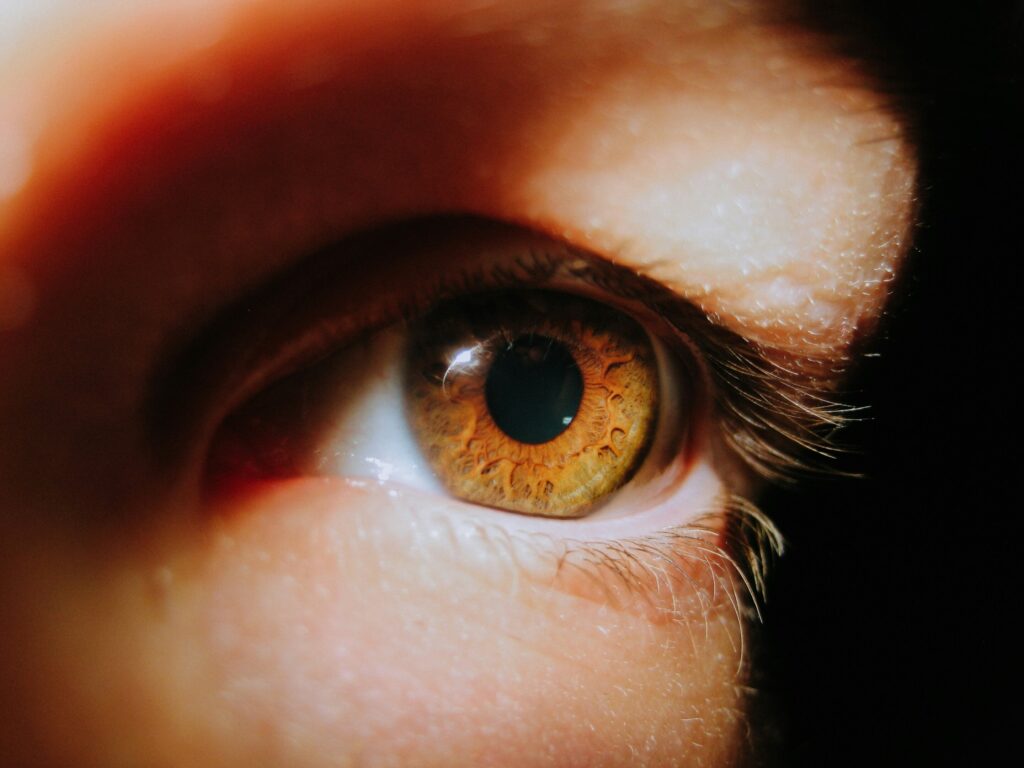
When people encounter new information that challenges their expectations, their pupils are likely to dilate. This physiological response is a sign that something is happening in the brain to help the person adapt to the new situation, according to a study led by Brown University researchers.
“Pupil dilation signals a spike in arousal, and our findings support the idea that these rapid fluctuations in arousal are doing something useful in the brain,” said study author Matt Nassar, an associate professor of neuroscience and of cognitive and psychological sciences at Brown. “They’re enabling us to deal with a world that often changes from one context to another context.”
Nassar is part of a research team at Brown’s Carney Institute for Brain Science that studied the function and purpose of spikes in physical alertness. Their findings, published in Nature Human Behaviour, show that the spikes are a signal of the brain’s transition into a new mode, instantly changing how the person perceives and learns from what is happening around them.
Tracking the brain’s reset signal
Surprising events elicit activity in the part of the brain known as the locus coeruleus, which is the primary source of norepinephrine, the chemical messenger that drives the body’s fight-or-flight stress response. This activity is correlated with a change in pupil diameter as well as with specific brain waves measured by electroencephalography (EEG). Despite many studies showing spikes in norepinephrine and other markers of arousal in response to surprising events, the function of these physical signals and how they might shape behavior has been unclear, Nassar said.
The team designed an experiment involving colored squares on a screen, during which participants repeatedly made predictions about what they were about to see. Participants were then shown a new set of squares, reported what they saw and made new predictions about what they would see next. During this time, the researchers collected physiological data, including changes in pupil diameter and EEG signals.
“We wanted to capture the phenomenon associated with two overarching ideas about how the arousal system affects behavior,” said study co-author Harrison Marble, who earned a bachelor’s degree in neuroscience from Brown in 2023 and is now a research assistant and manager in Nassar’s lab. “One of them is related to learning, and the other is related to perceptual bias.”
The experiment included 63 participants, resulting in 57 EEG datasets and 60 pupil measurement datasets.
When surprise clears expectations
The researchers found that surprising colors—those that didn’t match predictions—elicited pupil dilation and amplified certain brain waves. They also found that these measurements were related to reductions in bias and adjustments in learning: When images looked like what the participants thought they were going to see, participants were biased toward their expectations. Yet pupil and brain measurements showed that participants were also able to learn from unexpected results and adjust their subsequent predictions accordingly.
In surprising situations, the researchers found, the norepinephrine spike is almost like a refresh mechanism—it’s a sign the brain is adjusting to new information that changes expectations.
“The brain holds on to some mental context, and then when it recognizes that you’re in a new situation, you replace that context,” Nassar said. “Changes in pupil diameter, as well as specific EEG readings, are external markers showing that the brain is loading that new context. This both limits the effect that the previous context has on perception and also provides a clean slate, unencumbered by previous expectations, thereby allowing one to learn faster.”
Publication details
Tiantian Li et al, Fluctuations in arousal reflect latent state transitions that facilitate behavioural optimization, Nature Human Behaviour (2026). DOI: 10.1038/s41562-026-02533-1
Journal information:
Nature Human Behaviour
Clinical categories
Who’s behind this story?

Robert Egan
Citation:
Why do people’s pupils dilate when they’re surprised? Researchers explain (2026, August 5)
retrieved 5 August 2026
from https://medicalxpress.com/news/2026-08-people-pupils-dilate-theyre.html
This document is subject to copyright. Apart from any fair dealing for the purpose of private study or research, no
part may be reproduced without the written permission. The content is provided for information purposes only.

Khamrah by Lattafa for Men - 3.4 oz EDP Spray
4% Off
Ghost Sweetheart Eau de Toilette | Pineapple, Jasmine and Sandalwood | Perfume for Women 50 ml
50% Off
Marc Jacobs Dot Eau De Parfum for Women, 100 ml
42% Off
Ted Baker W Eau de Toilette for Her, Fig Leaf, White Peony and Violet Top Notes, Pink Orchid and Raspberry Middle Notes, 75ml
£11.77 (£15.69 / 100 ml) (as of 06/08/2026 04:06 GMT +01:00 - More infoProduct prices and availability are accurate as of the date/time indicated and are subject to change. Any price and availability information displayed on [relevant Amazon Site(s), as applicable] at the time of purchase will apply to the purchase of this product.)
Ted Baker Woman Pink Eau de Toilette Spray Floral Green Feminine Fragrance, Opening Notes are Fresh Peach, Bergamot and Tangerine with Warm Musk, Vanilla and Vetiver Base, 100ml
11% Off
Vera Wang Princess Eau de Toilette - 30 ml

Choco Musk 50ml Eau De Parfum for men and women | Chocolate Musk by Jannat Aromas
17% Off
Christina Aguilera Signature Eau de Parfum (50ml) Floral, Fruity & Exotic Scent, Luxury Fragrance for Women
9% Off
Calvin Klein - Eau De Toilette CKIN2U - Calvin Klein Women, Ladies Perfume, Women's Perfume, Calvin Klein Perfume, Calvin Klein One - 150 ml
5% Off
Jimmy Choo Flash Eau de Parfum, 60 ml (Pack of 1)
3% Off
Fruit of the Loom Men's Heavy T Shirt, White, XL UK
28% Off
ATNKE LED Lighted Beanie Cap,USB Rechargeable Running Hat Ultra Bright 4 LED Waterproof Light Winter Warm Gifts for Men and Women/Pink
17% Off
Men's 1/4 Zip Pullover UK Sale Clearance, Fleece Sweatshirt Casual Jumper Long Sleeve T-shirt Top Stand Collar Sweater Plain Pullover Sports Leisure Workwear Quarter Zip Sweater Lightweight Jumpers
£5.88 (as of 12/11/2025 00:52 GMT +01:00 - More infoProduct prices and availability are accurate as of the date/time indicated and are subject to change. Any price and availability information displayed on [relevant Amazon Site(s), as applicable] at the time of purchase will apply to the purchase of this product.)
Crevice Cleaning Brush, Bathroom Tile Groove Gap Cleaning Brush,Premium Crevice Cleaning Tool Aluminum Support with 15° Angle Magic Brush, Thin Brush for Home Kitchen
19% Off
Wireless Earbuds, Bluetooth 5.3 Headphones in Ear with HiFi Stereo Deep Bass, 4 ENC Noise Cancelling Mic Wireless Earphones 40H Playtime, Bluetooth Earbuds Dual LED Display, IP7 Waterproof, USB-C
42% Off


