
 [
[
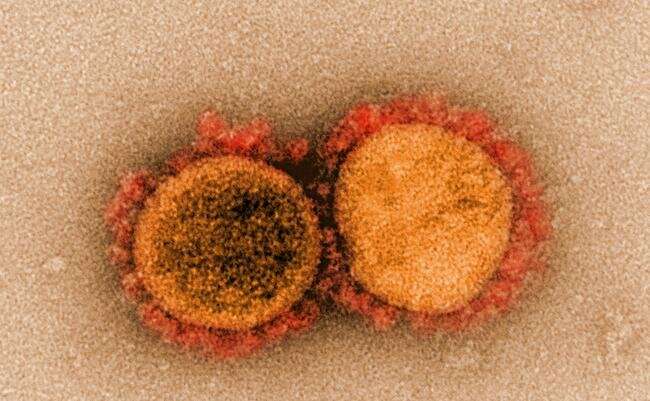
Six years after the height of the COVID-19 pandemic, scientists are still uncovering surprising ways the virus can wreak havoc on the body. A new UCLA study published in Science Advances describes a previously unrecognized way the SARS-CoV-2 nucleocapsid protein—a structural protein less familiar than the spike protein that has dominated public attention and much vaccine research—can push the immune system into dangerous overdrive.
The nucleocapsid protein’s main job is to package and protect the virus’s genetic material. Like several other coronavirus proteins, it’s also known to suppress the body’s early antiviral defenses, helping the virus get a foothold.
Scientists led by virologist Melody Li set out to see whether SARS-CoV-2’s version of this immune-dampening protein worked the same way as those found in SARS and MERS, earlier coronaviruses known to cause severe disease.
“Coronaviruses are notorious for encoding proteins that antagonize the body’s natural antiviral defenses,” said Li, an associate professor of microbiology, immunology and molecular genetics and member of the UCLA Broad Stem Cell Research Center. “When SARS-CoV-2 first appeared, almost nothing was known about it, so we wanted to find out whether it was using the same playbook.”
A hidden protein with an outsized effect
The project led the researchers to a less-explored question: how the nucleocapsid protein behaves inside macrophages. These immune cells patrol tissues for signs of infection and release chemical signals called cytokines and chemokines to rally the body’s defenses.
What they found upended their original hypothesis. The nucleocapsid protein appeared to be a “double-edged sword,” Li said. While it still suppressed signals that trigger an early antiviral response, it also amplified inflammatory pathways in macrophages, which can fuel tissue-damaging immune responses.
“We set out looking for a protein that suppresses the immune response, and we found the opposite,” said Zhenlan Yao, co-first author of the study and a former postdoctoral researcher in Li’s lab, who will soon begin a research assistant professorship at Hong Kong University. “It was surprising, but it lines up with what we already know about COVID-19: The virus dampens the immune response early on, then overactivates it later—and that’s when a lot of the tissue damage happens.”
The researchers examined nucleocapsid proteins from several SARS-CoV-2 variants, as well as from SARS-CoV-1 and MERS-CoV, and found the pro-inflammatory effect was conserved across pathogenic coronaviruses—with the delta variant’s version proving by far the most inflammatory.
“It’s a bit like a thief trying to slip past a bank’s security system, but instead of staying quiet, it trips the alarm,” Li said. “We don’t think these viruses intend to do this—a virus’s whole goal is to spread, not to make its host severely sick. But this looks like an unintended side effect that, in the case of COVID, ends up fueling the disease.”
In the body, that immune “alarm” does not stay confined to macrophages. When these cells become overactivated, they release inflammatory signals that can affect nearby tissues, including the cells that line blood vessels.
Cracks in the body’s protective barriers
To investigate whether those effects could help explain COVID-19 complications involving the brain and heart, the team turned to two human cell-based models: a stem cell-derived model of the blood-brain barrier and a model of the coronary artery lining.
These barriers are made of endothelial cells, which line blood vessels and help control what passes from the bloodstream into surrounding tissues. In the brain, this barrier is especially tight, helping protect delicate neural tissue from pathogens, toxins and other harmful substances.
When the researchers exposed both models to fluid containing signals from macrophages producing the delta variant’s nucleocapsid protein, the heart barrier broke down significantly—a phenomenon known as vascular leakage.
Because the heart depends on tight, selective blood vessel linings to function normally, the finding points to a possible mechanism that could help explain the cardiac injury seen in severe cases of COVID-19.
Rethinking how severe COVID-19 is treated
The findings also suggest a path toward more targeted COVID-19 treatments.
Severe cases can be treated with broad anti-inflammatory drugs like corticosteroids, which dampen harmful inflammation but do not specifically target the viral mechanisms that may be driving it. A therapy or vaccine that targets the nucleocapsid protein, Li said, could potentially rein in hyperinflammation more precisely and, in doing so, help protect the blood vessel barriers that support brain and heart health.
And because macrophages play a similar double-edged role in many infections beyond COVID-19, she said, the same mechanism could turn out to matter well beyond this one virus.
“It’s critical to keep studying COVID-19 so that we can constantly improve patient care—not everyone responds well to vaccines, and people who are immunocompromised often have limited treatment options,” said Pablo Alvarez, co-first author of the study and a former graduate student in Li’s lab. “These studies can also help us prepare for future coronavirus outbreaks.”
Publication details
Zhenlan Yao et al, SARS-CoV-2 nucleocapsid induces hyperinflammation and vascular leakage through the Toll-like receptor signaling axis in macrophages, Science Advances (2026). DOI: 10.1126/sciadv.aea2780
Journal information:
Science Advances
Key medical concepts
Who’s behind this story?

Robert Egan
Citation:
A lesser-known SARS-CoV-2 protein may offer clues to long COVID symptoms (2026, August 5)
retrieved 5 August 2026
from https://medicalxpress.com/news/2026-08-lesser-sars-cov-protein-clues.html
This document is subject to copyright. Apart from any fair dealing for the purpose of private study or research, no
part may be reproduced without the written permission. The content is provided for information purposes only.

Khamrah by Lattafa for Men - 3.4 oz EDP Spray
4% Off
Ghost Sweetheart Eau de Toilette | Pineapple, Jasmine and Sandalwood | Perfume for Women 50 ml
50% Off
Marc Jacobs Dot Eau De Parfum for Women, 100 ml
42% Off
Ted Baker W Eau de Toilette for Her, Fig Leaf, White Peony and Violet Top Notes, Pink Orchid and Raspberry Middle Notes, 75ml
£11.77 (£15.69 / 100 ml) (as of 05/08/2026 04:06 GMT +01:00 - More infoProduct prices and availability are accurate as of the date/time indicated and are subject to change. Any price and availability information displayed on [relevant Amazon Site(s), as applicable] at the time of purchase will apply to the purchase of this product.)
Ted Baker Woman Pink Eau de Toilette Spray Floral Green Feminine Fragrance, Opening Notes are Fresh Peach, Bergamot and Tangerine with Warm Musk, Vanilla and Vetiver Base, 100ml
11% Off
Vera Wang Princess Eau de Toilette - 30 ml

Choco Musk 50ml Eau De Parfum for men and women | Chocolate Musk by Jannat Aromas
17% Off
Christina Aguilera Signature Eau de Parfum (50ml) Floral, Fruity & Exotic Scent, Luxury Fragrance for Women
9% Off
Calvin Klein - Eau De Toilette CKIN2U - Calvin Klein Women, Ladies Perfume, Women's Perfume, Calvin Klein Perfume, Calvin Klein One - 150 ml
5% Off
Jimmy Choo Flash Eau de Parfum, 60 ml (Pack of 1)
3% Off
Fruit of the Loom Men's Heavy T Shirt, White, XL UK
28% Off
ATNKE LED Lighted Beanie Cap,USB Rechargeable Running Hat Ultra Bright 4 LED Waterproof Light Winter Warm Gifts for Men and Women/Pink
17% Off
Men's 1/4 Zip Pullover UK Sale Clearance, Fleece Sweatshirt Casual Jumper Long Sleeve T-shirt Top Stand Collar Sweater Plain Pullover Sports Leisure Workwear Quarter Zip Sweater Lightweight Jumpers
£5.88 (as of 12/11/2025 00:52 GMT +01:00 - More infoProduct prices and availability are accurate as of the date/time indicated and are subject to change. Any price and availability information displayed on [relevant Amazon Site(s), as applicable] at the time of purchase will apply to the purchase of this product.)
Crevice Cleaning Brush, Bathroom Tile Groove Gap Cleaning Brush,Premium Crevice Cleaning Tool Aluminum Support with 15° Angle Magic Brush, Thin Brush for Home Kitchen
19% Off
Wireless Earbuds, Bluetooth 5.3 Headphones in Ear with HiFi Stereo Deep Bass, 4 ENC Noise Cancelling Mic Wireless Earphones 40H Playtime, Bluetooth Earbuds Dual LED Display, IP7 Waterproof, USB-C
42% Off


