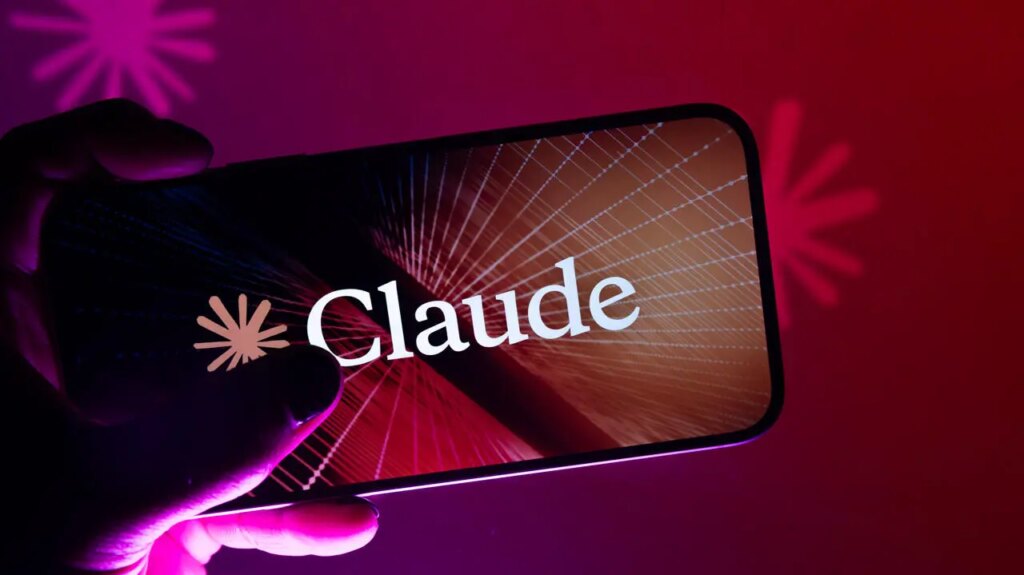
If you use Anthropic’s AI chatbot Claude to do your homework, everyone will be able to tell soon. Anthropic said this month that text and files generated by its family of AI models will be watermarked to let consumers know. The change will allow the company to comply with EU regulations governing the transparency of AI use.
The EU’s Code of Practice on Transparency of AI-generated Content requires companies that provide and deploy AI systems to inform customers when they are interacting with AI and to include watermarks on AI content. Consumers also must know when they’re exposed to deepfakes and emotion-recognition and biometric-categorization tools. Nearly 200 organizations have agreed to the measures, the European Commission said.
Watermarking — an authentication process that originated in Italy in the 13th century — is entirely different for AI content. The AI system can automatically embed markers in text indicating that the content originated from AI and not a human. Examples could be different spacing between words and numbers, word sequencing and other invisible signals that remain with the text even if the person copies and pastes it across different platforms. Readers can’t see these markers, but computer systems can.

In its announcement, Anthropic said Claude models launched on or after Aug. 2 would include watermarking. That includes content created by Claude through the API, Claude, Claude Code, Claude Cowork and Claude Tag. Watermarking will apply to all Claude-generated content wherever the AI system is offered, not just in the EU.
Anthropic said it would “soon” share details about how customers can check whether text was generated by AI.
AI transparency is a growing trend. Substack partnered with Pangram to let readers know how much, if any, a post was generated by AI. Suno recently announced changes to help listeners know if a song was created by AI. If LinkedIn customers suspect AI slop, they can let LinkedIn know. Spotify’s new feature, AI Persona, allows listeners and creators to know which music was created with AI.
How text will be watermarked
To boil down an otherwise complicated process, Anthropic said that text generated by Claude models will be detectable because of how the words are chosen. If there is enough text, the AI detection tool will be able to spot a pattern that only Claude models would use to generate the text.
Anthropic said that text watermarking would not lessen the quality of the content and that readers will not be able to tell the difference between watermarked text and non-watermarked text, without using the AI detection tool.
“In internal testing, we’ve seen no impact of watermarking on the content, level of creativity or readability of Claude’s text,” the company said.
Anthropic said its tool is based on the SynthID system that Google is using to detect AI in text, images, video and audio. How SynthID detects AI in text content is described in a Nature paper published in 2024.
The watermarks Claude adds to text will remain, even if the text is copied and pasted from text editors such as Windows Notepad or MacOS’s TextEdit. The marks also might not be eliminated through human editing, either.
“Watermarking will be applied at the model level, which means it will be present no matter which Claude product or surface the text comes from,” the company said.
Read more: I Used Every AI Cheating App and Detector and Came to One Conclusion
How images will be watermarked
Anthropic said Claude will attach cryptographically signed notes in the metadata of files such as .png, .jpg or .svg to specify that the files were generated or processed with Claude. This is part of a standard practice, known as C2PA, used in photo-editing software and camera manufacturers to record where an image came from, Anthropic said.
If someone tries to tamper with it — for example, trying to hide that it was generated by AI — the cryptographic signature will break and thus will show the reader that it was tampered with.
It’s not foolproof
Anthropic included a caveat in its announcement. The presence of watermarking doesn’t necessarily mean the content or image was created by Claude, nor does the absence of watermarking mean Claude wasn’t involved, either.
For example, let’s say someone wants to repurpose an essay from another writer. They punch the essay into Claude and ask the AI to reword it. The output will have watermarking, but the content’s facts and details came from a writer, not AI. People often use Claude for proofreading, translating and summarizing, the company said.
Someone might also take content from Claude and edit it and combine it with other text. Even if only a small portion of the final draft is from Claude, there could be a watermark, perhaps undermining the legitimacy of the document for the reader.
“Light editing probably won’t remove the watermark completely,” Anthropic said. “A complete rewrite where every word is replaced will.”
Read more: Students Cheating With AI Caused This Ivy League School to Upend a 133-Year-Old Tradition
Anthropic said content generated or processed by Claude might not have a watermark, for various reasons. It could be that the amount of AI-generated content is too small, or perhaps the content has been “heavily edited, paraphrased, translated or mixed into other writing.”
It’s also possible that a Claude-generated image doesn’t have a watermark, either. For example, if someone takes a screenshot of the image and re-saves it as a different file, it won’t have the metadata.
“A watermark can only determine that Claude was likely involved with the content at some point,” the company said. “It cannot distinguish ‘Claude wrote this’ from ‘Claude heavily edited this,’” the company said.
Although Anthropic is trying to comply with EU rules, AI detection has been significantly less than reliable, according to some reports. For example, content from non-native English speakers is often falsely flagged as AI-generated.
Anthropic said Claude’s watermarking process will not reveal any information about the person using a Claude model, their organization or chats with Claude.
Swift backlash
Many Claude customers weren’t pleased with Anthropic’s announcement. Some people canceled their paid subscriptions, according to Business Insider, and some derided the decision with postings on X.
Some consumers feared that some pieces of content, even with little or insignificant Claude-generated text, would be flagged as coming from AI and become a sort of “scarlet letter” that dooms that content to illegitimacy.
Alon Yamin, CEO of content integrity platform Copyleaks, said in a statement that AI watermarking creates too much risk of false positives and doesn’t let the reader know how much text was truly generated by AI.
“Watermarks are binary,” Yamin wrote. “If someone writes a highly original piece but uses an AI tool just to polish the grammar or structure, the watermark will flag the entire document as 100% AI. This penalizes the modern workflow and completely ignores the value of original human thought.”
Yamin pointed out that several websites — claudewatermark.com, claudewatermarks.com and StealthGPT — were already advertising how to remove Claude watermarks.

Source link

Khamrah by Lattafa for Men - 3.4 oz EDP Spray
4% Off
Ghost Sweetheart Eau de Toilette | Pineapple, Jasmine and Sandalwood | Perfume for Women 50 ml
50% Off
Marc Jacobs Dot Eau De Parfum for Women, 100 ml
42% Off
Ted Baker W Eau de Toilette for Her, Fig Leaf, White Peony and Violet Top Notes, Pink Orchid and Raspberry Middle Notes, 75ml
£11.77 (£15.69 / 100 ml) (as of 19/08/2026 04:23 GMT +01:00 - More infoProduct prices and availability are accurate as of the date/time indicated and are subject to change. Any price and availability information displayed on [relevant Amazon Site(s), as applicable] at the time of purchase will apply to the purchase of this product.)
Ted Baker Woman Pink Eau de Toilette Spray Floral Green Feminine Fragrance, Opening Notes are Fresh Peach, Bergamot and Tangerine with Warm Musk, Vanilla and Vetiver Base, 100ml
11% Off
Vera Wang Princess Eau de Toilette - 30 ml

Choco Musk 50ml Eau De Parfum for men and women | Chocolate Musk by Jannat Aromas
17% Off
Christina Aguilera Signature Eau de Parfum (50ml) Floral, Fruity & Exotic Scent, Luxury Fragrance for Women
9% Off
Calvin Klein - Eau De Toilette CKIN2U - Calvin Klein Women, Ladies Perfume, Women's Perfume, Calvin Klein Perfume, Calvin Klein One - 150 ml
5% Off
Jimmy Choo Flash Eau de Parfum, 60 ml (Pack of 1)
3% Off
Fruit of the Loom Men's Heavy T Shirt, White, XL UK
28% Off
ATNKE LED Lighted Beanie Cap,USB Rechargeable Running Hat Ultra Bright 4 LED Waterproof Light Winter Warm Gifts for Men and Women/Pink
17% Off
Men's 1/4 Zip Pullover UK Sale Clearance, Fleece Sweatshirt Casual Jumper Long Sleeve T-shirt Top Stand Collar Sweater Plain Pullover Sports Leisure Workwear Quarter Zip Sweater Lightweight Jumpers

Crevice Cleaning Brush, Bathroom Tile Groove Gap Cleaning Brush,Premium Crevice Cleaning Tool Aluminum Support with 15° Angle Magic Brush, Thin Brush for Home Kitchen
19% Off
Wireless Earbuds, Bluetooth 5.3 Headphones in Ear with HiFi Stereo Deep Bass, 4 ENC Noise Cancelling Mic Wireless Earphones 40H Playtime, Bluetooth Earbuds Dual LED Display, IP7 Waterproof, USB-C
42% Off