BBC News

 Getty Images
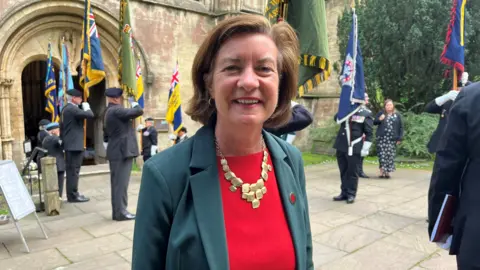
Wales’ First Minister Eluned Morgan will lead a service to mark 80 years since the end of World War Two in Europe.
The VE Day 80 service, taking place at Cardiff’s Llandaff Cathedral on Wednesday evening, will bring together about 250 people, including veterans and politicians, paying tribute to those who helped secure peace in Europe.
It is being held a day before a national service of remembrance and thanksgiving for VE Day, taking place at Westminster Abbey in London.
“It’s an honour to be going to Llandaff Cathedral to remember the exceptional courage and resilience of those who fought for our freedom,” Morgan said.
More than 15,000 Welsh soldiers died during World War Two, and the event will include a minute’s silence to remember them.
“This anniversary is about honouring ordinary Welsh people who did extraordinary things. This isn’t just another date in our history books, this was a moment that changed lives, changed Wales and our world,” Morgan said.
She said she would be meeting with some of those who took part in the war, and that it was important “we give thanks and think about those who lost their lives to give us our freedom”.
Morgan added that the 80th anniversary of VE Day was significant because “realistically this is probably the last major time that we will have those veterans with us”.
She said that many people were affected by the war, and that her father’s house was bombed, highlighting the importance of teaching “the next generation not to take peace for granted”.
At 15:00 GMT on 8 May 1945, Prime Minister Winston Churchill announced on the radio that the war in Europe had come to an end, following Nazi Germany’s surrender the day before, sparking spontaneous celebrations across the country.
“We may allow ourselves a brief period of rejoicing, but let us not forget for a moment the toil and efforts that lie ahead,” Churchill said in his announcement.
VE Day was also a moment of great sadness and reflection, as millions of people had lost their lives or loved ones in the conflict, which began in 1939.
But even after 8 May, many had to continue fighting battles in other parts of the world away from Europe where the war continued, while others were still being held as prisoners of war.
The war officially ended on 15 August 1945 – known as Victory over Japan Day or VJ Day – shortly after atomic bombs were dropped on the Japanese cities of Hiroshima and Nagasaki.
 Llandaff Cathedral
Llandaff Cathedral was directly impacted by the war, one of the most important global moments of the 20th century.
Some people found solace in attending church at a time of sadness, and the cathedral opened its doors to the local community.
Major towns and cities were subjected to nightly bombing campaigns at the hands of the German Luftwaffe during the winter of 1940 and 1941.
On 2 January 1941, Cardiff was targeted, with 165 people killed and more than 400 seriously injured.
Parachute landmines fell on Llandaff, with one becoming entangled in one of the cathedral’s spires, before falling into the churchyard and exploding.
The cathedral’s roof collapsed inwards, leading to much of the inside and its contents being destroyed.
Even when the war was over, restoration could not begin immediately as materials and labour were being reserved for other buildings that needed repair.
BBC News

Khamrah by Lattafa for Men - 3.4 oz EDP Spray
4% Off
Ghost Sweetheart Eau de Toilette | Pineapple, Jasmine and Sandalwood | Perfume for Women 50 ml
50% Off
Marc Jacobs Dot Eau De Parfum for Women, 100 ml
42% Off
Ted Baker W Eau de Toilette for Her, Fig Leaf, White Peony and Violet Top Notes, Pink Orchid and Raspberry Middle Notes, 75ml
£11.77 (£15.69 / 100 ml) (as of 16/07/2026 03:58 GMT +01:00 - More infoProduct prices and availability are accurate as of the date/time indicated and are subject to change. Any price and availability information displayed on [relevant Amazon Site(s), as applicable] at the time of purchase will apply to the purchase of this product.)
Ted Baker Woman Pink Eau de Toilette Spray Floral Green Feminine Fragrance, Opening Notes are Fresh Peach, Bergamot and Tangerine with Warm Musk, Vanilla and Vetiver Base, 100ml
11% Off
Vera Wang Princess Eau de Toilette - 30 ml

Choco Musk 50ml Eau De Parfum for men and women | Chocolate Musk by Jannat Aromas
17% Off
Christina Aguilera Signature Eau de Parfum (50ml) Floral, Fruity & Exotic Scent, Luxury Fragrance for Women
9% Off
Calvin Klein - Eau De Toilette CKIN2U - Calvin Klein Women, Ladies Perfume, Women's Perfume, Calvin Klein Perfume, Calvin Klein One - 150 ml
5% Off
Jimmy Choo Flash Eau de Parfum, 60 ml (Pack of 1)
3% Off
Fruit of the Loom Men's Heavy T Shirt, White, XL UK
28% Off
ATNKE LED Lighted Beanie Cap,USB Rechargeable Running Hat Ultra Bright 4 LED Waterproof Light Winter Warm Gifts for Men and Women/Pink
17% Off
Men's 1/4 Zip Pullover UK Sale Clearance, Fleece Sweatshirt Casual Jumper Long Sleeve T-shirt Top Stand Collar Sweater Plain Pullover Sports Leisure Workwear Quarter Zip Sweater Lightweight Jumpers
£5.88 (as of 12/11/2025 00:52 GMT +01:00 - More infoProduct prices and availability are accurate as of the date/time indicated and are subject to change. Any price and availability information displayed on [relevant Amazon Site(s), as applicable] at the time of purchase will apply to the purchase of this product.)
Crevice Cleaning Brush, Bathroom Tile Groove Gap Cleaning Brush,Premium Crevice Cleaning Tool Aluminum Support with 15° Angle Magic Brush, Thin Brush for Home Kitchen
19% Off
Wireless Earbuds, Bluetooth 5.3 Headphones in Ear with HiFi Stereo Deep Bass, 4 ENC Noise Cancelling Mic Wireless Earphones 40H Playtime, Bluetooth Earbuds Dual LED Display, IP7 Waterproof, USB-C
42% Off