[
[
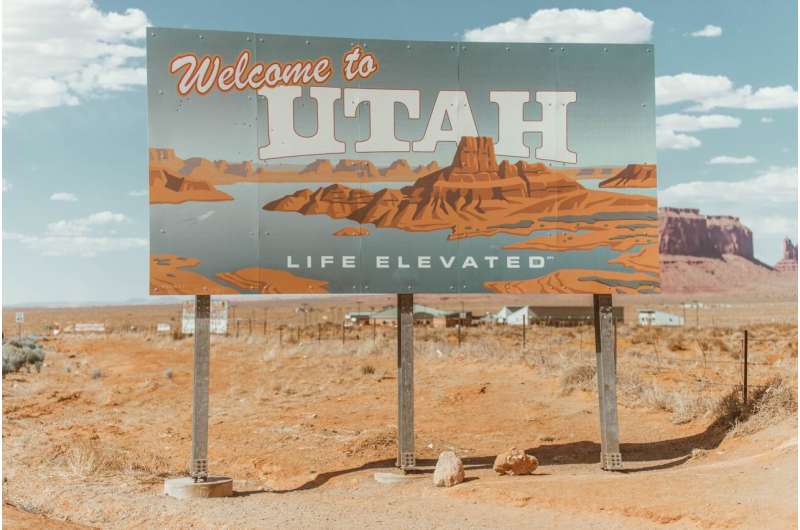
A new analysis has found that after Utah lowered the legal blood alcohol concentration (BAC) limit for driving from 0.08 to 0.05 g/dL, alcohol-related crash fatalities declined significantly more in Utah than in its six contiguous states. The findings from the study published in the American Journal of Preventive Medicine, provide timely evidence that lowering the BAC limit may save lives and point to broad public safety benefits.
Driving under the influence of alcohol remains a major risk factor for motor vehicle crashes, with recent data showing stagnating reductions or a rise in fatalities over the past decade. In 2023, 12,429 crash fatalities in the U.S. involved at least one alcohol-impaired driver. Over the period 2014–2023, alcohol-impaired driving crashes consistently accounted for 28%–32% of all annual traffic fatalities in the U.S.
International research has consistently demonstrated that lowering the legal BAC limit to 0.05 effectively reduces alcohol-related crash injuries and fatalities by 11% or more. Utah was the first U.S. state to lower the legal BAC limit for driving from 0.08 to 0.05—the law was passed in 2017 and took effect in 2018—and remains the only state that enforces the lower limit. To date, all other states maintain a 0.08 threshold.
How the study compared states
Investigators in the current study analyzed national fatal crash data from the Fatality Analysis Reporting System (FARS) and compared county-level crash fatalities in Utah with those in Arizona, Colorado, Idaho, Nevada, New Mexico and Wyoming before and after the Utah 0.05 BAC law took effect (2013–2023). For the difference-in-differences analysis, a subsample including only crashes that occurred in 2016 and 2019 was used.
The most important finding was that Utah experienced larger declines in alcohol-related fatalities, while non-alcohol-related fatalities did not show the same policy-related change.
Lead author and co-investigator Kaigang Li, Ph.D., MEd, Department of Health and Exercise Science, Colorado State University, and Colorado School of Public Health, Fort Collins, says, “This is one of the most rigorous U.S.-based evaluations of a 0.05 BAC law using county-level comparative data. At a time when alcohol-impaired driving deaths remain a persistent national public health problem, these findings provide timely evidence that lowering the BAC limit may save lives.”
The researchers were highly encouraged to see that reductions were not limited only to drivers near the 0.05 threshold but extended across higher BAC levels as well. This suggests the law may have had a broader deterrent effect on drinking and driving behavior.
Barriers to wider adoption
Despite documented lifesaving policy benefits in Utah and other nations, and strong endorsement from the National Transportation Safety Board (NTSB), political resistance, public misunderstanding and cultural norms remain barriers to adopting a national 0.05 BAC limit, the investigators point out.
Lead investigator Federico E. Vaca, MD, MPH, University of California Irvine School of Medicine, Irvine, notes, “In the last decade for which we have federally published U.S. crash data (2014–2023) available, the number of alcohol-impaired driving crash fatalities increased by 25% and the corresponding fatality rate increased by 15%.
“There is just so much opportunity here for collective prevention efforts to reduce serious injury and save more lives on our roadways. Each year of delay in enacting this policy represents a lost opportunity to prevent thousands of fatalities among drivers, passengers and all road users.”
Li concludes, “Our findings suggest that stronger impaired-driving laws can influence drivers’ behavior and reduce preventable traffic deaths. Utah’s experience shows important and additional evidence for policymakers nationwide.”
Publication details
Kaigang Li et al, TEMPORARY REMOVAL: Utah’s Move from 0.08 to 0.05 BAC Per Se Policy: Effects on Driver Crash Fatalities Compared to Contiguous States, American Journal of Preventive Medicine (2026). DOI: 10.1016/j.amepre.2026.108380
Journal information:
American Journal of Preventive Medicine
Key medical concepts
Clinical categories
Who’s behind this story?


Citation:
Utah’s stricter 0.05 BAC limit significantly reduces drunk driving fatalities, analysis finds (2026, June 16)
retrieved 16 June 2026
from https://medicalxpress.com/news/2026-06-utah-stricter-bac-limit-significantly.html
This document is subject to copyright. Apart from any fair dealing for the purpose of private study or research, no
part may be reproduced without the written permission. The content is provided for information purposes only.

Khamrah by Lattafa for Men - 3.4 oz EDP Spray
4% Off
Ghost Sweetheart Eau de Toilette | Pineapple, Jasmine and Sandalwood | Perfume for Women 50 ml
50% Off
Marc Jacobs Dot Eau De Parfum for Women, 100 ml
42% Off
Ted Baker W Eau de Toilette for Her, Fig Leaf, White Peony and Violet Top Notes, Pink Orchid and Raspberry Middle Notes, 75ml
£11.77 (£15.69 / 100 ml) (as of 06/09/2026 04:59 GMT +01:00 - More infoProduct prices and availability are accurate as of the date/time indicated and are subject to change. Any price and availability information displayed on [relevant Amazon Site(s), as applicable] at the time of purchase will apply to the purchase of this product.)
Ted Baker Woman Pink Eau de Toilette Spray Floral Green Feminine Fragrance, Opening Notes are Fresh Peach, Bergamot and Tangerine with Warm Musk, Vanilla and Vetiver Base, 100ml
11% Off
Vera Wang Princess Eau de Toilette - 30 ml

Choco Musk 50ml Eau De Parfum for men and women | Chocolate Musk by Jannat Aromas
17% Off
Christina Aguilera Signature Eau de Parfum (50ml) Floral, Fruity & Exotic Scent, Luxury Fragrance for Women
9% Off
Calvin Klein - Eau De Toilette CKIN2U - Calvin Klein Women, Ladies Perfume, Women's Perfume, Calvin Klein Perfume, Calvin Klein One - 150 ml
5% Off
Jimmy Choo Flash Eau de Parfum, 60 ml (Pack of 1)
3% Off
Fruit of the Loom Men's Heavy T Shirt, White, XL UK
28% Off
ATNKE LED Lighted Beanie Cap,USB Rechargeable Running Hat Ultra Bright 4 LED Waterproof Light Winter Warm Gifts for Men and Women/Pink
17% Off
Men's 1/4 Zip Pullover UK Sale Clearance, Fleece Sweatshirt Casual Jumper Long Sleeve T-shirt Top Stand Collar Sweater Plain Pullover Sports Leisure Workwear Quarter Zip Sweater Lightweight Jumpers
£5.88 (as of 12/11/2025 00:52 GMT +01:00 - More infoProduct prices and availability are accurate as of the date/time indicated and are subject to change. Any price and availability information displayed on [relevant Amazon Site(s), as applicable] at the time of purchase will apply to the purchase of this product.)
Crevice Cleaning Brush, Bathroom Tile Groove Gap Cleaning Brush,Premium Crevice Cleaning Tool Aluminum Support with 15° Angle Magic Brush, Thin Brush for Home Kitchen
19% Off
Wireless Earbuds, Bluetooth 5.3 Headphones in Ear with HiFi Stereo Deep Bass, 4 ENC Noise Cancelling Mic Wireless Earphones 40H Playtime, Bluetooth Earbuds Dual LED Display, IP7 Waterproof, USB-C
42% Off