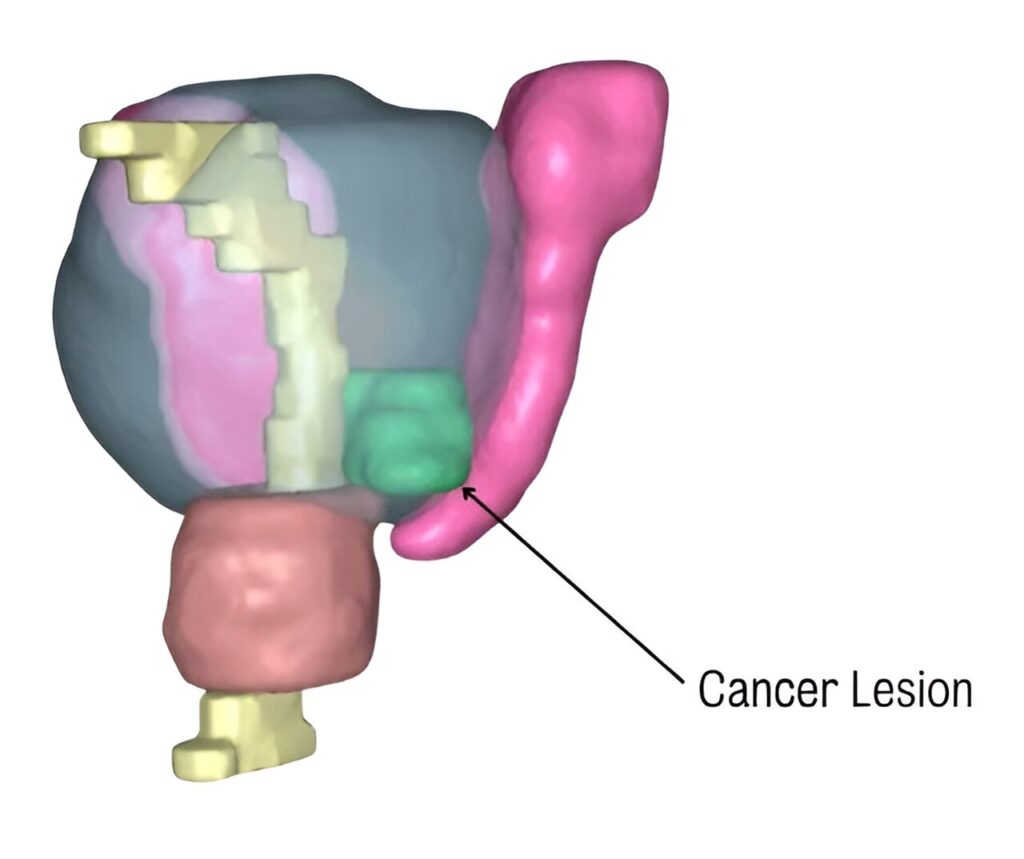
Prostate cancer is often treated by a robotic keyhole surgery called a robotic-assisted radical prostatectomy. Accompanying this surgery is an MRI scan that tells the surgeon where the cancer is within the prostate.
Currently, surgeons are expected to mentally reconstruct a patient’s 3D anatomy from the 2D imaging presented to them. This reconstruction becomes less challenging with experience, although it remains an issue in difficult cases and for junior surgeons.
Researchers from King’s College London, Guy’s and St Thomas’ NHS Foundation Trust, Innersight Labs, Nvidia, and San Raffaele Hospital, have investigated current evidence and trends on the effects 3D models have in the reduction of complications resulting from surgery.
The results suggest that cancer lesion outcomes improve, but there is not enough evidence to conclude there is an improvement of functional outcomes such as urinary incontinence and erectile dysfunction. The findings are published in the Journal of Robotic Surgery.
“Our research has identified that the use of 3D-printed technology is most effective during a robotic radical prostatectomy. It allows surgeons to operate more precisely and successfully remove the prostate cancer while reducing damage to the sphincter muscle and nerve bundles. The operation is thus personalized to the individual patient while reducing the complications of surgery,” says Professor Prokar Dasguptar OBE.
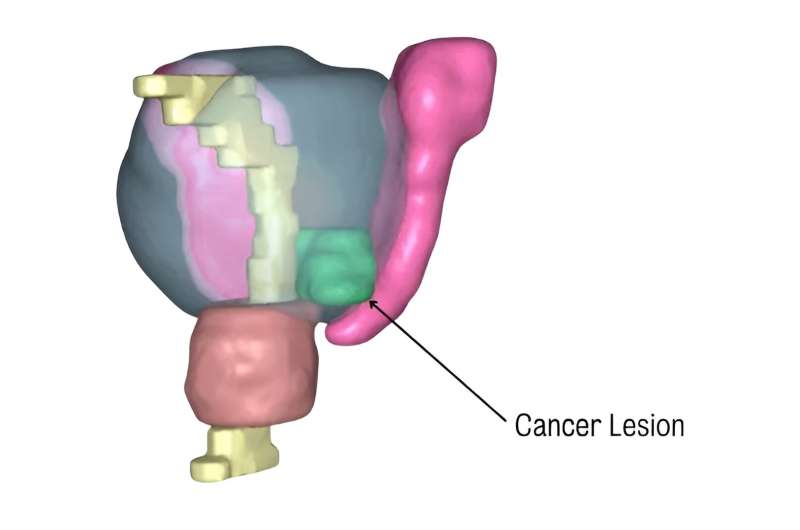
Alongside these findings, researchers are using artificial intelligence to map the prostate with the cancer on MRI scans, speeding up the creation of 3D models in future studies. The results are used to 3D print the prostate and create a 3D image on a computer screen for surgeons to refer to during the robotic procedure.
“We are currently running a feasibility study at Guy’s Hospital that is allowing us to introduce state-of-the-art technology for the automated segmentation of prostate anatomy using artificial intelligence and the automated generation of 3D printed/virtual patient-specific models, while designing more sophisticated algorithms that could further reduce surgical complications,” says Dr. Alejandro Granados, principal investigator and lecturer in surgical data science.
Future studies are expected to investigate the effects of 3D models on surgical outcomes across different levels of surgeons’ experience.
More information:
Kenaan Sarhan et al, Reduction of surgical complications via 3D models during robotic assisted radical prostatectomy: review of current evidence and meta-analysis, Journal of Robotic Surgery (2024). DOI: 10.1007/s11701-024-02041-2
Citation:
Using 3D modeling to improve the surgical outcomes for prostate cancer (2024, August 23)
retrieved 25 August 2024
from https://medicalxpress.com/news/2024-08-3d-surgical-outcomes-prostate-cancer.html
This document is subject to copyright. Apart from any fair dealing for the purpose of private study or research, no
part may be reproduced without the written permission. The content is provided for information purposes only.

Khamrah by Lattafa for Men - 3.4 oz EDP Spray
4% Off
Ghost Sweetheart Eau de Toilette | Pineapple, Jasmine and Sandalwood | Perfume for Women 50 ml
50% Off
Marc Jacobs Dot Eau De Parfum for Women, 100 ml
42% Off
Ted Baker W Eau de Toilette for Her, Fig Leaf, White Peony and Violet Top Notes, Pink Orchid and Raspberry Middle Notes, 75ml
£11.77 (£15.69 / 100 ml) (as of 16/07/2026 03:58 GMT +01:00 - More infoProduct prices and availability are accurate as of the date/time indicated and are subject to change. Any price and availability information displayed on [relevant Amazon Site(s), as applicable] at the time of purchase will apply to the purchase of this product.)
Ted Baker Woman Pink Eau de Toilette Spray Floral Green Feminine Fragrance, Opening Notes are Fresh Peach, Bergamot and Tangerine with Warm Musk, Vanilla and Vetiver Base, 100ml
11% Off
Vera Wang Princess Eau de Toilette - 30 ml

Choco Musk 50ml Eau De Parfum for men and women | Chocolate Musk by Jannat Aromas
17% Off
Christina Aguilera Signature Eau de Parfum (50ml) Floral, Fruity & Exotic Scent, Luxury Fragrance for Women
9% Off
Calvin Klein - Eau De Toilette CKIN2U - Calvin Klein Women, Ladies Perfume, Women's Perfume, Calvin Klein Perfume, Calvin Klein One - 150 ml
5% Off
Jimmy Choo Flash Eau de Parfum, 60 ml (Pack of 1)
3% Off
Fruit of the Loom Men's Heavy T Shirt, White, XL UK
28% Off
ATNKE LED Lighted Beanie Cap,USB Rechargeable Running Hat Ultra Bright 4 LED Waterproof Light Winter Warm Gifts for Men and Women/Pink
17% Off
Men's 1/4 Zip Pullover UK Sale Clearance, Fleece Sweatshirt Casual Jumper Long Sleeve T-shirt Top Stand Collar Sweater Plain Pullover Sports Leisure Workwear Quarter Zip Sweater Lightweight Jumpers
£5.88 (as of 12/11/2025 00:52 GMT +01:00 - More infoProduct prices and availability are accurate as of the date/time indicated and are subject to change. Any price and availability information displayed on [relevant Amazon Site(s), as applicable] at the time of purchase will apply to the purchase of this product.)
Crevice Cleaning Brush, Bathroom Tile Groove Gap Cleaning Brush,Premium Crevice Cleaning Tool Aluminum Support with 15° Angle Magic Brush, Thin Brush for Home Kitchen
19% Off
Wireless Earbuds, Bluetooth 5.3 Headphones in Ear with HiFi Stereo Deep Bass, 4 ENC Noise Cancelling Mic Wireless Earphones 40H Playtime, Bluetooth Earbuds Dual LED Display, IP7 Waterproof, USB-C
42% Off