[
[
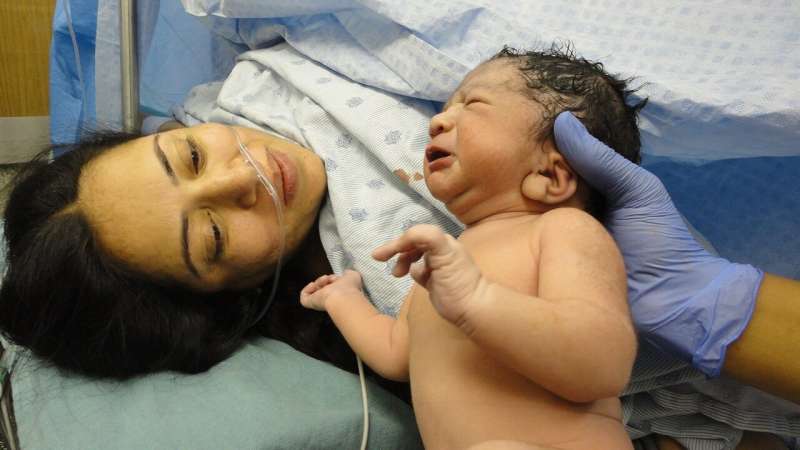
Maternal deaths rise by around 11% in countries that rely on US aid following a switch from a Democratic to a Republican administration, suggest the findings of a data analysis published in the open access journal BMJ Global Health. This is equivalent to around 45 additional deaths for every 100,000 live births, eroding a fifth of the decline in global maternal deaths that has been achieved since 1985, conclude the researchers.
How US policy shapes global aid
US foreign aid for family planning and reproductive health services has been heavily influenced by changes in the implementation of the Mexico City Policy—first introduced as the US Policy on Population Assistance under the Reagan administration in 1984, and often referred to as the Global Gag Rule (GGR), explain the researchers.
The policy prohibits disbursal of US aid for family planning to overseas non-governmental organizations that provide, make referrals to, or promote abortion-related services or information, even when these services are financed through non-US funds.
The policy was rebranded as the Protecting Life in Global Health Assistance policy and expanded to apply to all US global health assistance during President Trump’s first term of office in 2017.
Study design and data sources
To estimate the impact of shifts in funding on maternal deaths, the researchers used data from the World Bank’s World Development Indicators for every year between 1985 and 2023 to measure the maternal mortality ratio for 150 countries.
This is defined as the number of 15–49 year-old women who die from pregnancy-related causes while pregnant or within 42 days of a termination for every 100,000 live births.
The data were also used to capture the intermediate effects of the GGR on contraception and the percentage of births attended by skilled health professionals.
The GGR was activated during the Republican administrations of 1985–92, 2001–08, and 2017–20, and deactivated during the Democratic administrations of 1993–2000, 2009–16, and 2021–24.
Differences in aid flows by party
Analysis of the data between 1985 and 2024 indicates that aid for family planning is, on average, 48% higher under Democratic than under Republican administrations.
In those countries most reliant on financial assistance aid, receipts plummet by around 34% per head of the population during Republican administrations. The corresponding falls are about 10% in those countries less reliant on this aid.
While heavily aid-reliant countries start from substantially higher levels and remain worse off throughout, declines in maternal deaths have been large over the past four decades across the board, the estimates indicate.
The gap in the average maternal mortality ratio between the most and least reliant countries ranges from roughly 445 additional deaths/100,000 live births to around 120/100,000 live births. The gap narrows most noticeably when the GGR isn’t in force.
Impact on maternal deaths worldwide
For those countries with above average reliance on US family planning aid, a Republican presidency is associated with a 10.5% increase in maternal deaths, equivalent to approximately 45 lives lost for every 100,000 live births.
“The effect is consistently observed across regions including Africa, Latin America, and Asia, indicating that the detrimental impact of the policy is not confined to a single geographical context,” point out the researchers.
“Although Africa experiences the largest impact in absolute terms, the percentage impact is greatest in Latin America (16%), followed by Asia (15%), and Africa (7%),” they add.
A US$1 per head higher reliance on US aid for reproductive and maternal health is associated with 25 additional maternal deaths/100,000 live births under the GGR, estimate the researchers.
“The magnitude of this effect suggests that the GGR erodes a meaningful share of the progress made in reducing maternal mortality over recent decades,” they suggest.
Effects on contraception and birth care
What’s more, the GGR also decreases the proportion of skilled birth attendance by around 1%, and reduces contraceptive prevalence by around 2%, both of which likely contribute to the rise in maternal deaths, say the researchers.
This study is based on estimates, and the researchers acknowledge various limitations to their analysis, including that maternal deaths in the World Development Indicators may be under-reported or misclassified, particularly in low and middle income countries with less well developed reporting infrastructures.
But they point out, “An estimated 11% increase in maternal deaths corresponds to roughly one-fifth of the global decline in maternal mortality achieved between 1985 and 2024.”
They add, “Maternal mortality represents only the visible portion of a much larger set of reproductive health risks, including hemorrhage, sepsis, reproductive tract infections, uterine perforation, cervical tears, chronic pain, infertility and elevated risks in subsequent pregnancies.”
Policy shifts and future vulnerability
During Trump’s second term, substantial cuts have been made to foreign aid and it’s estimated that over 90% of all USAID awards for family planning and reproductive health programs have been terminated, highlight the researchers.
The U.S. is not the only nation, however, to have cut overseas development aid, they point out, concluding, “These results underscore the vulnerability of health systems to abrupt shifts in donor policy and highlight the importance of stable international support for reproductive health services.”
Publication details
US Presidential Party switches are mirrored in global maternal mortality, BMJ Global Health (2026). DOI: 10.1136/bmjgh-2025-020223
Journal information:
BMJ Global Health
Key medical concepts
Citation:
US foreign aid swings may be costing lives abroad, data analysis suggests (2026, March 24)
retrieved 24 March 2026
from https://medicalxpress.com/news/2026-03-foreign-aid-analysis.html
This document is subject to copyright. Apart from any fair dealing for the purpose of private study or research, no
part may be reproduced without the written permission. The content is provided for information purposes only.

Khamrah by Lattafa for Men - 3.4 oz EDP Spray
4% Off
Ghost Sweetheart Eau de Toilette | Pineapple, Jasmine and Sandalwood | Perfume for Women 50 ml
50% Off
Marc Jacobs Dot Eau De Parfum for Women, 100 ml
42% Off
Ted Baker W Eau de Toilette for Her, Fig Leaf, White Peony and Violet Top Notes, Pink Orchid and Raspberry Middle Notes, 75ml
£11.77 (£15.69 / 100 ml) (as of 20/06/2026 03:33 GMT +01:00 - More infoProduct prices and availability are accurate as of the date/time indicated and are subject to change. Any price and availability information displayed on [relevant Amazon Site(s), as applicable] at the time of purchase will apply to the purchase of this product.)
Ted Baker Woman Pink Eau de Toilette Spray Floral Green Feminine Fragrance, Opening Notes are Fresh Peach, Bergamot and Tangerine with Warm Musk, Vanilla and Vetiver Base, 100ml
11% Off
Vera Wang Princess Eau de Toilette - 30 ml

Choco Musk 50ml Eau De Parfum for men and women | Chocolate Musk by Jannat Aromas
17% Off
Christina Aguilera Signature Eau de Parfum (50ml) Floral, Fruity & Exotic Scent, Luxury Fragrance for Women
9% Off
Calvin Klein - Eau De Toilette CKIN2U - Calvin Klein Women, Ladies Perfume, Women's Perfume, Calvin Klein Perfume, Calvin Klein One - 150 ml
5% Off
Jimmy Choo Flash Eau de Parfum, 60 ml (Pack of 1)
3% Off
Fruit of the Loom Men's Heavy T Shirt, White, XL UK
28% Off
ATNKE LED Lighted Beanie Cap,USB Rechargeable Running Hat Ultra Bright 4 LED Waterproof Light Winter Warm Gifts for Men and Women/Pink
17% Off
Men's 1/4 Zip Pullover UK Sale Clearance, Fleece Sweatshirt Casual Jumper Long Sleeve T-shirt Top Stand Collar Sweater Plain Pullover Sports Leisure Workwear Quarter Zip Sweater Lightweight Jumpers
£5.88 (as of 12/11/2025 00:52 GMT +01:00 - More infoProduct prices and availability are accurate as of the date/time indicated and are subject to change. Any price and availability information displayed on [relevant Amazon Site(s), as applicable] at the time of purchase will apply to the purchase of this product.)
Crevice Cleaning Brush, Bathroom Tile Groove Gap Cleaning Brush,Premium Crevice Cleaning Tool Aluminum Support with 15° Angle Magic Brush, Thin Brush for Home Kitchen
19% Off
Wireless Earbuds, Bluetooth 5.3 Headphones in Ear with HiFi Stereo Deep Bass, 4 ENC Noise Cancelling Mic Wireless Earphones 40H Playtime, Bluetooth Earbuds Dual LED Display, IP7 Waterproof, USB-C
42% Off