Annually, over 100,000 people in the Netherlands undergo a colonoscopy, an endoscopy of the colon. During this procedure, a doctor uses a camera to search for colorectal cancer and polyps, protrusions from the colon wall that can be precursors to colorectal cancer. Previous studies have shown that the more polyps a doctor finds and removes, the lower the likelihood of developing colorectal cancer later on.
Now, it appears that AI can significantly aid in this process. A doctor finds nearly forty percent more polyps when a smart computer assists in examining the camera images in the colon. “A doctor can miss polyps because they are just briefly in the image, or the attention is focused on another spot,” says medical researcher Michiel Maas. “But a computer examines every pixel in the image and is alert every millisecond. That provides significant added value.”
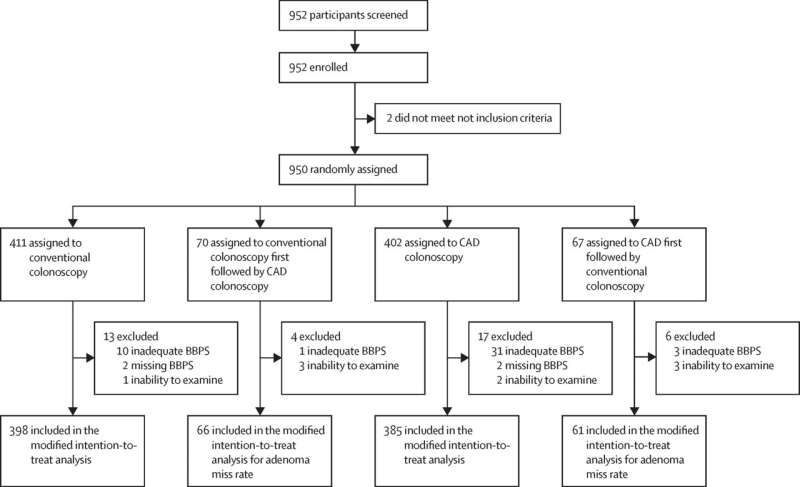
This added value was demonstrated in a study involving almost 1,000 patients conducted in 10 hospitals in different countries. Participants underwent a colonoscopy because they qualified for colorectal cancer screening or had previous polyps. They received either the standard colon examination or the examination where the computer live-monitored. The computer placed a purple square in the image of an area that looked suspicious, drawing the doctor’s attention for closer examination.
Although the computer helped detect and remove more polyps, the colonoscopy with digital assistance did not take much time. Additionally, the new procedure did not result in a higher percentage of false positives, i.e., tissue that was removed but later found non-threatening during analysis at the Pathology department. The additionally removed polyps were just as likely to be of a dangerous type as the polyps removed during a standard examination.
The smart computer was developed by the company Magentiq Eye LTD. They trained the software to recognize abnormalities using thousands of photos and videos of colonoscopies from around the world. The system is now commercially available but is still limited in use. Maas says, “This system costs money, and reimbursement for medical examinations with AI assistance is still in the development phase.”
In subsequent studies, researchers will investigate whether the computer can also determine the danger level of a polyp based on its visual characteristics and size. Professor and Gastroenterologist Peter Siersema says, “If we can determine that during the examination, we can leave harmless polyps in place. You then don’t need to analyze them in Pathology. Ultimately, this reduces the risk of complications and costs.”
The paper is published in The Lancet Digital Health journal.
More information:
Michiel H J Maas et al, A computer-aided polyp detection system in screening and surveillance colonoscopy: an international, multicentre, randomised, tandem trial, The Lancet Digital Health (2024). DOI: 10.1016/S2589-7500(23)00242-X
Citation:
Study finds AI-assisted polyp detection system significantly improves colonoscopy (2024, February 22)
retrieved 23 February 2024
from https://medicalxpress.com/news/2024-02-ai-polyp-significantly-colonoscopy.html
This document is subject to copyright. Apart from any fair dealing for the purpose of private study or research, no
part may be reproduced without the written permission. The content is provided for information purposes only.

Khamrah by Lattafa for Men - 3.4 oz EDP Spray
4% Off
Ghost Sweetheart Eau de Toilette | Pineapple, Jasmine and Sandalwood | Perfume for Women 50 ml
50% Off
Marc Jacobs Dot Eau De Parfum for Women, 100 ml
42% Off
Ted Baker W Eau de Toilette for Her, Fig Leaf, White Peony and Violet Top Notes, Pink Orchid and Raspberry Middle Notes, 75ml
£11.77 (£15.69 / 100 ml) (as of 23/08/2026 04:39 GMT +01:00 - More infoProduct prices and availability are accurate as of the date/time indicated and are subject to change. Any price and availability information displayed on [relevant Amazon Site(s), as applicable] at the time of purchase will apply to the purchase of this product.)
Ted Baker Woman Pink Eau de Toilette Spray Floral Green Feminine Fragrance, Opening Notes are Fresh Peach, Bergamot and Tangerine with Warm Musk, Vanilla and Vetiver Base, 100ml
11% Off
Vera Wang Princess Eau de Toilette - 30 ml

Choco Musk 50ml Eau De Parfum for men and women | Chocolate Musk by Jannat Aromas
17% Off
Christina Aguilera Signature Eau de Parfum (50ml) Floral, Fruity & Exotic Scent, Luxury Fragrance for Women
9% Off
Calvin Klein - Eau De Toilette CKIN2U - Calvin Klein Women, Ladies Perfume, Women's Perfume, Calvin Klein Perfume, Calvin Klein One - 150 ml
5% Off
Jimmy Choo Flash Eau de Parfum, 60 ml (Pack of 1)
3% Off
Fruit of the Loom Men's Heavy T Shirt, White, XL UK
28% Off
ATNKE LED Lighted Beanie Cap,USB Rechargeable Running Hat Ultra Bright 4 LED Waterproof Light Winter Warm Gifts for Men and Women/Pink
17% Off
Men's 1/4 Zip Pullover UK Sale Clearance, Fleece Sweatshirt Casual Jumper Long Sleeve T-shirt Top Stand Collar Sweater Plain Pullover Sports Leisure Workwear Quarter Zip Sweater Lightweight Jumpers
£5.88 (as of 12/11/2025 00:52 GMT +01:00 - More infoProduct prices and availability are accurate as of the date/time indicated and are subject to change. Any price and availability information displayed on [relevant Amazon Site(s), as applicable] at the time of purchase will apply to the purchase of this product.)
Crevice Cleaning Brush, Bathroom Tile Groove Gap Cleaning Brush,Premium Crevice Cleaning Tool Aluminum Support with 15° Angle Magic Brush, Thin Brush for Home Kitchen
19% Off
Wireless Earbuds, Bluetooth 5.3 Headphones in Ear with HiFi Stereo Deep Bass, 4 ENC Noise Cancelling Mic Wireless Earphones 40H Playtime, Bluetooth Earbuds Dual LED Display, IP7 Waterproof, USB-C
42% Off