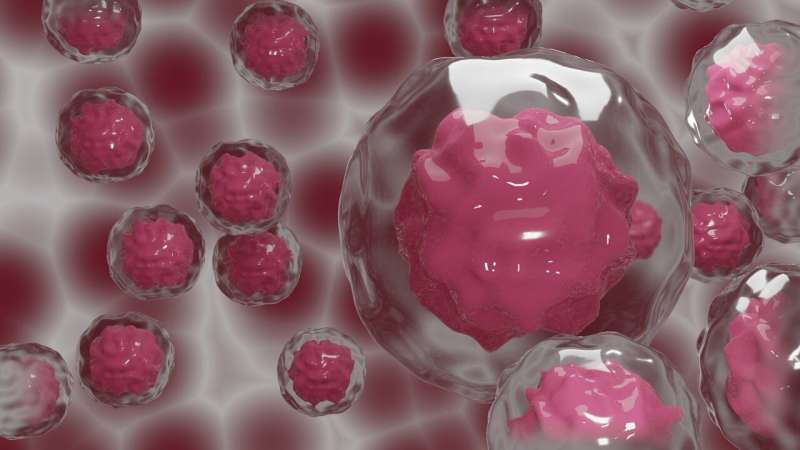
Researchers from University of California San Diego have found that two of the most frequently administered stem cell therapies, which are often used interchangeably, actually contain completely different types of cells. The results challenge the current “one-cell-cures-all” paradigm in orthopedic stem cell therapeutics and highlight the need for more informed and rigorous characterization of injectable stem cell therapies before they are marketed for use in patients.
The researchers analyzed cell populations of autologous bone marrow aspirate concentrate (BMAC) and adipose-derived stromal vascular fraction (ADSVF) collected from the same subjects. The study was published July 12, 2024 in Science Advances.
These two therapies have many similarities: both are injectable therapies derived from a patient’s own cells—bone marrow in BMAC and adipose tissue (fat) in ADSVF—and they are both thought to contain mesenchymal stem/stromal cells (MSCs), cells that can differentiate into muscle, bone and other connective tissues.
Because of their similarities, the two therapies are frequently marketed as interchangeable “stem cell therapies” and are used to treat a range of musculoskeletal and skin conditions, particularly in professional athletes. However, little research to date has attempted to characterize the composition and underlying biology of these two therapies.
This lack of information has prevented rigorous clinical investigations into the ideal dosages for these therapies and, according to the researchers, has encouraged misinformation in the marketing for the treatments within the $11.9 billion-dollar stem cell industry.
To fill this gap, the researchers analyzed 62 BMAC cell populations and 57 ADSVF populations to create a cellular atlas that details what types of cells are present in each therapy, what genes are active in these cells, and what proteins are present.
Their atlas revealed that MSC concentrations in BMAC formulations were extremely low, and that overall, there were no comparable “stem cell” types in both therapies. In fact, the two treatments had very different compositions; BMAC was composed mainly of red and white blood cells, and ADSVF was composed mainly of connective tissue cells.
In addition, many proteins associated with regenerative function were either absent or found in extremely low concentrations in both therapies, calling their mechanisms of action and overall efficacy into question.
In addition to providing a rich resource for researchers, the findings suggest that the active ingredients in biologic therapies like BMAC and ADSVF need to be defined more thoroughly.
They also suggest that the field as a whole should move toward more standardized cell therapies, in which clinically necessary doses of the cell and protein concentrations have been carefully quantified.
More information:
Severin Ruoss et al, Comparative single cell transcriptional and proteomic atlas of clinical-grade injectable mesenchymal source tissues, Science Advances (2024). DOI: 10.1126/sciadv.adn2831. www.science.org/doi/10.1126/sciadv.adn2831
Citation:
All stem cell therapies are not created equally: Some don’t have many stem cells at all, researchers find (2024, July 12)
retrieved 13 July 2024
from https://medicalxpress.com/news/2024-07-stem-cell-therapies-equally-dont.html
This document is subject to copyright. Apart from any fair dealing for the purpose of private study or research, no
part may be reproduced without the written permission. The content is provided for information purposes only.

Khamrah by Lattafa for Men - 3.4 oz EDP Spray
4% Off
Ghost Sweetheart Eau de Toilette | Pineapple, Jasmine and Sandalwood | Perfume for Women 50 ml
50% Off
Marc Jacobs Dot Eau De Parfum for Women, 100 ml
42% Off
Ted Baker W Eau de Toilette for Her, Fig Leaf, White Peony and Violet Top Notes, Pink Orchid and Raspberry Middle Notes, 75ml
£11.77 (£15.69 / 100 ml) (as of 13/05/2026 03:13 GMT +01:00 - More infoProduct prices and availability are accurate as of the date/time indicated and are subject to change. Any price and availability information displayed on [relevant Amazon Site(s), as applicable] at the time of purchase will apply to the purchase of this product.)
Ted Baker Woman Pink Eau de Toilette Spray Floral Green Feminine Fragrance, Opening Notes are Fresh Peach, Bergamot and Tangerine with Warm Musk, Vanilla and Vetiver Base, 100ml
11% Off
Vera Wang Princess Eau de Toilette - 30 ml

Choco Musk 50ml Eau De Parfum for men and women | Chocolate Musk by Jannat Aromas
17% Off
Christina Aguilera Signature Eau de Parfum (50ml) Floral, Fruity & Exotic Scent, Luxury Fragrance for Women
9% Off
Calvin Klein - Eau De Toilette CKIN2U - Calvin Klein Women, Ladies Perfume, Women's Perfume, Calvin Klein Perfume, Calvin Klein One - 150 ml
5% Off
Jimmy Choo Flash Eau de Parfum, 60 ml (Pack of 1)
3% Off
Fruit of the Loom Men's Heavy T Shirt, White, XL UK
28% Off
ATNKE LED Lighted Beanie Cap,USB Rechargeable Running Hat Ultra Bright 4 LED Waterproof Light Winter Warm Gifts for Men and Women/Pink
17% Off
Men's 1/4 Zip Pullover UK Sale Clearance, Fleece Sweatshirt Casual Jumper Long Sleeve T-shirt Top Stand Collar Sweater Plain Pullover Sports Leisure Workwear Quarter Zip Sweater Lightweight Jumpers
£5.88 (as of 12/11/2025 00:52 GMT +01:00 - More infoProduct prices and availability are accurate as of the date/time indicated and are subject to change. Any price and availability information displayed on [relevant Amazon Site(s), as applicable] at the time of purchase will apply to the purchase of this product.)
Crevice Cleaning Brush, Bathroom Tile Groove Gap Cleaning Brush,Premium Crevice Cleaning Tool Aluminum Support with 15° Angle Magic Brush, Thin Brush for Home Kitchen
19% Off
Wireless Earbuds, Bluetooth 5.3 Headphones in Ear with HiFi Stereo Deep Bass, 4 ENC Noise Cancelling Mic Wireless Earphones 40H Playtime, Bluetooth Earbuds Dual LED Display, IP7 Waterproof, USB-C
42% Off