
 [
[

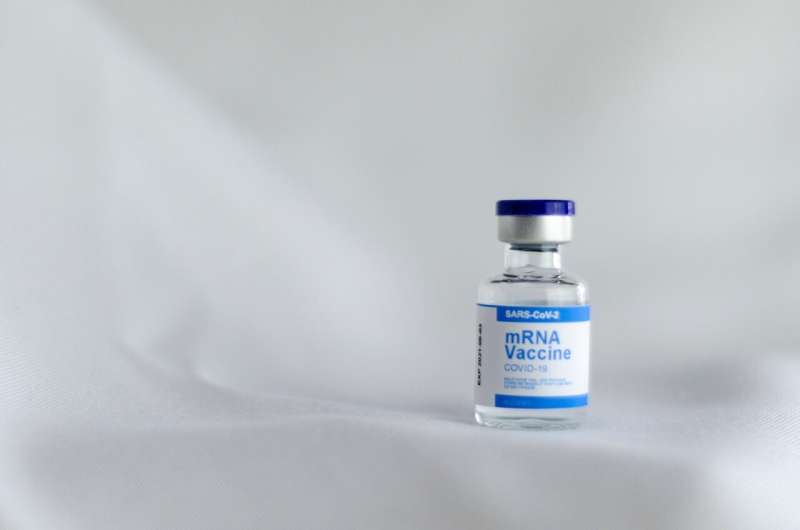
Scientists at Queen Mary University of London have found a way to overcome cells’ natural defenses against self-amplifying mRNA vaccines, allowing the cells to produce significantly more of the target protein. The findings are published in Nature Communications.
mRNA-based vaccines were central to getting us out of the COVID-19 pandemic. Unlike conventional vaccines, which use a low dose of a virus to build immunity, RNA vaccines tell your cells to produce a protein that teaches your body how to fight the virus.
Since then, scientists have been working on self-amplifying mRNA (saRNA) vaccines, which replicate within host cells. These next-generation vaccines could provide longer-lasting protection at lower doses, meaning they could be rolled out more widely and faster than previously imaginable.
The benefits go beyond pandemic protection. saRNA vaccines hold great promise as a novel strategy in gene therapy, cancer immunotherapy and protein replacement therapies.
The barrier to saRNA vaccines lies within the technology itself.
As saRNA replicates, it generates double-stranded RNA (dsRNA), which triggers cells’ antiviral defenses. This makes the saRNA less stable, less able to replicate and less able to instruct cells to produce the protein that trains the immune system. It’s a major flaw limiting how effective an saRNA vaccine can be.
Dr. Pierre Maillard and Dr. Raul Yusef Sanchez David, scientists at Queen Mary University of London’s Blizard Institute, found that adding NoV B2 helps overcome this problem. The protein is known to suppress RNA interference, one of the cell’s natural defenses against this double-stranded RNA.
By reducing the extent to which cells restrict the saRNA, NoV B2 allows it to produce far more of the intended protein in both stem cells and regular cells. Crucially, it does so without undermining saRNA’s ability to stimulate the immune system.
Maillard, senior lecturer in antiviral immunity at Queen Mary University of London, said, “Our findings identify a strategy to overcome a fundamental barrier limiting self-amplifying vaccines. If this translates successfully in vivo, it could open new possibilities for vaccine design as well as for gene therapies and cancer treatment.”
A new generation of vaccines
The team is now working with Queen Mary Innovation, the university’s technology transfer company, to find a commercial partner to help develop the technique for clinical use.
By boosting how much protein saRNA can produce in the lab, the innovation opens new possibilities in gene therapy, cancer immunotherapy and protein replacement therapies. If translated successfully, this technology could make gene therapy safer and more affordable, make cancer vaccines more potent, and turn protein replacement therapy from a process of repeated infusions into one in which the patient’s body generates its own medicine.
The advance comes amid growing debate over funding for mRNA-based research following a U.S. announcement of $500 million in cuts to mRNA vaccine research, a decision that sparked widespread concern in the global scientific and public health communities.
Maillard and Sanchez David’s discoveries at Queen Mary demonstrate the continued strength of the United Kingdom as a place to invest in research and innovation.
Publication details
Tuning intracellular immunity by Nodamura virus B2 protein enhances self-1 amplifying RNA activity, Nature Communications (2026). DOI: 10.1038/s41467-026-77816-2
Journal information:
Nature Communications
Key medical concepts
Clinical categories


Citation:
Scientists overcome key barrier to self-amplifying vaccines (2026, September 28)
retrieved 28 September 2026
from https://medicalxpress.com/news/2026-09-scientists-key-barrier-amplifying-vaccines.html
This document is subject to copyright. Apart from any fair dealing for the purpose of private study or research, no
part may be reproduced without the written permission. The content is provided for information purposes only.

Khamrah by Lattafa for Men - 3.4 oz EDP Spray
4% Off
Ghost Sweetheart Eau de Toilette | Pineapple, Jasmine and Sandalwood | Perfume for Women 50 ml
50% Off
Marc Jacobs Dot Eau De Parfum for Women, 100 ml
42% Off
Ted Baker W Eau de Toilette for Her, Fig Leaf, White Peony and Violet Top Notes, Pink Orchid and Raspberry Middle Notes, 75ml
£11.77 (£15.69 / 100 ml) (as of 28/09/2026 05:08 GMT +01:00 - More infoProduct prices and availability are accurate as of the date/time indicated and are subject to change. Any price and availability information displayed on [relevant Amazon Site(s), as applicable] at the time of purchase will apply to the purchase of this product.)
Ted Baker Woman Pink Eau de Toilette Spray Floral Green Feminine Fragrance, Opening Notes are Fresh Peach, Bergamot and Tangerine with Warm Musk, Vanilla and Vetiver Base, 100ml
11% Off
Vera Wang Princess Eau de Toilette - 30 ml

Choco Musk 50ml Eau De Parfum for men and women | Chocolate Musk by Jannat Aromas
17% Off
Christina Aguilera Signature Eau de Parfum (50ml) Floral, Fruity & Exotic Scent, Luxury Fragrance for Women
9% Off
Calvin Klein - Eau De Toilette CKIN2U - Calvin Klein Women, Ladies Perfume, Women's Perfume, Calvin Klein Perfume, Calvin Klein One - 150 ml
5% Off
Jimmy Choo Flash Eau de Parfum, 60 ml (Pack of 1)
3% Off
Fruit of the Loom Men's Heavy T Shirt, White, XL UK
28% Off
ATNKE LED Lighted Beanie Cap,USB Rechargeable Running Hat Ultra Bright 4 LED Waterproof Light Winter Warm Gifts for Men and Women/Pink
17% Off
Men's 1/4 Zip Pullover UK Sale Clearance, Fleece Sweatshirt Casual Jumper Long Sleeve T-shirt Top Stand Collar Sweater Plain Pullover Sports Leisure Workwear Quarter Zip Sweater Lightweight Jumpers
£5.88 (as of 12/11/2025 00:52 GMT +01:00 - More infoProduct prices and availability are accurate as of the date/time indicated and are subject to change. Any price and availability information displayed on [relevant Amazon Site(s), as applicable] at the time of purchase will apply to the purchase of this product.)
Crevice Cleaning Brush, Bathroom Tile Groove Gap Cleaning Brush,Premium Crevice Cleaning Tool Aluminum Support with 15° Angle Magic Brush, Thin Brush for Home Kitchen
19% Off
Wireless Earbuds, Bluetooth 5.3 Headphones in Ear with HiFi Stereo Deep Bass, 4 ENC Noise Cancelling Mic Wireless Earphones 40H Playtime, Bluetooth Earbuds Dual LED Display, IP7 Waterproof, USB-C
42% Off