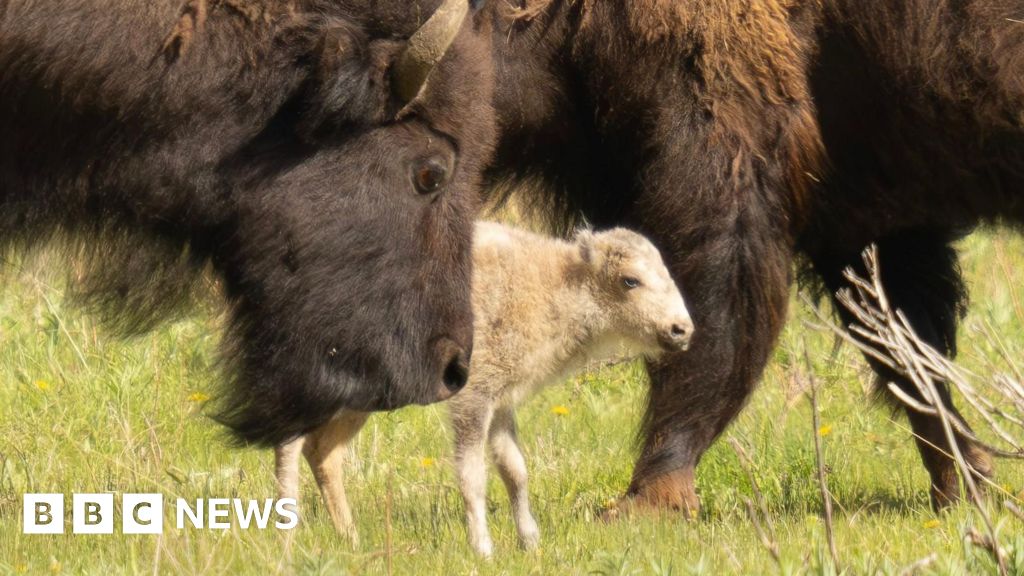
The Yellowstone bison make up the only wild herd in the US and are among the last genetically pure bison in existence.
But Yellowstone National Park regularly reaches the legally-permitted capacity of 5,000.
Tribes who support the species’ growth have stepped in, believing the species’ health is tied to their own history. Since 2019, the US National Park Service has transferred 414 healthy bison from Yellowstone to 26 tribes in 12 states through the Bison Conservation Transfer Program.
Native people also have their own distribution system to share buffalo independent of the park’s efforts. Since 1992, the Intertribal Buffalo Council – a collective of 83 tribes working to “restore the cultural, spiritual and historic relationships” with the animals – has sent 25,000 bison to 65 herds on tribal lands in 22 states.
“People don’t understand or realise that what happened to the buffalo similarly happened to native people, and that history is intertwined,” says Jason Baldes, who serves as vice-president of the council and is a member of the Eastern Shoshone Tribe.
The returning of buffalo to tribal people marks a major change in federal policy for a country whose soldiers had once been ordered to kill them all to deprive tribes of food and supplies.
And officials are not only returning animals, they’re considering taking on more themselves: the National Park Service has just completed an environmental impact study at Yellowstone, and determined that the size of the herd should increase from 5,000 to 6,000 – but could accommodate as many as 10,000. It’s the first time the park has proposed an increase in 24 years.
The herd’s growth is made more striking by the fact that up to 60 million American buffalo were killed in the rush to claim ownership of the American frontier.
Unlike the native people – who are known to use nearly every part of the animal for food, shelter and more – the settlers killed them with reckless abandon, taking furs and leaving carcasses to rot.
By the 20th Century, no more than 1,000 bison remained in the wild.
Large-scale cattle operations took over the empty land and commercial interests continue to be a source of conflict between those who wish to see the wild buffalo roam as they once did, and the livestock industry.
Source link

Khamrah by Lattafa for Men - 3.4 oz EDP Spray
4% Off
Ghost Sweetheart Eau de Toilette | Pineapple, Jasmine and Sandalwood | Perfume for Women 50 ml
50% Off
Marc Jacobs Dot Eau De Parfum for Women, 100 ml
42% Off
Ted Baker W Eau de Toilette for Her, Fig Leaf, White Peony and Violet Top Notes, Pink Orchid and Raspberry Middle Notes, 75ml
£11.77 (£15.69 / 100 ml) (as of 07/07/2026 03:55 GMT +01:00 - More infoProduct prices and availability are accurate as of the date/time indicated and are subject to change. Any price and availability information displayed on [relevant Amazon Site(s), as applicable] at the time of purchase will apply to the purchase of this product.)
Ted Baker Woman Pink Eau de Toilette Spray Floral Green Feminine Fragrance, Opening Notes are Fresh Peach, Bergamot and Tangerine with Warm Musk, Vanilla and Vetiver Base, 100ml
11% Off
Vera Wang Princess Eau de Toilette - 30 ml

Choco Musk 50ml Eau De Parfum for men and women | Chocolate Musk by Jannat Aromas
17% Off
Christina Aguilera Signature Eau de Parfum (50ml) Floral, Fruity & Exotic Scent, Luxury Fragrance for Women
9% Off
Calvin Klein - Eau De Toilette CKIN2U - Calvin Klein Women, Ladies Perfume, Women's Perfume, Calvin Klein Perfume, Calvin Klein One - 150 ml
5% Off
Jimmy Choo Flash Eau de Parfum, 60 ml (Pack of 1)
3% Off
Fruit of the Loom Men's Heavy T Shirt, White, XL UK
28% Off
ATNKE LED Lighted Beanie Cap,USB Rechargeable Running Hat Ultra Bright 4 LED Waterproof Light Winter Warm Gifts for Men and Women/Pink
17% Off
Men's 1/4 Zip Pullover UK Sale Clearance, Fleece Sweatshirt Casual Jumper Long Sleeve T-shirt Top Stand Collar Sweater Plain Pullover Sports Leisure Workwear Quarter Zip Sweater Lightweight Jumpers

Crevice Cleaning Brush, Bathroom Tile Groove Gap Cleaning Brush,Premium Crevice Cleaning Tool Aluminum Support with 15° Angle Magic Brush, Thin Brush for Home Kitchen
19% Off
Wireless Earbuds, Bluetooth 5.3 Headphones in Ear with HiFi Stereo Deep Bass, 4 ENC Noise Cancelling Mic Wireless Earphones 40H Playtime, Bluetooth Earbuds Dual LED Display, IP7 Waterproof, USB-C
42% Off