


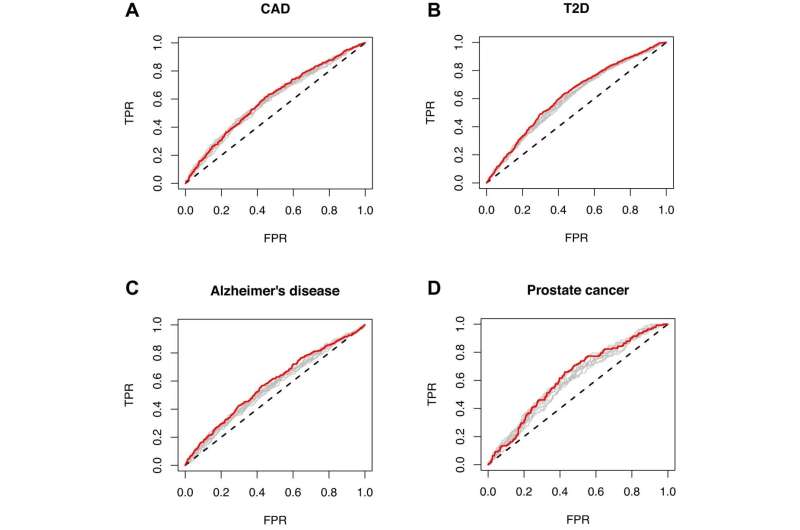
A new study has shown that risk scores based on our genes and gut bacteria can improve the prediction of diseases such as type 2 diabetes and prostate cancer over traditional risk factors alone.
When it comes to the prediction of a person’s risk of coronary artery disease, type 2 diabetes, Alzheimer’s disease, and prostate cancer, combining traditional risk factors that are used by doctors today with new technologies that quantify our genetic risk (polygenic risk scores) and gut bacteria (gut microbiome) resulted in the most powerful predictors of common chronic diseases.
The study, led by Dr. Yang Liu, is one of the first to look at the combined impact of genetics and the gut microbiome on disease risk and paves the way for a more refined, powerful, and personalized approach to disease prediction.
Published in Nature Aging and based on the data of more than 5670 adults, the study is a collaboration by the Baker Heart and Diabetes Institute, the University of Cambridge and the Finnish Institute of Health and Welfare.
While traditional risk factors typically rely on age, sex, and measurements like body mass index, blood pressure, non-HDL cholesterol, and HbA1c, this study highlights how large-scale analysis of a person’s genetics and gut bacteria can improve predictive performance.
In this study, researchers investigated the individual and combined predictive performance of polygenic risk scores, the gut microbiome, and traditional risk factors for the development of future coronary artery disease, type 2 diabetes, Alzheimer’s disease, and prostate cancer over a median of ~18 years of follow-up, using the population-based FINRISK 2002 cohort.
The recent emergence of multi-omics means that it is now possible to measure and integrate who classes of biomolecular and cellular factors for the purpose of building multi-omic risk scores.
Multi-omic technologies, which are powering discovery across multiple aspects of biology from the genome, proteome, and transcriptome to epigenome and microbiome, have uncovered new biomarkers for various common age-related diseases. If diseases such as coronary artery disease, Alzheimer’s Disease, prostate cancer, and type 2 diabetes can be predicted early, prevention strategies can also be applied.
Dr. Liu says these personalized risk scores, combined with traditional risk factors, open up new avenues for non-invasive risk profiling and early detection of disease.
“This study shows the potential of integrating a person’s multiple omes in advancing understanding of the development and prediction of diseases,” says Dr. Liu. “Multi-omics has come a long way, but data integration and translation into benefits for clinical decision-making remain challenging.”
More information:
Yang Liu et al, Integration of polygenic and gut metagenomic risk prediction for common diseases, Nature Aging (2024). DOI: 10.1038/s43587-024-00590-7
Citation:
Risk prediction using genes and gut bacteria can improve early detection of diseases like type 2 diabetes (2024, March 26)
retrieved 26 March 2024
from https://medicalxpress.com/news/2024-03-genes-gut-bacteria-early-diseases.html
This document is subject to copyright. Apart from any fair dealing for the purpose of private study or research, no
part may be reproduced without the written permission. The content is provided for information purposes only.

Khamrah by Lattafa for Men - 3.4 oz EDP Spray
4% Off
Ghost Sweetheart Eau de Toilette | Pineapple, Jasmine and Sandalwood | Perfume for Women 50 ml
50% Off
Marc Jacobs Dot Eau De Parfum for Women, 100 ml
42% Off
Ted Baker W Eau de Toilette for Her, Fig Leaf, White Peony and Violet Top Notes, Pink Orchid and Raspberry Middle Notes, 75ml
£11.77 (£15.69 / 100 ml) (as of 09/10/2026 06:28 GMT +01:00 - More infoProduct prices and availability are accurate as of the date/time indicated and are subject to change. Any price and availability information displayed on [relevant Amazon Site(s), as applicable] at the time of purchase will apply to the purchase of this product.)
Ted Baker Woman Pink Eau de Toilette Spray Floral Green Feminine Fragrance, Opening Notes are Fresh Peach, Bergamot and Tangerine with Warm Musk, Vanilla and Vetiver Base, 100ml
11% Off
Vera Wang Princess Eau de Toilette - 30 ml

Choco Musk 50ml Eau De Parfum for men and women | Chocolate Musk by Jannat Aromas
17% Off
Christina Aguilera Signature Eau de Parfum (50ml) Floral, Fruity & Exotic Scent, Luxury Fragrance for Women
9% Off
Calvin Klein - Eau De Toilette CKIN2U - Calvin Klein Women, Ladies Perfume, Women's Perfume, Calvin Klein Perfume, Calvin Klein One - 150 ml
5% Off
Jimmy Choo Flash Eau de Parfum, 60 ml (Pack of 1)
3% Off
Fruit of the Loom Men's Heavy T Shirt, White, XL UK
28% Off
ATNKE LED Lighted Beanie Cap,USB Rechargeable Running Hat Ultra Bright 4 LED Waterproof Light Winter Warm Gifts for Men and Women/Pink
17% Off
Men's 1/4 Zip Pullover UK Sale Clearance, Fleece Sweatshirt Casual Jumper Long Sleeve T-shirt Top Stand Collar Sweater Plain Pullover Sports Leisure Workwear Quarter Zip Sweater Lightweight Jumpers
£5.88 (as of 12/11/2025 00:52 GMT +01:00 - More infoProduct prices and availability are accurate as of the date/time indicated and are subject to change. Any price and availability information displayed on [relevant Amazon Site(s), as applicable] at the time of purchase will apply to the purchase of this product.)
Crevice Cleaning Brush, Bathroom Tile Groove Gap Cleaning Brush,Premium Crevice Cleaning Tool Aluminum Support with 15° Angle Magic Brush, Thin Brush for Home Kitchen
19% Off
Wireless Earbuds, Bluetooth 5.3 Headphones in Ear with HiFi Stereo Deep Bass, 4 ENC Noise Cancelling Mic Wireless Earphones 40H Playtime, Bluetooth Earbuds Dual LED Display, IP7 Waterproof, USB-C
42% Off