 [
[

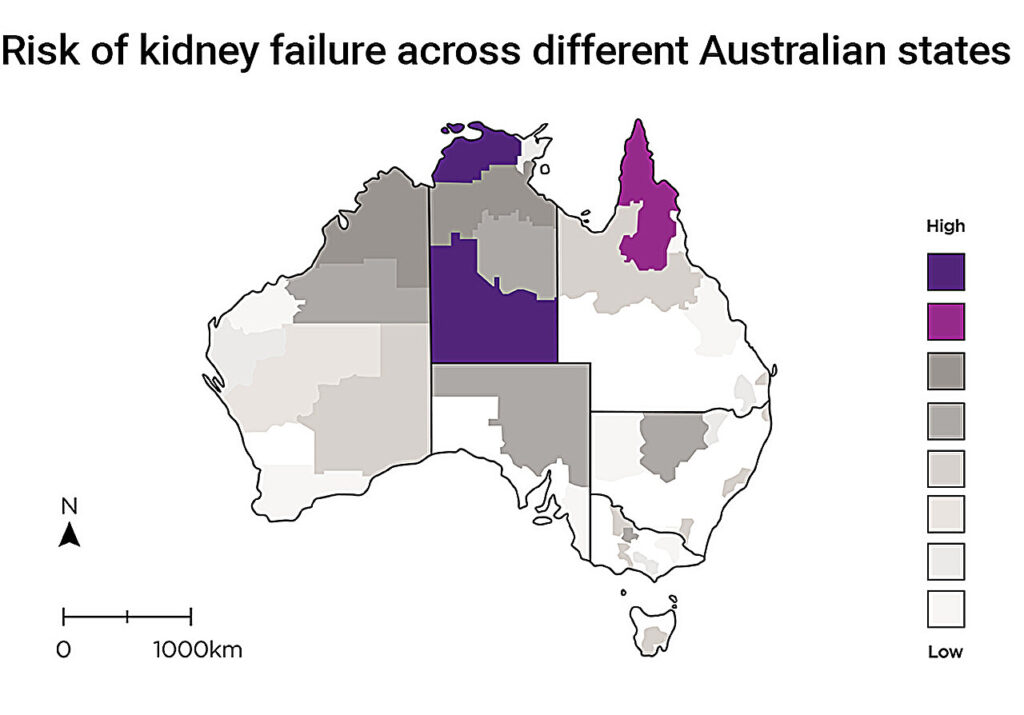
Australians living in consistently hot and humid northern regions are at greater risk of kidney failure than their compatriots in more temperate and less remote locations, researchers have found.
The University of Queensland study published in BMC Medicine investigated the influence of climate zones and geographic disparities on the incidence of patients needing kidney transplants or dialysis.
Dr. Darsy Darssan from UQ’s School of Public Health said higher incidences were identified in locations with hot temperatures and greater humidity.
“These areas were also likely to be located in rural or remote areas and have a lower socioeconomic status, highlighting the complex interplay of the driving factors,” Dr. Darssan said. “There are serious inequities in these disadvantaged and remote populations with hotter climates that need to be addressed through improved access to care and expanded prevention programs.”
The study looked at data from almost 50,000 Australian adults who started treatment for kidney failure between 2000 and 2020, within the 6 zones of the Bureau of Meteorology’s climate classifications.
Associate Professor Nick Osborne said variations in incidents of kidney failure were also apparent across climate zones within—and between—major cities, with Darwin at highest risk.
“Dehydration can increase kidney stress and potentially accelerate the progression of kidney disease,” Dr. Osborne said. “Remote areas may mean reduced access to health care, further exacerbating the risk.
“Patients requiring dialysis are particularly vulnerable during extreme weather events, and it is critically important that they have reliable health care access. By taking advantage of Australia’s large size, it enables an assessment of the impact of variations in climate on the incidence of kidney failure.”
Royal Melbourne Hospital Nephrologist Dr. Mark Tiong said the findings reinforced the value of viewing health holistically and considering bio-psycho-social and environmental factors. “As the climate continues to change, incorporating these broader factors into our understanding of kidney disease will be important for planning equitable, practical, and sustainable care,” Dr. Tiong said.
The data was provided by the Australian and New Zealand Dialysis and Transplant (ANZDATA) registry.
More information
Lijalem M. Tesfaw et al, Climate effect on the incidence of kidney failure patients in Australia, BMC Medicine (2025). DOI: 10.1186/s12916-025-04532-x
Journal information:
BMC Medicine
Citation:
Residents in hot, humid regions more likely to have kidney failure (2025, December 22)
retrieved 22 December 2025
from https://medicalxpress.com/news/2025-12-residents-hot-humid-regions-kidney.html
This document is subject to copyright. Apart from any fair dealing for the purpose of private study or research, no
part may be reproduced without the written permission. The content is provided for information purposes only.

Khamrah by Lattafa for Men - 3.4 oz EDP Spray
4% Off
Ghost Sweetheart Eau de Toilette | Pineapple, Jasmine and Sandalwood | Perfume for Women 50 ml
50% Off
Marc Jacobs Dot Eau De Parfum for Women, 100 ml
42% Off
Ted Baker W Eau de Toilette for Her, Fig Leaf, White Peony and Violet Top Notes, Pink Orchid and Raspberry Middle Notes, 75ml
£11.77 (£15.69 / 100 ml) (as of 07/06/2026 03:29 GMT +01:00 - More infoProduct prices and availability are accurate as of the date/time indicated and are subject to change. Any price and availability information displayed on [relevant Amazon Site(s), as applicable] at the time of purchase will apply to the purchase of this product.)
Ted Baker Woman Pink Eau de Toilette Spray Floral Green Feminine Fragrance, Opening Notes are Fresh Peach, Bergamot and Tangerine with Warm Musk, Vanilla and Vetiver Base, 100ml
11% Off
Vera Wang Princess Eau de Toilette - 30 ml

Choco Musk 50ml Eau De Parfum for men and women | Chocolate Musk by Jannat Aromas
17% Off
Christina Aguilera Signature Eau de Parfum (50ml) Floral, Fruity & Exotic Scent, Luxury Fragrance for Women
9% Off
Calvin Klein - Eau De Toilette CKIN2U - Calvin Klein Women, Ladies Perfume, Women's Perfume, Calvin Klein Perfume, Calvin Klein One - 150 ml
5% Off
Jimmy Choo Flash Eau de Parfum, 60 ml (Pack of 1)
3% Off
Fruit of the Loom Men's Heavy T Shirt, White, XL UK
28% Off
ATNKE LED Lighted Beanie Cap,USB Rechargeable Running Hat Ultra Bright 4 LED Waterproof Light Winter Warm Gifts for Men and Women/Pink
17% Off
Men's 1/4 Zip Pullover UK Sale Clearance, Fleece Sweatshirt Casual Jumper Long Sleeve T-shirt Top Stand Collar Sweater Plain Pullover Sports Leisure Workwear Quarter Zip Sweater Lightweight Jumpers
£5.88 (as of 12/11/2025 00:52 GMT +01:00 - More infoProduct prices and availability are accurate as of the date/time indicated and are subject to change. Any price and availability information displayed on [relevant Amazon Site(s), as applicable] at the time of purchase will apply to the purchase of this product.)
Crevice Cleaning Brush, Bathroom Tile Groove Gap Cleaning Brush,Premium Crevice Cleaning Tool Aluminum Support with 15° Angle Magic Brush, Thin Brush for Home Kitchen
19% Off
Wireless Earbuds, Bluetooth 5.3 Headphones in Ear with HiFi Stereo Deep Bass, 4 ENC Noise Cancelling Mic Wireless Earphones 40H Playtime, Bluetooth Earbuds Dual LED Display, IP7 Waterproof, USB-C
42% Off