 [
[

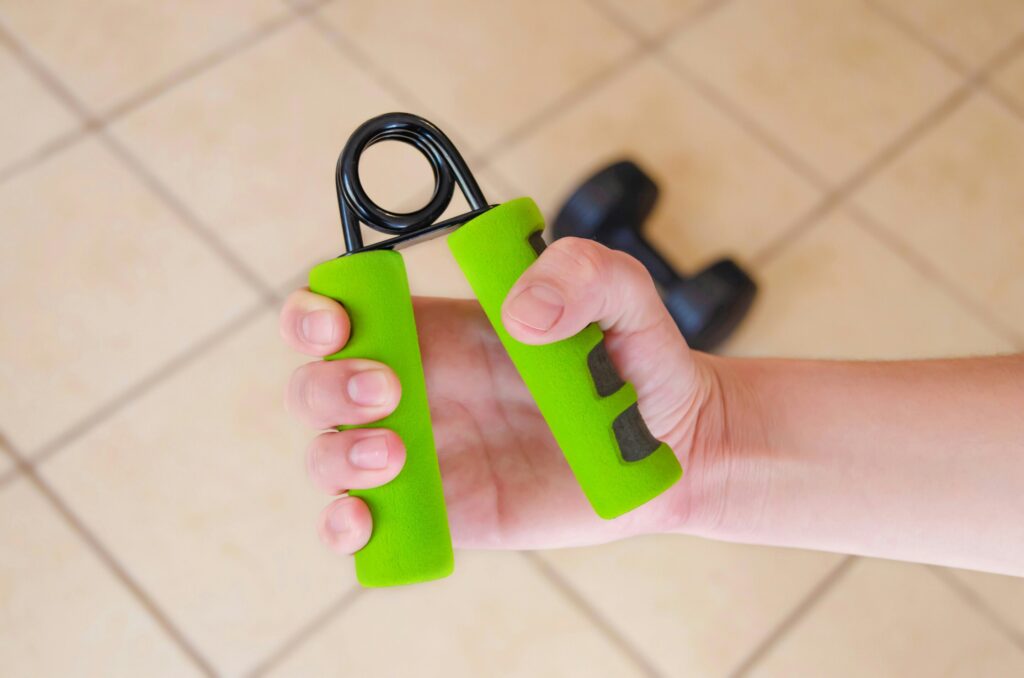
If you follow wellness channels on social media, you might’ve come across the claim that your grip strength—or how firmly you can squeeze something with your hands—can predict how long you will live.
This sounds far-fetched. Yet the science supports such a connection.
But as wellness influencers try to monetize this link, what started as something based on scientific evidence starts to get stretched. Now some influencers claim just strengthening your grip can help you live longer.
And it’s not just social media influencers. Mainstream media often follows similar patterns, overlooking the complexity and nuance of the science and misrepresenting what it means for individuals.
What the science says
The evidence consistently shows a person’s grip strength is a good indicator of their overall health and therefore can act as a proxy for how long they might live.
However, grip strength isn’t a driver of longevity. The strength of your hands doesn’t make you healthier. It indicates how robust the body is, from muscle and nerve function to the health of your heart and veins, and how your body uses energy.
A typical way researchers have investigated the relationship between grip strength, health and longevity is to measure participants’ handgrip strength by getting them to squeeze a hand-held device called a dynamometer. Then they track participants over time to see if they developed diseases and how old they were when they died.
For example, a study of around half a million British people ages 40–69 found a 5-kilogram lower grip strength was associated with an approximately 20% greater risk of dying during the follow-up period, which was up to 10 years.
The researchers also found muscle weakness, which they defined as having a grip strength of less than 26 kilograms for men and 16 kilograms for women, was associated with a higher overall risk of death as well as a higher risk of death from cardiovascular disease, respiratory disease, chronic obstructive pulmonary disease and a number of cancers.
The link is stronger for older people
While the relationship between grip strength and health holds for all age groups, in older people it appears to be a particularly good predictor of death, heart attacks, stroke, falls and fractures.
This is because it seems to be an exceptionally good indicator of age-related loss of muscle mass, known as sarcopenia, and of power and resilience in older people.
Consequently, some researchers suggest grip strength should be considered a “new vital sign”—alongside more traditional indicators of health such as temperature, pulse, respiration and blood pressure.
The reason grip strength is a less powerful predictor of longevity in younger people compared with older age groups is that most young people are near the upper end of physiological performance. Differences in young people’s health are relatively small compared with the “noise” introduced by measurement error or random variation.
As people age, however, their health varies much more, while the sources of error remain roughly the same. Consequently, this higher signal-to-noise ratio results in a much stronger relationship between grip strength and health in later life.
So how did this turn into hype?
The problem with the way some people communicate this is generally an issue of overreach. Things often get muddled, and this association can sometimes be turned into a prescription.
When people conflate correlation with causation, they may claim that just doing exercises to improve your grip strength, without improving your overall health, can help you live longer.
But just because two variables are linked does not mean one causes the other. Improving grip strength is not a magic path to longevity. Rather, it’s a marker or proxy of broader physiological robustness, which influences longevity.
Intriguingly, some reels and articles explain the science clearly and highlight that grip strength is a proxy and not a cause, but then, paradoxically, go on to describe ways of increasing grip strength.
This undoubtedly undermines the message that the relationship is not causal.
One of the problems seems to be that influencers and journalists sometimes feel it’s not enough to just explain the science: They have to offer actionable health advice or a solution. This can lead to overreach, where advice is given that goes beyond what the evidence says.
In a nutshell
We’re all naturally drawn to simple metrics that promise insights into our health and longevity, and grip strength seems to be one of the more useful ones.
Grip strength is a simple and accessible marker that can help predict health and longevity, particularly in older adults. But improving your grip strength in isolation won’t make you healthier or extend your life.
The most effective drivers of health and longevity remain the obvious ones: staying active, eating a balanced diet, sleeping well, maintaining social connections and managing stress.


This article is republished from The Conversation under a Creative Commons license. Read the original article.
Citation:
Can ‘grip strength’ exercises actually help you live longer? (2026, June 6)
retrieved 6 June 2026
from https://medicalxpress.com/news/2026-06-strength-longer.html
This document is subject to copyright. Apart from any fair dealing for the purpose of private study or research, no
part may be reproduced without the written permission. The content is provided for information purposes only.

Khamrah by Lattafa for Men - 3.4 oz EDP Spray
4% Off
Ghost Sweetheart Eau de Toilette | Pineapple, Jasmine and Sandalwood | Perfume for Women 50 ml
50% Off
Marc Jacobs Dot Eau De Parfum for Women, 100 ml
42% Off
Ted Baker W Eau de Toilette for Her, Fig Leaf, White Peony and Violet Top Notes, Pink Orchid and Raspberry Middle Notes, 75ml
£11.77 (£15.69 / 100 ml) (as of 29/06/2026 03:52 GMT +01:00 - More infoProduct prices and availability are accurate as of the date/time indicated and are subject to change. Any price and availability information displayed on [relevant Amazon Site(s), as applicable] at the time of purchase will apply to the purchase of this product.)
Ted Baker Woman Pink Eau de Toilette Spray Floral Green Feminine Fragrance, Opening Notes are Fresh Peach, Bergamot and Tangerine with Warm Musk, Vanilla and Vetiver Base, 100ml
11% Off
Vera Wang Princess Eau de Toilette - 30 ml

Choco Musk 50ml Eau De Parfum for men and women | Chocolate Musk by Jannat Aromas
17% Off
Christina Aguilera Signature Eau de Parfum (50ml) Floral, Fruity & Exotic Scent, Luxury Fragrance for Women
9% Off
Calvin Klein - Eau De Toilette CKIN2U - Calvin Klein Women, Ladies Perfume, Women's Perfume, Calvin Klein Perfume, Calvin Klein One - 150 ml
5% Off
Jimmy Choo Flash Eau de Parfum, 60 ml (Pack of 1)
3% Off
Fruit of the Loom Men's Heavy T Shirt, White, XL UK
28% Off
ATNKE LED Lighted Beanie Cap,USB Rechargeable Running Hat Ultra Bright 4 LED Waterproof Light Winter Warm Gifts for Men and Women/Pink
17% Off
Men's 1/4 Zip Pullover UK Sale Clearance, Fleece Sweatshirt Casual Jumper Long Sleeve T-shirt Top Stand Collar Sweater Plain Pullover Sports Leisure Workwear Quarter Zip Sweater Lightweight Jumpers
£5.88 (as of 12/11/2025 00:52 GMT +01:00 - More infoProduct prices and availability are accurate as of the date/time indicated and are subject to change. Any price and availability information displayed on [relevant Amazon Site(s), as applicable] at the time of purchase will apply to the purchase of this product.)
Crevice Cleaning Brush, Bathroom Tile Groove Gap Cleaning Brush,Premium Crevice Cleaning Tool Aluminum Support with 15° Angle Magic Brush, Thin Brush for Home Kitchen
19% Off
Wireless Earbuds, Bluetooth 5.3 Headphones in Ear with HiFi Stereo Deep Bass, 4 ENC Noise Cancelling Mic Wireless Earphones 40H Playtime, Bluetooth Earbuds Dual LED Display, IP7 Waterproof, USB-C
42% Off