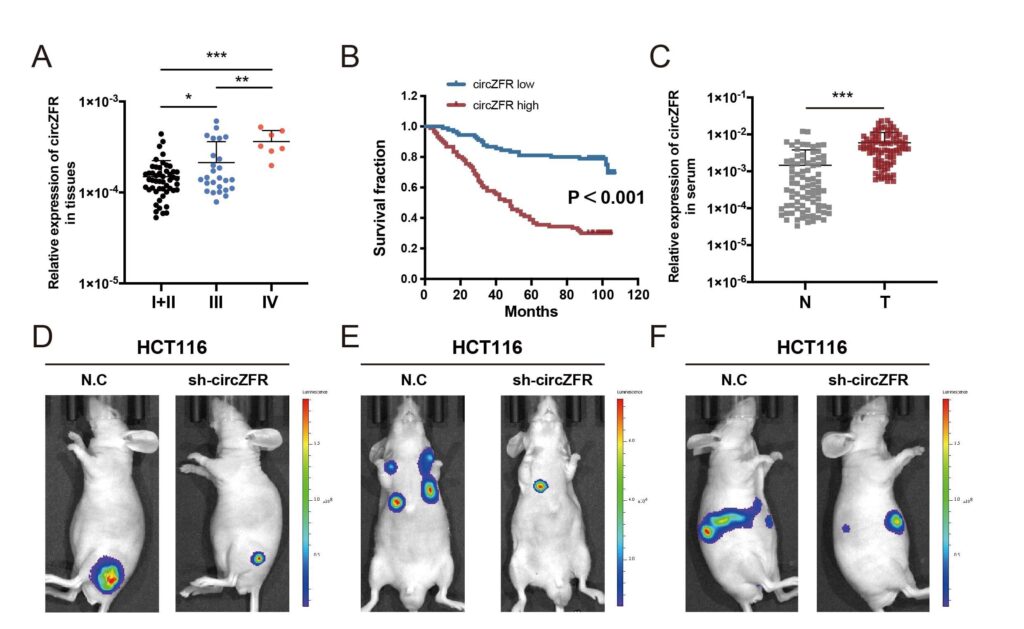
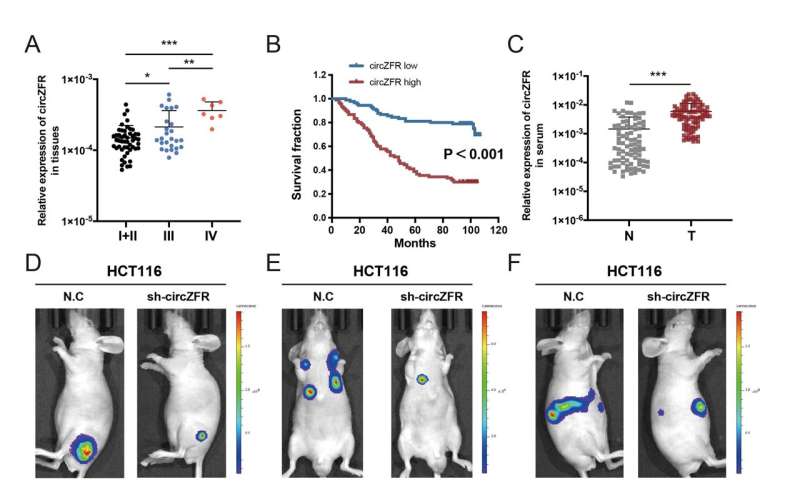
In a study published in the journal Science China Life Sciences, a research team identified circZFR using circRNA microarray and competing endogenous RNA (ceRNA) microarray, and they confirmed that circZFR is a promising biomarker for colorectal cancer (CRC) diagnosis and prognosis.
Currently, the morbidity and mortality of CRC remain high due to the lack of early symptoms and effective early screening technology. Metastasis and recurrence remain the most common causes of death related to CRC. Therefore, it is crucial to find novel biomarkers for CRC diagnosis and prognosis, as well as unravel their mechanisms of action.
The team studied the function of circZFR, as well as the upstream and downstream events that promote CRC progression. Highly expressed circZFR promotes the proliferation and migration of CRC cells directly or via exosomes. In mouse models, circZFR stimulates tumor growth, and lung and liver metastasis.
Mechanistically, ESRP1 in CRC cells may enhance the production of circZFR. The oncogenic protein BCLAF1 binds to circZFR, preventing the ubiquitinated degradation of BCLAF1. In addition, circZFR sponges miR-3127-5p to boost RTKN2 expression. These findings support the use of circZFR as a potential biomarker for CRC diagnosis and a desirable target for future treatment.
-
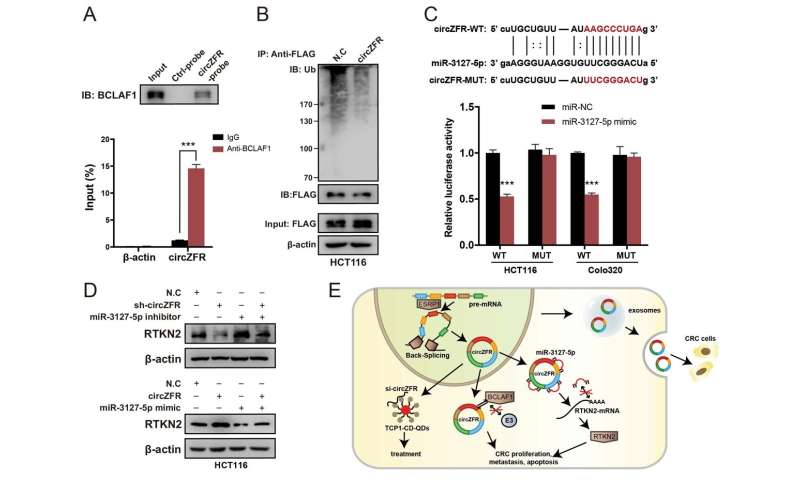
circZFR promotes CRC progression via stabilizing BCLAF1 and regulating the miR-3127-5p/RTKN2 axis. Credit: Science China Press
-
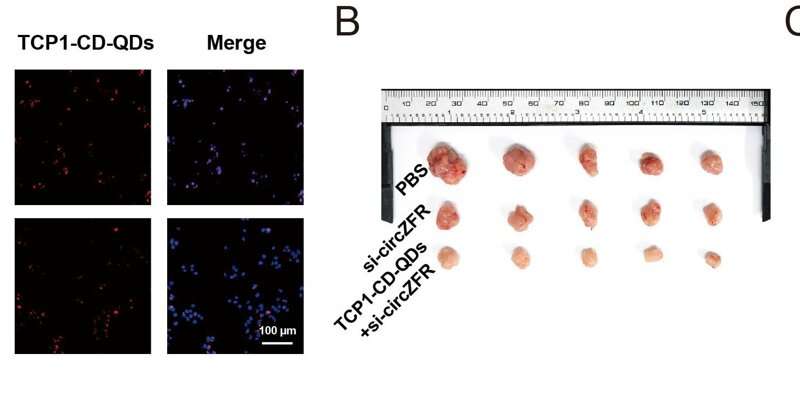
TCP1-CD-QDs loaded with si-circZFR target CRC tissues and promote CRC growth. Credit: Science China Press
The study further shows that the TCP1-CD-QDs nanocarrier is able to carry and deliver circZFR siRNA (si-circZFR) to the vasculature of CRC tissues, effectively inhibiting tumor growth.
“The unique looping structure of circRNAs renders them extremely stable, implying that these molecules have a strong biomarker potential for early screening, diagnosis, and prognosis. Our study on circZFR will provide help for researchers in this field to explore more novel functional circRNAs,” Zhangfa Song—the senior author of the study—noted.
More information:
Jiaxin Chen et al, CircZFR promotes colorectal cancer progression via stabilizing BCLAF1 and regulating the miR-3127-5p/RTKN2 axis, Science China Life Sciences (2024). DOI: 10.1007/s11427-023-2514-y
Citation:
Research confirms circZFR is a promising biomarker for colorectal cancer diagnosis and prognosis (2024, July 5)
retrieved 5 July 2024
from https://medicalxpress.com/news/2024-07-circzfr-biomarker-colorectal-cancer-diagnosis.html
This document is subject to copyright. Apart from any fair dealing for the purpose of private study or research, no
part may be reproduced without the written permission. The content is provided for information purposes only.

Khamrah by Lattafa for Men - 3.4 oz EDP Spray
4% Off
Ghost Sweetheart Eau de Toilette | Pineapple, Jasmine and Sandalwood | Perfume for Women 50 ml
50% Off
Marc Jacobs Dot Eau De Parfum for Women, 100 ml
42% Off
Ted Baker W Eau de Toilette for Her, Fig Leaf, White Peony and Violet Top Notes, Pink Orchid and Raspberry Middle Notes, 75ml
£11.77 (£15.69 / 100 ml) (as of 27/06/2026 03:51 GMT +01:00 - More infoProduct prices and availability are accurate as of the date/time indicated and are subject to change. Any price and availability information displayed on [relevant Amazon Site(s), as applicable] at the time of purchase will apply to the purchase of this product.)
Ted Baker Woman Pink Eau de Toilette Spray Floral Green Feminine Fragrance, Opening Notes are Fresh Peach, Bergamot and Tangerine with Warm Musk, Vanilla and Vetiver Base, 100ml
11% Off
Vera Wang Princess Eau de Toilette - 30 ml

Choco Musk 50ml Eau De Parfum for men and women | Chocolate Musk by Jannat Aromas
17% Off
Christina Aguilera Signature Eau de Parfum (50ml) Floral, Fruity & Exotic Scent, Luxury Fragrance for Women
9% Off
Calvin Klein - Eau De Toilette CKIN2U - Calvin Klein Women, Ladies Perfume, Women's Perfume, Calvin Klein Perfume, Calvin Klein One - 150 ml
5% Off
Jimmy Choo Flash Eau de Parfum, 60 ml (Pack of 1)
3% Off
Fruit of the Loom Men's Heavy T Shirt, White, XL UK
28% Off
ATNKE LED Lighted Beanie Cap,USB Rechargeable Running Hat Ultra Bright 4 LED Waterproof Light Winter Warm Gifts for Men and Women/Pink
17% Off
Men's 1/4 Zip Pullover UK Sale Clearance, Fleece Sweatshirt Casual Jumper Long Sleeve T-shirt Top Stand Collar Sweater Plain Pullover Sports Leisure Workwear Quarter Zip Sweater Lightweight Jumpers
£5.88 (as of 12/11/2025 00:52 GMT +01:00 - More infoProduct prices and availability are accurate as of the date/time indicated and are subject to change. Any price and availability information displayed on [relevant Amazon Site(s), as applicable] at the time of purchase will apply to the purchase of this product.)
Crevice Cleaning Brush, Bathroom Tile Groove Gap Cleaning Brush,Premium Crevice Cleaning Tool Aluminum Support with 15° Angle Magic Brush, Thin Brush for Home Kitchen
19% Off
Wireless Earbuds, Bluetooth 5.3 Headphones in Ear with HiFi Stereo Deep Bass, 4 ENC Noise Cancelling Mic Wireless Earphones 40H Playtime, Bluetooth Earbuds Dual LED Display, IP7 Waterproof, USB-C
42% Off