 [
[

Canadian scientists have demonstrated for the first time that a noninvasive brain-monitoring technique could help medical teams predict the future development of premature babies.
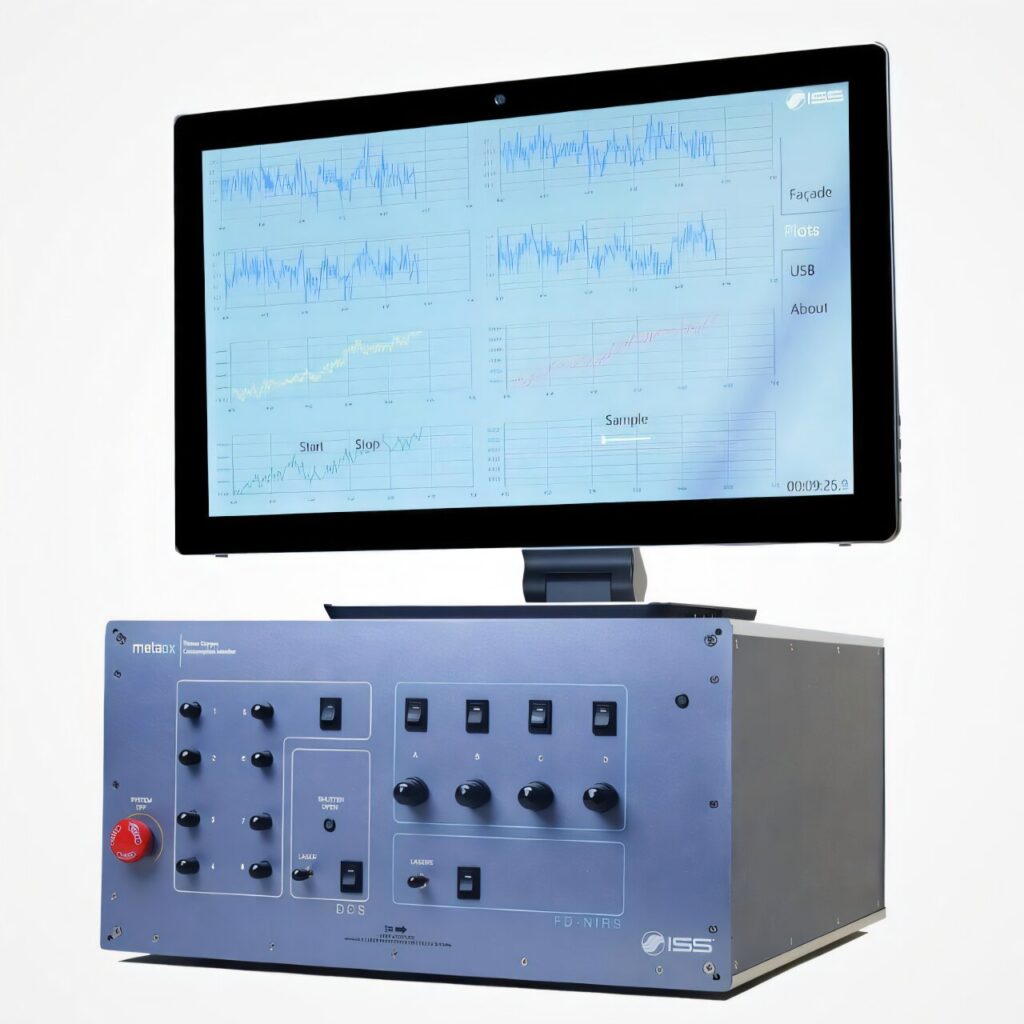
The technique combines two advanced optical technologies called FDNIRS and DCS to measure, without any pain or radiation, how well the baby’s brain uses oxygen.
An optical sensor placed on the child’s forehead provides two pieces of crucial information:
- cerebral blood flow and the amount of oxygen reaching the brain (availability);
- the amount of oxygen extracted and consumed by the brain (utilization).
In a study of 241 babies born between 29 and 36 weeks of pregnancy, scientists at Université de Montréal and its affiliated children’s hospital Santé Québec—CHU Sainte-Justine used the sensor when the infants reached term-equivalent age (approximately 40 weeks).
They then waited two years and compared the data with the children’s cognitive, language and motor development, assessed using the Bayley-4 scales, a reference tool for measuring neurodevelopment in young children.
The key finding, published in January in Scientific Reports: the more efficiently a premature baby’s brain uses oxygen, the better the child’s subsequent development, as measured by cognitive tests and language scores.
Among the babies studied, one in three showed developmental delays at age 2.
Less closely monitored
Unlike extremely premature infants (less than 29 weeks) who already receive systematic follow-up, those born between 29 and 36 weeks of pregnancy, despite representing the majority of premature births, are generally monitored less closely in Canada.
“Very premature infants have been extensively studied by scientists and are systematically followed by a pediatrician, while those born between 29 and 36 weeks have received less attention,” said Santé Québec—CHU Sainte-Justine occupational therapist Marie-Noëlle Simard.
“We therefore know less about the consequences of these babies’ prematurity on their development,” added Simard, a professor at UdeM’s School of Rehabilitation. “Most of these babies leave the hospital without further follow-up, as if they had been born at term.”
The research was conducted between August 2018 and November 2021 at Santé Québec—CHU Sainte-Justine on preemies who had been hospitalized in the mother-child hospital’s neonatology unit for at least 48 hours.
The study was co-led by Mathieu Dehaes, a professor in UdeM’s Department of Radiology, Radiation Oncology and Nuclear Medicine and Institute of Biomedical Engineering, and Thuy Mai Luu, a pediatrician at Santé Québec—CHU Sainte-Justine and professor in UdeM’s Faculty of Medicine.
Although the average cognitive and language scores for all children were slightly below the norm (between 95 and 98, compared with a normative average of 100), the study found that nearly one in three children showed delays in at least one area of development.
Language delay particularly affects this population, affecting nearly 29% of the children followed.
“We don’t yet fully understand why some premature infants show lower oxygen metabolism,” said Dehaes, who conducts his research at Santé Québec—CHU Sainte-Justine’s Azrieli Research Centre.
“But we believe that premature birth during the third trimester, a critical period of brain development, may affect the metabolic demand needed to support this rapid and increased maturation.”
Boys more vulnerable
The study also reveals significant differences between the sexes.
In boys, the associations between brain measurements and future development are much more pronounced than in girls. This observation suggests that premature boys exhibit particular neurological vulnerability, something already shown in previous studies.
Boys in the study also had significantly lower language (92 vs. 99) and motor (98 vs. 101) development scores than girls, reinforcing the need for sex-adapted monitoring, the scientists say.
Unlike magnetic resonance imaging, which is costly and often requires sedating and transporting the baby outside the neonatal intensive care unit, the optical technique used by Dehaes is completely noninvasive and safe.
It’s performed at the baby’s bedside in intensive care. It requires no sedation and could soon provide immediate results through the development of a real-time analysis algorithm, Dehaes said.
“This tool could help identify very early which babies need specialized follow-up or early interventions to optimize their development,” said Luu, medical director of CHU Sainte-Justine’s neonatal follow-up program. “If a developmental delay is suspected, that’s where physiotherapists, occupational therapists and, later, speech-language pathologists can step in.”
The researchers now plan to validate their results by tracking the children’s development beyond age 2 to better understand long-term trajectories.
More data being collected
A longitudinal study has been established, and the team is completing data collection for the same children at age 5, before school entry, an important milestone in brain development.
The team is also preparing research proposals to study these children’s development at age 8.
“So that all premature infants can be screened at term-equivalent age, we are also working on developing normative charts that will establish reference values for brain oxygen availability and utilization,” said Dehaes.
“The goal would be to use these charts, like head-circumference charts, to determine whether values are normal for the child’s age,” he said.
By the numbers
- 8% of births in Canada are premature
- 241 babies born between 29 and 36 weeks of pregnancy were followed in the UdeM study
- 90% completed the assessment at age 2
- 33% showed delays in at least one area of development
- 29% showed language delays
- 13% showed cognitive delays
Similar results in babies with heart defects
Dehaes’ research team has also applied the optical neuromonitoring technique to newborns with transposition of the great arteries (TGA), a congenital heart defect in which blood is not sufficiently oxygenated when it reaches the brain.
In a study published in January in the Journal of Cerebral Blood Flow & Metabolism, 30 babies with TGA were followed. Dehaes and his team measured the babies’ cerebral blood flow and oxygen delivery within 72 hours after corrective cardiac surgery.
The results show that babies with TGA had lower oxygen delivery to the brain than healthy babies. More importantly, higher blood flow and oxygen delivery after surgery were associated with better motor and language scores at age 2.
The research demonstrates that the optical neuromonitoring technique can also serve as an early biomarker of neurological development in children with congenital heart defects, helping target interventions for a highly vulnerable pediatric population.
Publication details
Anurudhya Karthikeyan et al, Associations between postnatal cerebral oxygen availability and utilization in very to late preterm infants and neurodevelopmental outcome, Scientific Reports (2026). DOI: 10.1038/s41598-026-35303-0
Anurudhya Karthikeyan et al, Postoperative cerebral oxygen availability and neurodevelopment in children with d-transposition of the great arteries, Journal of Cerebral Blood Flow & Metabolism (2026). DOI: 10.1177/0271678×251409018
Journal information:
Scientific Reports
Key medical concepts


Citation:
Premature babies—a simple test gauges neurocognitive development (2026, June 17)
retrieved 17 June 2026
from https://medicalxpress.com/news/2026-06-premature-babies-simple-gauges-neurocognitive.html
This document is subject to copyright. Apart from any fair dealing for the purpose of private study or research, no
part may be reproduced without the written permission. The content is provided for information purposes only.

Khamrah by Lattafa for Men - 3.4 oz EDP Spray
4% Off
Ghost Sweetheart Eau de Toilette | Pineapple, Jasmine and Sandalwood | Perfume for Women 50 ml
50% Off
Marc Jacobs Dot Eau De Parfum for Women, 100 ml
42% Off
Ted Baker W Eau de Toilette for Her, Fig Leaf, White Peony and Violet Top Notes, Pink Orchid and Raspberry Middle Notes, 75ml
£11.77 (£15.69 / 100 ml) (as of 19/07/2026 04:00 GMT +01:00 - More infoProduct prices and availability are accurate as of the date/time indicated and are subject to change. Any price and availability information displayed on [relevant Amazon Site(s), as applicable] at the time of purchase will apply to the purchase of this product.)
Ted Baker Woman Pink Eau de Toilette Spray Floral Green Feminine Fragrance, Opening Notes are Fresh Peach, Bergamot and Tangerine with Warm Musk, Vanilla and Vetiver Base, 100ml
11% Off
Vera Wang Princess Eau de Toilette - 30 ml

Choco Musk 50ml Eau De Parfum for men and women | Chocolate Musk by Jannat Aromas
17% Off
Christina Aguilera Signature Eau de Parfum (50ml) Floral, Fruity & Exotic Scent, Luxury Fragrance for Women
9% Off
Calvin Klein - Eau De Toilette CKIN2U - Calvin Klein Women, Ladies Perfume, Women's Perfume, Calvin Klein Perfume, Calvin Klein One - 150 ml
5% Off
Jimmy Choo Flash Eau de Parfum, 60 ml (Pack of 1)
3% Off
Fruit of the Loom Men's Heavy T Shirt, White, XL UK
28% Off
ATNKE LED Lighted Beanie Cap,USB Rechargeable Running Hat Ultra Bright 4 LED Waterproof Light Winter Warm Gifts for Men and Women/Pink
17% Off
Men's 1/4 Zip Pullover UK Sale Clearance, Fleece Sweatshirt Casual Jumper Long Sleeve T-shirt Top Stand Collar Sweater Plain Pullover Sports Leisure Workwear Quarter Zip Sweater Lightweight Jumpers
£5.88 (as of 12/11/2025 00:52 GMT +01:00 - More infoProduct prices and availability are accurate as of the date/time indicated and are subject to change. Any price and availability information displayed on [relevant Amazon Site(s), as applicable] at the time of purchase will apply to the purchase of this product.)
Crevice Cleaning Brush, Bathroom Tile Groove Gap Cleaning Brush,Premium Crevice Cleaning Tool Aluminum Support with 15° Angle Magic Brush, Thin Brush for Home Kitchen
19% Off
Wireless Earbuds, Bluetooth 5.3 Headphones in Ear with HiFi Stereo Deep Bass, 4 ENC Noise Cancelling Mic Wireless Earphones 40H Playtime, Bluetooth Earbuds Dual LED Display, IP7 Waterproof, USB-C
42% Off