[
[
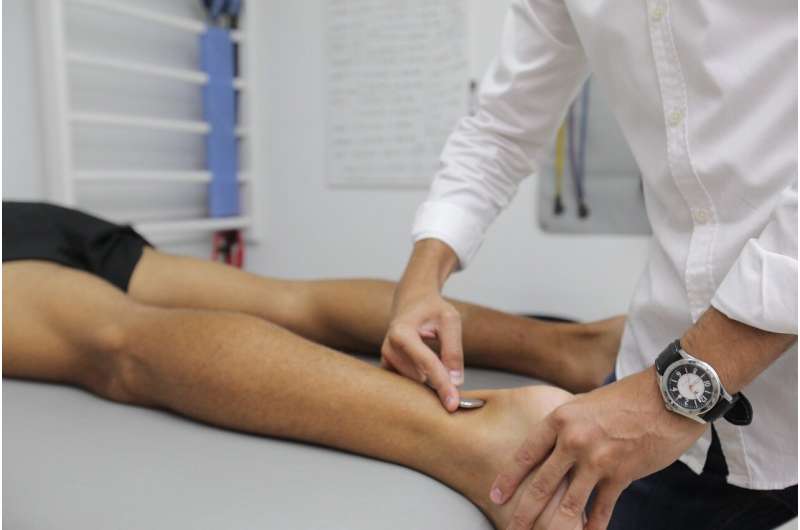
Apparently healthy cancer survivors often complain of extreme fatigue. They have finished treatment, the scans are clear, but they feel hollowed out, unable to walk to the mailbox or stay awake through dinner. The languor can linger for years, making it a major, unexplained symptom that clinicians have only been able to measure with subjective, imprecise surveys. But now a pilot study published in Biomedicines may help clinicians obtain a better measurement tool that could eventually lead to better treatments.
Researchers at Rutgers University, Johns Hopkins University and the National Institute on Aging used a specialized MRI to peer directly into the skeletal muscle cells of 11 cancer survivors, measuring how quickly their mitochondria—the organelles that generate cellular fuel—rebuilt energy reserves after exertion.
“No one before this had looked deeply into single-cell-specific biology that can drive cancer patient experiences,” said the study’s senior author, Leorey Saligan, a professor and the vice dean of research at the Rutgers School of Nursing. “There is some previous work on blood mitochondrial levels, but blood composition shifts constantly. Every time you sneeze, your blood cells differ.”
Saligan is also a member of the Cancer Prevention and Control Program at Rutgers Cancer Institute, the state’s only NCI-designated Comprehensive Cancer Center, together with RWJBarnabas Health.
The team used a National Institutes of Health-validated MRI test for mitochondrial measurement called phosphorus-31 magnetic resonance spectroscopy (31P-MRS). Participants lay inside a scanner with a coil over their left thighs. After a brief, vigorous knee extension exercise to deplete energy stores, the scanner tracked recovery. A longer recovery time signaled weaker mitochondrial function.
The 11 participants, whose ages ranged from 34 to 70, had undergone treatment for various cancers with surgery, chemotherapy, radiation, immunotherapy, hormone therapy or some combination.
Participants 65 and older exhibited about 10% slower muscle energy recovery than younger patients, along with weaker grip strength, higher self-reported fatigue and fewer daily steps. Treatment type also predicted muscle recovery to some extent, though treatment categories overlapped, and most participants had received more than one therapy. Participants who had received immunotherapy reported more fatigue, had slower muscle recovery, weaker grip strength and fewer daily steps than those who hadn’t.
The most provocative finding was a counterintuitive one. Among younger participants, those with worse mitochondrial recovery reported less fatigue, not more. At the same time, worse mitochondrial recovery in that group correlated with higher resilience and coping self-efficacy. The researchers cautioned that this could reflect statistical instability in such a small sample. Still, it also raises the possibility that subjective fatigue and cellular energy capacity operate through partially distinct pathways.
“It just shows that the subjective experience of fatigue is very multidimensional,” Saligan said. “It’s not only the physical aspect that’s dictating that symptom experience.”
The study has significant limitations, including the small sample size and the mix of cancer types and treatments.
The value of the study, the researchers said, lies in demonstrating the feasibility of this approach. If 31P-MRS can provide a stable, noninvasive measure of mitochondrial function in cancer survivors, it could eventually serve as a biomarker linking the biology of post-treatment fatigue to the subjective experience cancer patients describe.
Saligan said the next step is to replicate the work with larger cohorts. A further goal would be to measure energy recovery in the brain and skeletal muscle simultaneously.
“It is really important to see how soon exercise can really accelerate the recovery of the muscles, but also the utilization of the energy in the muscles,” Saligan said. “I think that is really critical for exercise dosing, but also timing exercise programs, for survivors.”
More information
Nada Lukkahatai et al, Age- and Treatment-Related Patterns in Fatigue, Coping/Resilience, and Skeletal Muscle Bioenergetics (31P-MRS τPCr) in Cancer Survivors: Exploratory Pilot Analysis, Biomedicines (2026). DOI: 10.3390/biomedicines14020448
Clinical categories
Citation:
Measuring the ’empty tank’: Pilot study gauges muscle energy in cancer survivors (2026, April 20)
retrieved 21 April 2026
from https://medicalxpress.com/news/2026-04-tank-gauges-muscle-energy-cancer.html
This document is subject to copyright. Apart from any fair dealing for the purpose of private study or research, no
part may be reproduced without the written permission. The content is provided for information purposes only.

Khamrah by Lattafa for Men - 3.4 oz EDP Spray
4% Off
Ghost Sweetheart Eau de Toilette | Pineapple, Jasmine and Sandalwood | Perfume for Women 50 ml
50% Off
Marc Jacobs Dot Eau De Parfum for Women, 100 ml
42% Off
Ted Baker W Eau de Toilette for Her, Fig Leaf, White Peony and Violet Top Notes, Pink Orchid and Raspberry Middle Notes, 75ml
£11.77 (£15.69 / 100 ml) (as of 25/08/2026 04:40 GMT +01:00 - More infoProduct prices and availability are accurate as of the date/time indicated and are subject to change. Any price and availability information displayed on [relevant Amazon Site(s), as applicable] at the time of purchase will apply to the purchase of this product.)
Ted Baker Woman Pink Eau de Toilette Spray Floral Green Feminine Fragrance, Opening Notes are Fresh Peach, Bergamot and Tangerine with Warm Musk, Vanilla and Vetiver Base, 100ml
11% Off
Vera Wang Princess Eau de Toilette - 30 ml

Choco Musk 50ml Eau De Parfum for men and women | Chocolate Musk by Jannat Aromas
17% Off
Christina Aguilera Signature Eau de Parfum (50ml) Floral, Fruity & Exotic Scent, Luxury Fragrance for Women
9% Off
Calvin Klein - Eau De Toilette CKIN2U - Calvin Klein Women, Ladies Perfume, Women's Perfume, Calvin Klein Perfume, Calvin Klein One - 150 ml
5% Off
Jimmy Choo Flash Eau de Parfum, 60 ml (Pack of 1)
3% Off
Fruit of the Loom Men's Heavy T Shirt, White, XL UK
28% Off
ATNKE LED Lighted Beanie Cap,USB Rechargeable Running Hat Ultra Bright 4 LED Waterproof Light Winter Warm Gifts for Men and Women/Pink
17% Off
Men's 1/4 Zip Pullover UK Sale Clearance, Fleece Sweatshirt Casual Jumper Long Sleeve T-shirt Top Stand Collar Sweater Plain Pullover Sports Leisure Workwear Quarter Zip Sweater Lightweight Jumpers
£5.88 (as of 12/11/2025 00:52 GMT +01:00 - More infoProduct prices and availability are accurate as of the date/time indicated and are subject to change. Any price and availability information displayed on [relevant Amazon Site(s), as applicable] at the time of purchase will apply to the purchase of this product.)
Crevice Cleaning Brush, Bathroom Tile Groove Gap Cleaning Brush,Premium Crevice Cleaning Tool Aluminum Support with 15° Angle Magic Brush, Thin Brush for Home Kitchen
19% Off
Wireless Earbuds, Bluetooth 5.3 Headphones in Ear with HiFi Stereo Deep Bass, 4 ENC Noise Cancelling Mic Wireless Earphones 40H Playtime, Bluetooth Earbuds Dual LED Display, IP7 Waterproof, USB-C
42% Off