
 [
[


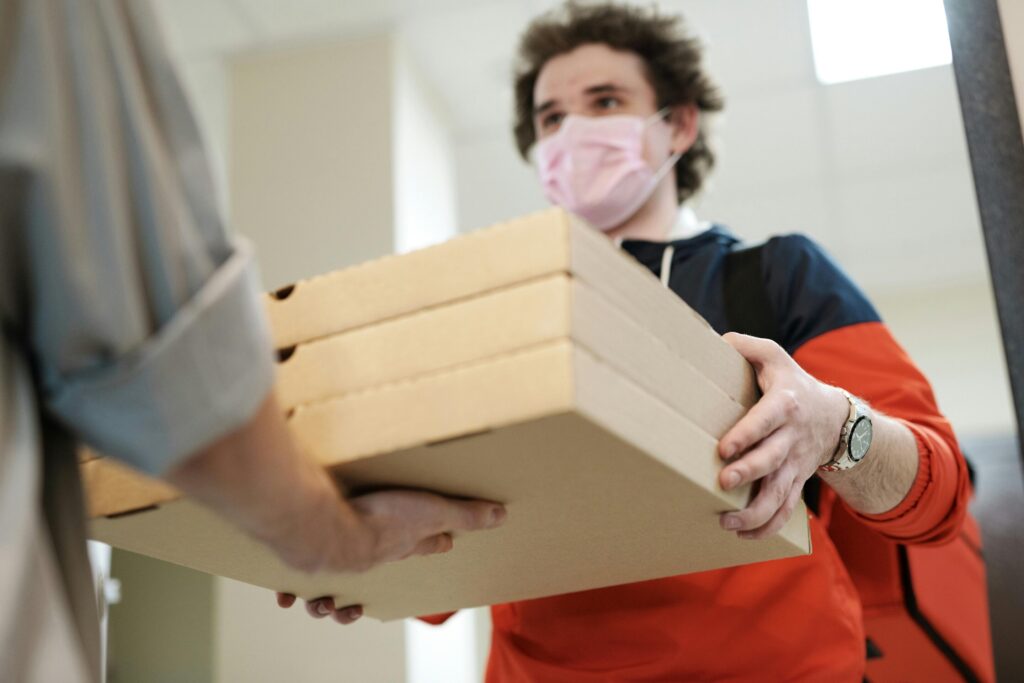
Nearly one-quarter of teens reported using mobile food delivery services during school hours, and almost half said they use them after school, according to a national survey of more than 1,000 U.S. adolescents.
Among respondents who used such services, almost 60% reported ordering fast food such as pizza and burgers, and more than one-third ordered sodas or other sugar-sweetened beverages. The findings raise concerns about the ability to maintain safe learning environments and support healthy nutrition for students, according to researchers.
“Federal and state school nutrition policies are designed to support access to healthy foods and beverages in school cafeterias and vending machines, but technology has outpaced policy,” said lead study author Mika Matsuzaki, PhD, MS, MPH, an assistant professor in the Human Nutrition group in the Department of International Health at Johns Hopkins Bloomberg School of Public Health.
“Today, a smartphone instantly brings a food outlet many miles away right to the school gate, fundamentally changing how our children access foods and beverages at school. We can no longer look at school nutrition without looking at the smartphone in a student’s pocket.”
Matsuzaki will present the findings at Nutrition 2026, the flagship annual meeting of the American Society for Nutrition, held July 25–28 in National Harbor, Maryland, just outside Washington, D.C.
Researchers conducted the survey online during the summer of 2025, garnering responses from 1,027 adolescents ages 13–17. In addition to the overall national trends, the results revealed some regional variation. Students living in the western United States were more likely to attend schools that allow mobile food delivery during school hours; however, teens in this region were also more likely to say they avoid using mobile food delivery because of the perceived high costs.
Nearly half of respondents said they support allowing mobile food delivery during school, although many—regardless of their support or opposition—expressed concerns about its implications for the learning environment and factors such as equity and bullying.
“Interestingly, students themselves are divided on whether this should be allowed. Even those who support it openly worry about campus safety and classroom distractions,” Matsuzaki said. “It’s rare to see teenagers raise flags about their own digital habits, which signals to us that they recognize these platforms are a double-edged sword.”
Researchers said schools can be an important venue to teach teens how to navigate digital food environments responsibly rather than impulsively. School administrators and policymakers could use the survey data as they consider campus safety and phone use policies, as well as potential guardrails to limit the influx of unhealthy food during school hours. It may also be possible to collaborate with food-delivery platforms to encourage users to make healthy choices. For parents and teens, researchers said the data could spur more conversations about nutrition and budgets.
“For many school administrators and parents, this study will be a wake-up call, as they may not be aware of this relatively new phenomenon. We hope these findings will bring proactive conversations,” Matsuzaki said.
Researchers noted that self-reported surveys have inherent limitations, and future studies could help further confirm the findings.
More information
Abstract: Use of mobile food delivery services during school hours in the United States: National survey
Key medical concepts


Citation:
One in four teens report using mobile food delivery at school (2026, July 27)
retrieved 27 July 2026
from https://medicalxpress.com/news/2026-07-teens-mobile-food-delivery-school.html
This document is subject to copyright. Apart from any fair dealing for the purpose of private study or research, no
part may be reproduced without the written permission. The content is provided for information purposes only.

Khamrah by Lattafa for Men - 3.4 oz EDP Spray
4% Off
Ghost Sweetheart Eau de Toilette | Pineapple, Jasmine and Sandalwood | Perfume for Women 50 ml
50% Off
Marc Jacobs Dot Eau De Parfum for Women, 100 ml
42% Off
Ted Baker W Eau de Toilette for Her, Fig Leaf, White Peony and Violet Top Notes, Pink Orchid and Raspberry Middle Notes, 75ml
£11.77 (£15.69 / 100 ml) (as of 01/10/2026 05:09 GMT +01:00 - More infoProduct prices and availability are accurate as of the date/time indicated and are subject to change. Any price and availability information displayed on [relevant Amazon Site(s), as applicable] at the time of purchase will apply to the purchase of this product.)
Ted Baker Woman Pink Eau de Toilette Spray Floral Green Feminine Fragrance, Opening Notes are Fresh Peach, Bergamot and Tangerine with Warm Musk, Vanilla and Vetiver Base, 100ml
11% Off
Vera Wang Princess Eau de Toilette - 30 ml

Choco Musk 50ml Eau De Parfum for men and women | Chocolate Musk by Jannat Aromas
17% Off
Christina Aguilera Signature Eau de Parfum (50ml) Floral, Fruity & Exotic Scent, Luxury Fragrance for Women
9% Off
Calvin Klein - Eau De Toilette CKIN2U - Calvin Klein Women, Ladies Perfume, Women's Perfume, Calvin Klein Perfume, Calvin Klein One - 150 ml
5% Off
Jimmy Choo Flash Eau de Parfum, 60 ml (Pack of 1)
3% Off
Fruit of the Loom Men's Heavy T Shirt, White, XL UK
28% Off
ATNKE LED Lighted Beanie Cap,USB Rechargeable Running Hat Ultra Bright 4 LED Waterproof Light Winter Warm Gifts for Men and Women/Pink
17% Off
Men's 1/4 Zip Pullover UK Sale Clearance, Fleece Sweatshirt Casual Jumper Long Sleeve T-shirt Top Stand Collar Sweater Plain Pullover Sports Leisure Workwear Quarter Zip Sweater Lightweight Jumpers
£5.88 (as of 12/11/2025 00:52 GMT +01:00 - More infoProduct prices and availability are accurate as of the date/time indicated and are subject to change. Any price and availability information displayed on [relevant Amazon Site(s), as applicable] at the time of purchase will apply to the purchase of this product.)
Crevice Cleaning Brush, Bathroom Tile Groove Gap Cleaning Brush,Premium Crevice Cleaning Tool Aluminum Support with 15° Angle Magic Brush, Thin Brush for Home Kitchen
19% Off
Wireless Earbuds, Bluetooth 5.3 Headphones in Ear with HiFi Stereo Deep Bass, 4 ENC Noise Cancelling Mic Wireless Earphones 40H Playtime, Bluetooth Earbuds Dual LED Display, IP7 Waterproof, USB-C
42% Off