
 [
[

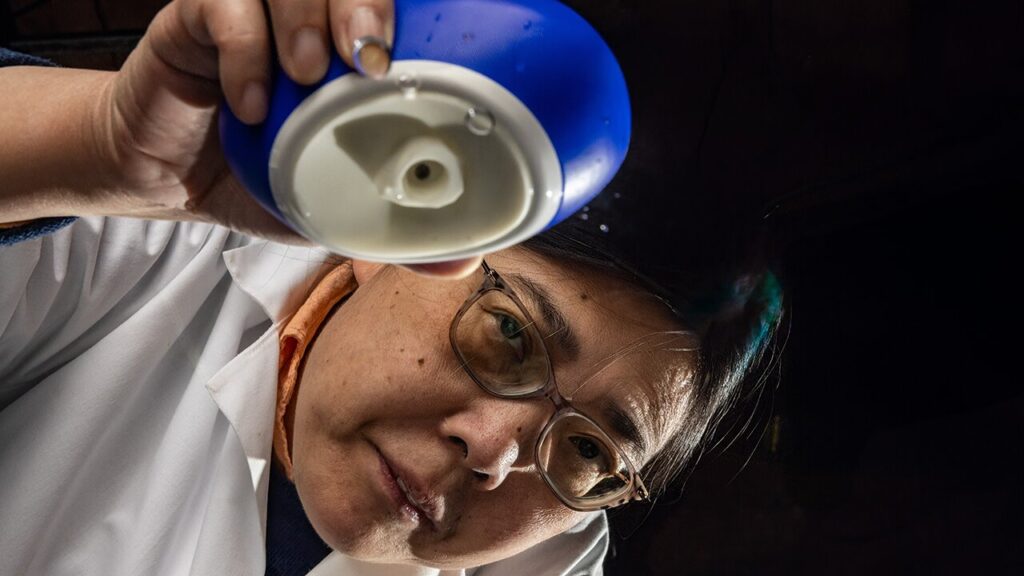
A University of Missouri researcher has unveiled a safer, smarter way to fight drug-resistant infections. Dr. Hongmin Sun, an associate professor in the School of Medicine, has demonstrated that a spray-mist device can deliver last-resort antibiotics directly into infected tissue without the harmful side effects often caused by delivery via the bloodstream.
The findings are published in the journal Military Medicine.
In a recent study, researchers worked with an industry partner to use a needle-free device to treat methicillin-resistant Staphylococcus aureus (MRSA), a dangerous bacterium that has become resistant to many common antibiotics.
The device successfully delivered vancomycin, a common last-resort antibiotic, deep into infected tissue without typical side effects such as kidney damage. Unlike topical creams or ointments that are easily wiped away or bloodstream delivery that risks organ damage, the spray-mist technology pushed the medicine through the skin to successfully treat the infection.
Sun collaborated with former Mizzou researcher Lakshmi Pulakat, now a professor of medicine at Tufts University, and Droplette Inc. to use the patented device for antibiotic delivery. The findings pave the way for future clinical trials as researchers seek FDA approval.

The team is hopeful the spray-mist device might one day be used in wound care in challenging settings.
“Whether it’s people with diabetic foot ulcers or soldiers hurt in battle, we wanted to come up with a new approach to treat these severely infected wounds in a more targeted way,” Sun said. “This can be a game-changing therapy for treating those with severely infected wounds.”
Pulakat said this technology is an example of compassionate care.
“This method of delivering last-resort antibiotics could prevent countless amputations and help save lives,” she said. “Dr. Sun is an internationally recognized expert in the field of pathogenic microbiology, and our collaboration with an industry partner has helped make this translational research possible.”
More information
Anushri Warang et al, Preventing Nephrotoxicity of Vancomycin and Attenuating Deep Tissue Infections by Methicillin-Resistant Staphylococcus aureus via Needle-Free Drug Delivery by the Droplette Micromist Technology Device, Military Medicine (2025). DOI: 10.1093/milmed/usaf087
Clinical categories
Citation:
Spray away infections: New device delivers antibiotics via mist, alleviating risks of side effects (2026, February 4)
retrieved 4 February 2026
from https://medicalxpress.com/news/2026-02-spray-infections-device-antibiotics-mist.html
This document is subject to copyright. Apart from any fair dealing for the purpose of private study or research, no
part may be reproduced without the written permission. The content is provided for information purposes only.

Khamrah by Lattafa for Men - 3.4 oz EDP Spray
4% Off
Ghost Sweetheart Eau de Toilette | Pineapple, Jasmine and Sandalwood | Perfume for Women 50 ml
50% Off
Marc Jacobs Dot Eau De Parfum for Women, 100 ml
42% Off
Ted Baker W Eau de Toilette for Her, Fig Leaf, White Peony and Violet Top Notes, Pink Orchid and Raspberry Middle Notes, 75ml
£11.77 (£15.69 / 100 ml) (as of 04/09/2026 04:57 GMT +01:00 - More infoProduct prices and availability are accurate as of the date/time indicated and are subject to change. Any price and availability information displayed on [relevant Amazon Site(s), as applicable] at the time of purchase will apply to the purchase of this product.)
Ted Baker Woman Pink Eau de Toilette Spray Floral Green Feminine Fragrance, Opening Notes are Fresh Peach, Bergamot and Tangerine with Warm Musk, Vanilla and Vetiver Base, 100ml
11% Off
Vera Wang Princess Eau de Toilette - 30 ml

Choco Musk 50ml Eau De Parfum for men and women | Chocolate Musk by Jannat Aromas
17% Off
Christina Aguilera Signature Eau de Parfum (50ml) Floral, Fruity & Exotic Scent, Luxury Fragrance for Women
9% Off
Calvin Klein - Eau De Toilette CKIN2U - Calvin Klein Women, Ladies Perfume, Women's Perfume, Calvin Klein Perfume, Calvin Klein One - 150 ml
5% Off
Jimmy Choo Flash Eau de Parfum, 60 ml (Pack of 1)
3% Off
Fruit of the Loom Men's Heavy T Shirt, White, XL UK
28% Off
ATNKE LED Lighted Beanie Cap,USB Rechargeable Running Hat Ultra Bright 4 LED Waterproof Light Winter Warm Gifts for Men and Women/Pink
17% Off
Men's 1/4 Zip Pullover UK Sale Clearance, Fleece Sweatshirt Casual Jumper Long Sleeve T-shirt Top Stand Collar Sweater Plain Pullover Sports Leisure Workwear Quarter Zip Sweater Lightweight Jumpers
£5.88 (as of 12/11/2025 00:52 GMT +01:00 - More infoProduct prices and availability are accurate as of the date/time indicated and are subject to change. Any price and availability information displayed on [relevant Amazon Site(s), as applicable] at the time of purchase will apply to the purchase of this product.)
Crevice Cleaning Brush, Bathroom Tile Groove Gap Cleaning Brush,Premium Crevice Cleaning Tool Aluminum Support with 15° Angle Magic Brush, Thin Brush for Home Kitchen
19% Off
Wireless Earbuds, Bluetooth 5.3 Headphones in Ear with HiFi Stereo Deep Bass, 4 ENC Noise Cancelling Mic Wireless Earphones 40H Playtime, Bluetooth Earbuds Dual LED Display, IP7 Waterproof, USB-C
42% Off


