[
[

Sexually transmitted infections (STIs) not only impact an individual’s health, but also result in multibillion-dollar economic losses worldwide. To study these diseases, a team of researchers has developed the first-of-its-kind, immune-capable organ-on-a-chip model that realistically reproduces the human cervical environment, allowing scientists to study how the microbiome, immune system, and STIs interact—something that has not been possible before with oversimplified cell cultures or animal models.
Scientists from the University of Maryland School of Medicine (UMSOM) and School of Dentistry (UMSOD), the University of Delaware, and the University of Virginia have published the research in the journal Science Advances.
The heavy global toll of STIs
Chlamydia and gonorrhea represent a substantial share of the STI burden, with combined direct medical costs estimated at approximately $1 billion annually in the United States alone, driven by their high incidence and associated complications. Globally, the World Health Organization (WHO) reports nearly one million new STIs infections each day among people ages 15 to 49, including 129 million new chlamydia cases annually. Beyond their economic impact, chlamydia and gonorrhea can lead to serious complications in women’s health, including pelvic inflammatory disease, infertility, and adverse pregnancy outcomes such as preterm birth.
“This new model will revolutionize how scientists study STIs, leading to an improved understanding of these conditions, as well as the potential for better treatments,” said co-lead author Jacques Ravel, Ph.D., Director of the Center for Microbiome Research and Innovation (CAMRI) within UMSOM’s Institute for Genome Sciences (IGS); the John L. Whitehurst Professor of Medicine, Microbiology and Immunology, and Assistant Dean for Research Advancement at UMSOM.
“The other powerful part of this research has been its cross-discipline collaboration in the research. By integrating engineering, microbiology, immunology, and microbiome science, we were able to build a model that more closely reflects human biology and the complexity of the cervical microenvironment.”
How the cervical organ-on-a-chip works
The organ-on-a-chip model, scientifically known as a microphysiological system, simulates the human cervix using cervical epithelial cells, supportive tissue cells, immune cells, fluid flow, and microbiomes commonly found in the vagina. The model consists of a porous membrane layered with human cervical cells on one side and supportive cells on the other. Fluids flow across both sides, mimicking physiological conditions. When microbiomes and pathogens are added, the model replicates key aspects of what occurs in the human cervix.
“A key goal was to develop a complex model system that is both practical and accessible, enabling researchers outside of bioengineering labs to adopt it and apply it to answer important biological questions,” said co-lead author Jason Gleghorn, Ph.D., Associate Professor of Biomedical Engineering at the University of Delaware, who led the model development. “The need for this model was particularly critical for studying the vaginal microbiome, which we know plays an important role in susceptibility to STIs.”
Revealing the microbiome’s role in infection
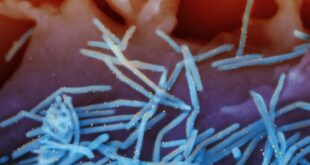
After developing the model, the researcher team tested it using two sexually transmitted infections: chlamydia, caused by Chlamydia trachomatis; and gonorrhea, caused by Neisseria gonorrhoeae.
“One of the most exciting findings was that just like in women, protective microbiomes dominated by Lactobacillus crispatus limited infection in the model, highlighting further the critical role of the vaginal microbiome in STI risk. In contrast, when we introduced nonoptimal microbiomes, infections worsened,” said Dr. Ravel.
“This model provides a powerful new tool to develop faster, more effective, and personalized treatments, to test new therapies, such as probiotics or live biotherapeutics, to ultimately protect women from infections before they occur. For the first time, we can simulate what happens in the human body rather than relying solely on a petri dish systems or inadequate animal models.”
Publication details
Katherine Nelson et al, A Microphysiologic Human Cervical Model Recapitulates Microbial, Immune, and Pathogenic Properties of Sexually Transmitted Infections, Science Advances (2026). DOI: 10.1126/sciadv.aeb4864. www.science.org/doi/10.1126/sciadv.aeb4864
Journal information:
Science Advances
Citation:
Immune-capable cervix-on-a-chip enables study of sexually transmitted infections (2026, April 3)
retrieved 3 April 2026
from https://medicalxpress.com/news/2026-04-immune-capable-cervix-chip-enables.html
This document is subject to copyright. Apart from any fair dealing for the purpose of private study or research, no
part may be reproduced without the written permission. The content is provided for information purposes only.

Khamrah by Lattafa for Men - 3.4 oz EDP Spray
4% Off
Ghost Sweetheart Eau de Toilette | Pineapple, Jasmine and Sandalwood | Perfume for Women 50 ml
50% Off
Marc Jacobs Dot Eau De Parfum for Women, 100 ml
42% Off
Ted Baker W Eau de Toilette for Her, Fig Leaf, White Peony and Violet Top Notes, Pink Orchid and Raspberry Middle Notes, 75ml
£11.77 (£15.69 / 100 ml) (as of 14/09/2026 05:03 GMT +01:00 - More infoProduct prices and availability are accurate as of the date/time indicated and are subject to change. Any price and availability information displayed on [relevant Amazon Site(s), as applicable] at the time of purchase will apply to the purchase of this product.)
Ted Baker Woman Pink Eau de Toilette Spray Floral Green Feminine Fragrance, Opening Notes are Fresh Peach, Bergamot and Tangerine with Warm Musk, Vanilla and Vetiver Base, 100ml
11% Off
Vera Wang Princess Eau de Toilette - 30 ml

Choco Musk 50ml Eau De Parfum for men and women | Chocolate Musk by Jannat Aromas
17% Off
Christina Aguilera Signature Eau de Parfum (50ml) Floral, Fruity & Exotic Scent, Luxury Fragrance for Women
9% Off
Calvin Klein - Eau De Toilette CKIN2U - Calvin Klein Women, Ladies Perfume, Women's Perfume, Calvin Klein Perfume, Calvin Klein One - 150 ml
5% Off
Jimmy Choo Flash Eau de Parfum, 60 ml (Pack of 1)
3% Off
Fruit of the Loom Men's Heavy T Shirt, White, XL UK
28% Off
ATNKE LED Lighted Beanie Cap,USB Rechargeable Running Hat Ultra Bright 4 LED Waterproof Light Winter Warm Gifts for Men and Women/Pink
17% Off
Men's 1/4 Zip Pullover UK Sale Clearance, Fleece Sweatshirt Casual Jumper Long Sleeve T-shirt Top Stand Collar Sweater Plain Pullover Sports Leisure Workwear Quarter Zip Sweater Lightweight Jumpers
£5.88 (as of 12/11/2025 00:52 GMT +01:00 - More infoProduct prices and availability are accurate as of the date/time indicated and are subject to change. Any price and availability information displayed on [relevant Amazon Site(s), as applicable] at the time of purchase will apply to the purchase of this product.)
Crevice Cleaning Brush, Bathroom Tile Groove Gap Cleaning Brush,Premium Crevice Cleaning Tool Aluminum Support with 15° Angle Magic Brush, Thin Brush for Home Kitchen
19% Off
Wireless Earbuds, Bluetooth 5.3 Headphones in Ear with HiFi Stereo Deep Bass, 4 ENC Noise Cancelling Mic Wireless Earphones 40H Playtime, Bluetooth Earbuds Dual LED Display, IP7 Waterproof, USB-C
42% Off