by Jan Grabowski, TWINCORE – Zentrum für Experimentelle und Klinische Infektionsforschung

The human cytomegalovirus, HCMV for short, lies dormant unnoticed in the body of most people for their entire lives. In immunocompromised individuals, however, the virus can cause life-threatening infections. It infects dendritic cells, a specific type of cell in the immune system.
Although the majority of them are infected, only a few of them immediately execute the virus’s genetic program. Researchers at TWINCORE, Centre for Experimental and Clinical Infection Research, have now been able to show which signaling pathways of the innate immune system the virus is targeting in order to have itself produced by the host cells.
They have published their findings in the journal Nature Communications.
Up to 90% of the world’s population carries HCMV. In people with a normal immune system, the infection is usually subclinical, i.e. it does not cause any pronounced symptoms. However, in immunocompromised patients, such as organ transplant recipients, the infection can become life-threatening. In addition, infection with HCMV during pregnancy is the most common cause of malformations in newborns, such as congenital hearing impairment.
In the human body, HCMV can infect the myeloid cells of the immune system. This group also includes the dendritic cells derived from monocytes, whose main task is to process foreign proteins so that they can be presented to the T cells. Antigen-specific T cells can then eliminate infected cells.
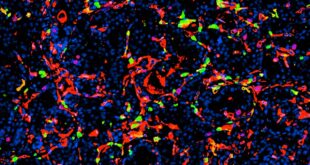
The researchers from the Institute for Experimental Infection Research, led by Prof Ulrich Kalinke, were able to divide the monocyte-derived dendritic cells into three groups, one of which is more susceptible to infection than the others.
“Using single-cell RNA sequencing, we found that in these cells, the signaling pathway that normally recognizes viruses is virtually hijacked by HCMV in order to establish the productive infection,” says Dr. Bibiana Costa, a postdoctoral researcher at TWINCORE and first author of the study. “This is the so-called STING signaling pathway.” STING stands for “stimulator of interferon genes”.
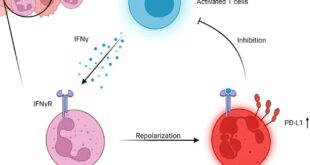
Interferons are messenger substances of the immune system that act directly against viruses and can also activate defense cells. In addition, interferons trigger further defense processes in a chain reaction. In the subgroup of dendritic cells, which are particularly susceptible to infection, the virus’ own proteins block this protective function and instead reprogram them so that new virus particles are produced undisturbed.
“We then analyzed this viral intervention in the cellular process in more detail to find out exactly which genes in the cells are affected,” says Costa. “We were able to identify several candidates that have either antiviral or proviral properties.”
Because certain immunomodulating drugs intervene precisely in these signaling pathways, there may be potential here for a therapeutic approach. This seems particularly promising because organ transplant recipients have to take immunosuppressive drugs for the rest of their lives to prevent the immune system from rejecting the transplant.
“However, this requires further studies,” says Prof Ulrich Kalinke, Director of the Institute for Experimental Infection Research and Managing Director of TWINCORE.
More information:
Bibiana Costa et al, Human cytomegalovirus exploits STING signaling and counteracts IFN/ISG induction to facilitate infection of dendritic cells, Nature Communications (2024). DOI: 10.1038/s41467-024-45614-3
Provided by
TWINCORE – Zentrum für Experimentelle und Klinische Infektionsforschung
Citation:
How human cytomegalovirus hijacks the immune system (2024, February 27)
retrieved 27 February 2024
from https://medicalxpress.com/news/2024-02-human-cytomegalovirus-hijacks-immune.html
This document is subject to copyright. Apart from any fair dealing for the purpose of private study or research, no
part may be reproduced without the written permission. The content is provided for information purposes only.

Khamrah by Lattafa for Men - 3.4 oz EDP Spray
4% Off
Ghost Sweetheart Eau de Toilette | Pineapple, Jasmine and Sandalwood | Perfume for Women 50 ml
50% Off
Marc Jacobs Dot Eau De Parfum for Women, 100 ml
42% Off
Ted Baker W Eau de Toilette for Her, Fig Leaf, White Peony and Violet Top Notes, Pink Orchid and Raspberry Middle Notes, 75ml
£11.77 (£15.69 / 100 ml) (as of 15/06/2026 03:32 GMT +01:00 - More infoProduct prices and availability are accurate as of the date/time indicated and are subject to change. Any price and availability information displayed on [relevant Amazon Site(s), as applicable] at the time of purchase will apply to the purchase of this product.)
Ted Baker Woman Pink Eau de Toilette Spray Floral Green Feminine Fragrance, Opening Notes are Fresh Peach, Bergamot and Tangerine with Warm Musk, Vanilla and Vetiver Base, 100ml
11% Off
Vera Wang Princess Eau de Toilette - 30 ml

Choco Musk 50ml Eau De Parfum for men and women | Chocolate Musk by Jannat Aromas
17% Off
Christina Aguilera Signature Eau de Parfum (50ml) Floral, Fruity & Exotic Scent, Luxury Fragrance for Women
9% Off
Calvin Klein - Eau De Toilette CKIN2U - Calvin Klein Women, Ladies Perfume, Women's Perfume, Calvin Klein Perfume, Calvin Klein One - 150 ml
5% Off
Jimmy Choo Flash Eau de Parfum, 60 ml (Pack of 1)
3% Off
Fruit of the Loom Men's Heavy T Shirt, White, XL UK
28% Off
ATNKE LED Lighted Beanie Cap,USB Rechargeable Running Hat Ultra Bright 4 LED Waterproof Light Winter Warm Gifts for Men and Women/Pink
17% Off
Men's 1/4 Zip Pullover UK Sale Clearance, Fleece Sweatshirt Casual Jumper Long Sleeve T-shirt Top Stand Collar Sweater Plain Pullover Sports Leisure Workwear Quarter Zip Sweater Lightweight Jumpers
£5.88 (as of 12/11/2025 00:52 GMT +01:00 - More infoProduct prices and availability are accurate as of the date/time indicated and are subject to change. Any price and availability information displayed on [relevant Amazon Site(s), as applicable] at the time of purchase will apply to the purchase of this product.)
Crevice Cleaning Brush, Bathroom Tile Groove Gap Cleaning Brush,Premium Crevice Cleaning Tool Aluminum Support with 15° Angle Magic Brush, Thin Brush for Home Kitchen
19% Off
Wireless Earbuds, Bluetooth 5.3 Headphones in Ear with HiFi Stereo Deep Bass, 4 ENC Noise Cancelling Mic Wireless Earphones 40H Playtime, Bluetooth Earbuds Dual LED Display, IP7 Waterproof, USB-C
42% Off