
 [
[
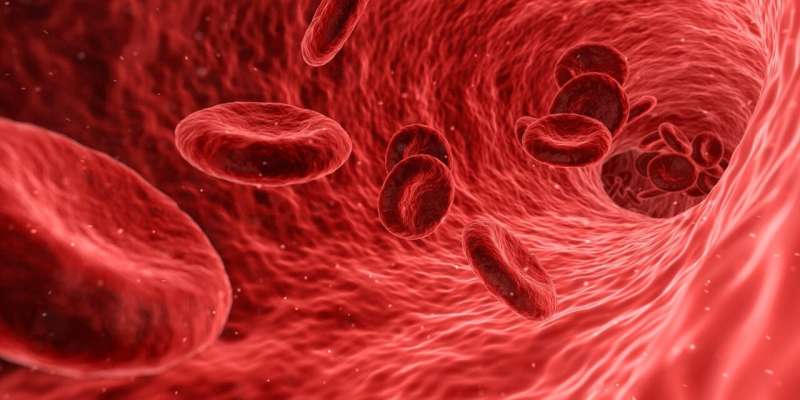
Researchers have found that, with new treatments for multiple myeloma, a serious type of blood cancer, clinicians should use different criteria to identify patients with poor chances of survival. The study was published online in Cancer.
Functional high-risk (FHR) multiple myeloma, which affects a subset of patients with blood cancer, is commonly defined as multiple myeloma that progresses within 18 months of starting treatment and has a survival prognosis of less than 2 years after progression.
Recently, however, the use of a four-part treatment regimen—including anti-CD38 antibodies, proteasome inhibitors, immunomodulatory agents and dexamethasone—followed by autologous stem cell transplantation has helped slow the cancer’s progression.
To update the definition of FHR multiple myeloma in the current era of combination therapy, investigators from the University of Alabama at Birmingham and the CoMMiT consortium analyzed information on 310 patients with newly diagnosed multiple myeloma who received this therapy and were followed for a median of 3.5 years.
Survival analyses indicated that cancer progression within 36 months of the start of combination therapy identified patients whose survival was likely to be less than 2 years from the time of progression.
Adding another treatment, called T-cell redirecting therapy, helped slow progression. This “FHR36” patient population, representing 16.4% of all treated patients, should be prioritized as candidates for early use of T-cell redirecting therapy and clinical trials of medications with novel mechanisms of action.
“The findings will help physicians choose therapies for this important minority of patients who have disease progression in the first 3 years after diagnosis and identify an important population whose greater need for treatment innovations should be addressed in the next generation of clinical trials,” said senior author Dr. Luciano J. Costa of the University of Alabama at Birmingham.
Publication details
Gayathri Ravi, et al. Redefining functional high-risk (FHR) multiple myeloma (MM) in the context of upfront quadruplet (QUAD) therapy and autologous stem cell transplantation (ASCT), Cancer (2026). DOI: 10.1002/cncr.70478
Journal information:
Cancer
Key medical concepts
Clinical categories


Citation:
Have the clinical signs of a serious type of blood cancer changed? (2026, July 20)
retrieved 20 July 2026
from https://medicalxpress.com/news/2026-07-clinical-blood-cancer.html
This document is subject to copyright. Apart from any fair dealing for the purpose of private study or research, no
part may be reproduced without the written permission. The content is provided for information purposes only.

Khamrah by Lattafa for Men - 3.4 oz EDP Spray
4% Off
Ghost Sweetheart Eau de Toilette | Pineapple, Jasmine and Sandalwood | Perfume for Women 50 ml
50% Off
Marc Jacobs Dot Eau De Parfum for Women, 100 ml
42% Off
Ted Baker W Eau de Toilette for Her, Fig Leaf, White Peony and Violet Top Notes, Pink Orchid and Raspberry Middle Notes, 75ml
£11.77 (£15.69 / 100 ml) (as of 20/07/2026 04:01 GMT +01:00 - More infoProduct prices and availability are accurate as of the date/time indicated and are subject to change. Any price and availability information displayed on [relevant Amazon Site(s), as applicable] at the time of purchase will apply to the purchase of this product.)
Ted Baker Woman Pink Eau de Toilette Spray Floral Green Feminine Fragrance, Opening Notes are Fresh Peach, Bergamot and Tangerine with Warm Musk, Vanilla and Vetiver Base, 100ml
11% Off
Vera Wang Princess Eau de Toilette - 30 ml

Choco Musk 50ml Eau De Parfum for men and women | Chocolate Musk by Jannat Aromas
17% Off
Christina Aguilera Signature Eau de Parfum (50ml) Floral, Fruity & Exotic Scent, Luxury Fragrance for Women
9% Off
Calvin Klein - Eau De Toilette CKIN2U - Calvin Klein Women, Ladies Perfume, Women's Perfume, Calvin Klein Perfume, Calvin Klein One - 150 ml
5% Off
Jimmy Choo Flash Eau de Parfum, 60 ml (Pack of 1)
3% Off
Fruit of the Loom Men's Heavy T Shirt, White, XL UK
28% Off
ATNKE LED Lighted Beanie Cap,USB Rechargeable Running Hat Ultra Bright 4 LED Waterproof Light Winter Warm Gifts for Men and Women/Pink
17% Off
Men's 1/4 Zip Pullover UK Sale Clearance, Fleece Sweatshirt Casual Jumper Long Sleeve T-shirt Top Stand Collar Sweater Plain Pullover Sports Leisure Workwear Quarter Zip Sweater Lightweight Jumpers
£5.88 (as of 12/11/2025 00:52 GMT +01:00 - More infoProduct prices and availability are accurate as of the date/time indicated and are subject to change. Any price and availability information displayed on [relevant Amazon Site(s), as applicable] at the time of purchase will apply to the purchase of this product.)
Crevice Cleaning Brush, Bathroom Tile Groove Gap Cleaning Brush,Premium Crevice Cleaning Tool Aluminum Support with 15° Angle Magic Brush, Thin Brush for Home Kitchen
19% Off
Wireless Earbuds, Bluetooth 5.3 Headphones in Ear with HiFi Stereo Deep Bass, 4 ENC Noise Cancelling Mic Wireless Earphones 40H Playtime, Bluetooth Earbuds Dual LED Display, IP7 Waterproof, USB-C
42% Off


