 [
[

Early-season tick bites have been driving more people to emergency rooms since 2017, and Virginia, along with several other northeastern states, is in the bull’s-eye.
That’s according to the Centers for Disease Control and Prevention, which hosts a live tick bite data tracker.
“Ticks worry me more than bears and snakes, due to the diseases that they carry,” says University of Virginia Dr. Christopher Holstege, who heads, among other things, the Blue Ridge Poison Center and UVA’s Department of Student Health and Wellness.
Here, he explains what’s happening and how to protect yourself.
Why is there an increase in tick-related emergency room visits?
It is difficult to know the true numbers. We do know more people are getting engaged with the outdoors, which is wonderful, and I firmly believe, important for health. The increased outdoor activities lead to increased interactions with ticks and the potential for tick-borne diseases.
People are encountering them while hiking, and I have personally already encountered them outdoors. With warmer weather, tick exposure risk increases, and visits to medical providers subsequently increase, especially when ticks are embedded in the skin and cannot be removed.
What are some of the tick-borne diseases in Virginia?
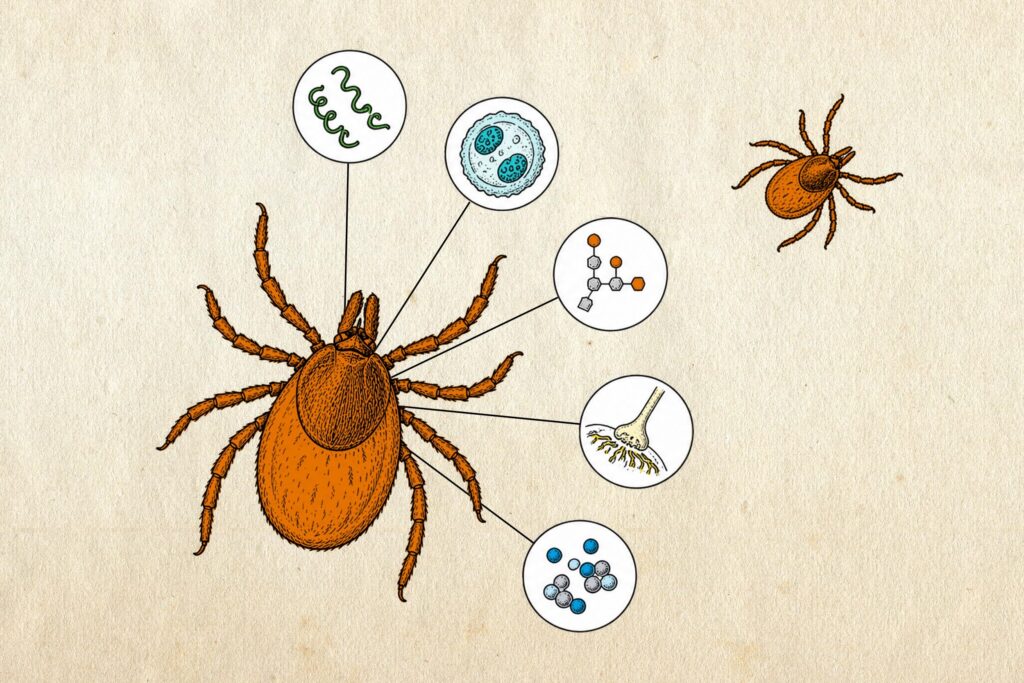
Lyme disease, ehrlichiosis, alpha-gal syndrome (which causes a red meat allergy), tick paralysis and Rocky Mountain spotted fever can occur in our region of the state. Several other serious, less common tickborne illnesses include babesiosis, anaplasmosis and tularemia.
What should someone do if they find a tick on their body?
The recommended method for removing a tick involves grasping the tick as close to the skin as possible using fine-tipped tweezers and removing the tick using gentle, outward pressure. Personal protective equipment, nitrile or latex gloves, should be worn if available. Attempts to encourage the tick to disengage, like burning the tick with matches or cigarettes or applying a smothering substance like petroleum jelly, gasoline or nail polish, are not recommended and can lead to harm. If you are unable to remove the tick, more invasive techniques may be required and should be performed in controlled settings such as a medical clinic.
What warning signs should people look out for?
Following a tick bite, a patient should watch for an expanding rash, such as a bull’s-eye pattern common with Lyme disease or the development of fever, chills, severe fatigue and joint pain. These are warning signs of Lyme disease or other tick-borne infections.
Clinical categories


Citation:
Q&A: Expert explains why tick bites are sending people to the ER in droves (2026, May 11)
retrieved 11 May 2026
from https://medicalxpress.com/news/2026-05-qa-expert-people-er-droves.html
This document is subject to copyright. Apart from any fair dealing for the purpose of private study or research, no
part may be reproduced without the written permission. The content is provided for information purposes only.

Khamrah by Lattafa for Men - 3.4 oz EDP Spray
4% Off
Ghost Sweetheart Eau de Toilette | Pineapple, Jasmine and Sandalwood | Perfume for Women 50 ml
50% Off
Marc Jacobs Dot Eau De Parfum for Women, 100 ml
42% Off
Ted Baker W Eau de Toilette for Her, Fig Leaf, White Peony and Violet Top Notes, Pink Orchid and Raspberry Middle Notes, 75ml
£11.77 (£15.69 / 100 ml) (as of 01/06/2026 03:25 GMT +01:00 - More infoProduct prices and availability are accurate as of the date/time indicated and are subject to change. Any price and availability information displayed on [relevant Amazon Site(s), as applicable] at the time of purchase will apply to the purchase of this product.)
Ted Baker Woman Pink Eau de Toilette Spray Floral Green Feminine Fragrance, Opening Notes are Fresh Peach, Bergamot and Tangerine with Warm Musk, Vanilla and Vetiver Base, 100ml
11% Off
Vera Wang Princess Eau de Toilette - 30 ml

Choco Musk 50ml Eau De Parfum for men and women | Chocolate Musk by Jannat Aromas
17% Off
Christina Aguilera Signature Eau de Parfum (50ml) Floral, Fruity & Exotic Scent, Luxury Fragrance for Women
9% Off
Calvin Klein - Eau De Toilette CKIN2U - Calvin Klein Women, Ladies Perfume, Women's Perfume, Calvin Klein Perfume, Calvin Klein One - 150 ml
5% Off
Jimmy Choo Flash Eau de Parfum, 60 ml (Pack of 1)
3% Off
Fruit of the Loom Men's Heavy T Shirt, White, XL UK
28% Off
ATNKE LED Lighted Beanie Cap,USB Rechargeable Running Hat Ultra Bright 4 LED Waterproof Light Winter Warm Gifts for Men and Women/Pink
17% Off
Men's 1/4 Zip Pullover UK Sale Clearance, Fleece Sweatshirt Casual Jumper Long Sleeve T-shirt Top Stand Collar Sweater Plain Pullover Sports Leisure Workwear Quarter Zip Sweater Lightweight Jumpers
£5.88 (as of 12/11/2025 00:52 GMT +01:00 - More infoProduct prices and availability are accurate as of the date/time indicated and are subject to change. Any price and availability information displayed on [relevant Amazon Site(s), as applicable] at the time of purchase will apply to the purchase of this product.)
Crevice Cleaning Brush, Bathroom Tile Groove Gap Cleaning Brush,Premium Crevice Cleaning Tool Aluminum Support with 15° Angle Magic Brush, Thin Brush for Home Kitchen
19% Off
Wireless Earbuds, Bluetooth 5.3 Headphones in Ear with HiFi Stereo Deep Bass, 4 ENC Noise Cancelling Mic Wireless Earphones 40H Playtime, Bluetooth Earbuds Dual LED Display, IP7 Waterproof, USB-C
42% Off