 [


Each morning during rounds as a resident at University of Rochester Medicine, Marika Toscano noticed the same troubling pattern.
Patients admitted for high-risk pregnancies often arrived seeming hopeful and engaged. But after days or weeks of hospitalization, many began withdrawing. Their room lights stayed off. The blinds remained closed. Conversations became shorter.
Toscano, now an assistant professor of maternal-fetal medicine at Johns Hopkins University, drew on her residency experiences to guide new research that found that offering patients evidence-based mental health support during their hospital stay can help prevent postpartum depression. The findings are published in the journal Women’s Health Issues.
People in the study who participated in the ROSE intervention experienced fewer postpartum depression symptoms during the first six weeks after childbirth than those receiving usual care, demonstrating hospitalization as a critical opportunity for early support.
Early intervention is key
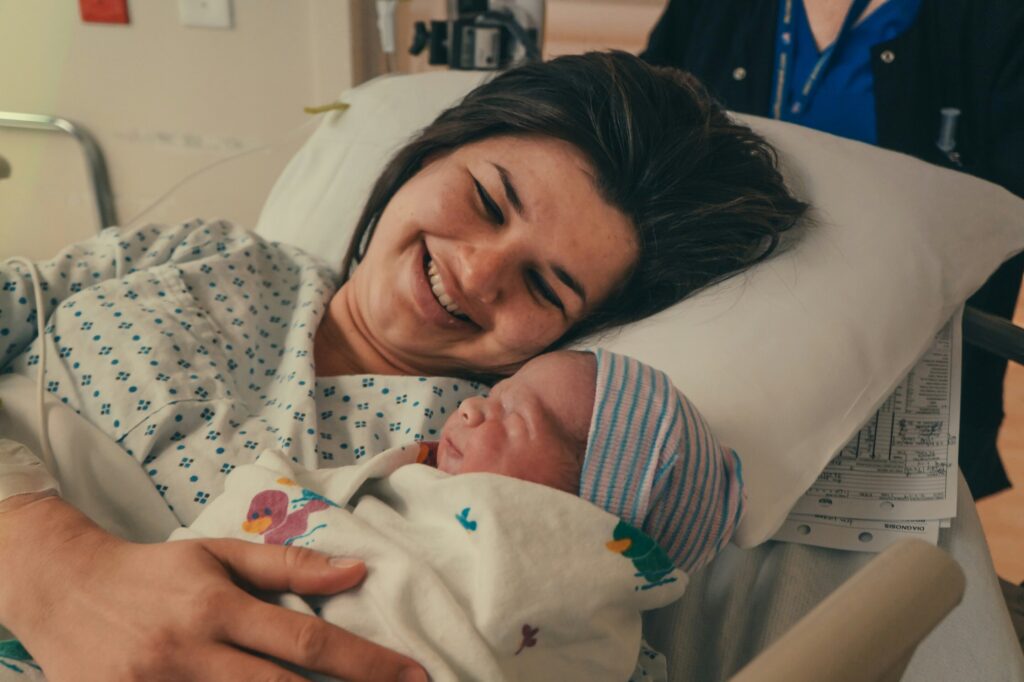
Any hospital stay can be stressful and disruptive. Life must be put on hold; support systems can be limited, and there is often a lot of uncertainty. For people hospitalized during a high-risk pregnancy, the risk of developing postpartum depression is roughly twice that of the general pregnant population.
Although postpartum depression is diagnosed after childbirth, symptoms often begin during pregnancy. This study suggests that offering mental health support earlier may improve outcomes for patients at high risk of postpartum depression.
This proactive approach is intentional. Ellen Poleshuck, Ph.D., director of the Program for Mental Health and Gender Wellness in Obstetrics and Gynecology, explains, “We don’t want to wait for people to recognize they have a problem and ask for help.”
Preventive care isn’t always available, especially for women whose prenatal care is interrupted by an unexpected hospitalization. The researchers say offering support proactively is an important step toward making mental health care more equitable.
“This has been a silent population. It’s the scariest, worst experience of their life, to go through a hospitalization during pregnancy. Starting down this path, learning how we can do a better job of supporting these families is really important,” said Poleshuck.
As a fellow, Toscano performed a meta-analysis and systematic review of patients who were admitted to the hospital for high-risk pregnancy. While supportive services such as music therapy and yoga existed, Toscano discovered there were no evidence-based behavioral health programs designed specifically to help prevent postpartum depression in hospitalized patients.
“They’re so resilient and trying to navigate, but I could see their mental health start to slide,” said Toscano. “I wanted to try to identify ways to help them.”
Supporting mothers when and where they need it
Toscano found that one way to help her patients was to implement the ROSE—Reach Out, Stay Strong, Essentials for mothers of newborns—Program. She first learned about the program while studying with Poleshuck, who helped integrate ROSE in outpatient settings at URochester Medicine.
ROSE is an evidence-based behavioral health intervention designed to reduce the risk of postpartum depression through education, communication skills, social support and practical coping strategies. In one-on-one sessions with mental health professionals, patients learn about available resources, develop important communication and coping skills, and have a supportive space to reflect on their feelings.
Toscano and Poleshuck saw the potential in offering ROSE to this specific population.
“Every single one of these women is at risk of developing postpartum depression, but they might not be aware,” said Poleshuck, professor of psychiatry and obstetrics and gynecology at the School of Medicine & Dentistry. “Because they’re admitted, their standard prenatal care is interrupted, and they may not get the opportunity to talk about those topics because the focus shifts so dramatically to the medical complications.”
While hospitalized, patients often spend days or even weeks waiting. Rather than introducing new information during the hectic days after childbirth, researchers saw hospitalization as an opportune time to provide education, emotional support and practical skills before their baby arrives.
Offering hope and validation
Toscano and Poleshuck found that patients not only valued mental health support but also the skills they learned through ROSE.
“There was a lot of skill-building in the sessions,” said Toscano. “The patients especially appreciated learning how to best communicate their needs and ask for help.”
Many participants later described using those same communication skills while advocating for their babies in the neonatal intensive care unit (NICU), talking with medical teams and asking family members for support at home.
The patients also expressed great appreciation for having someone to visit with them, make them feel heard and reassure them that they’re not alone.
“The program helps break down the societal expectations that pregnancy and childbirth are beautiful and easy and joyous, because that’s not the reality for most people,” said Toscano.
While larger studies are needed to confirm these findings, the initial results are promising: Participants experienced measurably fewer postpartum depression symptoms during the critical first six weeks after childbirth.
Toscano and Poleshuck hope these findings will encourage larger studies and, eventually, make preventive mental health support a routine part of care for patients hospitalized during high-risk pregnancies.
More information
Marika Toscano et al, Feasibility, Acceptability, and Exploratory Efficacy of Implementing an Intervention for Preventing Postpartum Depression in Antepartum Hospitalized Patients With High-Risk Pregnancy Complications: A Mixed-Methods Experimental Study, Women’s Health Issues (2026). DOI: 10.1016/j.whi.2026.04.002
Key medical concepts


Citation:
Early mental health support before birth may help prevent postpartum depression (2026, August 5)
retrieved 5 August 2026
from https://medicalxpress.com/news/2026-08-early-mental-health-birth-postpartum.html
This document is subject to copyright. Apart from any fair dealing for the purpose of private study or research, no
part may be reproduced without the written permission. The content is provided for information purposes only.

Khamrah by Lattafa for Men - 3.4 oz EDP Spray
4% Off
Ghost Sweetheart Eau de Toilette | Pineapple, Jasmine and Sandalwood | Perfume for Women 50 ml
50% Off
Marc Jacobs Dot Eau De Parfum for Women, 100 ml
42% Off
Ted Baker W Eau de Toilette for Her, Fig Leaf, White Peony and Violet Top Notes, Pink Orchid and Raspberry Middle Notes, 75ml
£11.77 (£15.69 / 100 ml) (as of 01/11/2026 05:39 GMT +00:00 - More infoProduct prices and availability are accurate as of the date/time indicated and are subject to change. Any price and availability information displayed on [relevant Amazon Site(s), as applicable] at the time of purchase will apply to the purchase of this product.)
Ted Baker Woman Pink Eau de Toilette Spray Floral Green Feminine Fragrance, Opening Notes are Fresh Peach, Bergamot and Tangerine with Warm Musk, Vanilla and Vetiver Base, 100ml
11% Off
Vera Wang Princess Eau de Toilette - 30 ml

Choco Musk 50ml Eau De Parfum for men and women | Chocolate Musk by Jannat Aromas
17% Off
Christina Aguilera Signature Eau de Parfum (50ml) Floral, Fruity & Exotic Scent, Luxury Fragrance for Women
9% Off
Calvin Klein - Eau De Toilette CKIN2U - Calvin Klein Women, Ladies Perfume, Women's Perfume, Calvin Klein Perfume, Calvin Klein One - 150 ml
5% Off
Jimmy Choo Flash Eau de Parfum, 60 ml (Pack of 1)
3% Off
Fruit of the Loom Men's Heavy T Shirt, White, XL UK
28% Off
ATNKE LED Lighted Beanie Cap,USB Rechargeable Running Hat Ultra Bright 4 LED Waterproof Light Winter Warm Gifts for Men and Women/Pink
17% Off
Men's 1/4 Zip Pullover UK Sale Clearance, Fleece Sweatshirt Casual Jumper Long Sleeve T-shirt Top Stand Collar Sweater Plain Pullover Sports Leisure Workwear Quarter Zip Sweater Lightweight Jumpers
£5.88 (as of 11/11/2025 23:52 GMT +00:00 - More infoProduct prices and availability are accurate as of the date/time indicated and are subject to change. Any price and availability information displayed on [relevant Amazon Site(s), as applicable] at the time of purchase will apply to the purchase of this product.)
Crevice Cleaning Brush, Bathroom Tile Groove Gap Cleaning Brush,Premium Crevice Cleaning Tool Aluminum Support with 15° Angle Magic Brush, Thin Brush for Home Kitchen
19% Off
Wireless Earbuds, Bluetooth 5.3 Headphones in Ear with HiFi Stereo Deep Bass, 4 ENC Noise Cancelling Mic Wireless Earphones 40H Playtime, Bluetooth Earbuds Dual LED Display, IP7 Waterproof, USB-C
42% Off