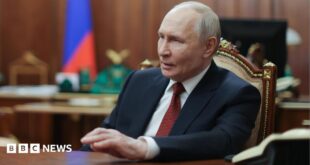
A second round of direct peace talks between Russia and Ukraine have ended without a major breakthrough, and only an agreement between the warring sides to swap more prisoners of war.
Ukrainian negotiators said Russia had again rejected an “unconditional ceasefire” – a key demand by Kyiv and its allies in Europe and the US.
The Russian team said it had proposed a two-to-three day truce “in certain areas” of the vast front line, but gave no further details.
At Monday’s talks, which were held in the Turkish city of Istanbul and lasted just over an hour, the two sides did agree to exchange all sick and heavily wounded prisoners of war, as well those aged under 25.
Expectations were low even before the talks started, with both sides remaining deeply divided on how to end the war that has been raging since Russia launched its full-scale invasion of Ukraine in February 2022.
Moscow currently controls about 20% of Ukrainian territory, including the southern Crimea peninsula which it annexed in 2014.
Speaking at a briefing after the meeting, Ukrainian Defence Minister Rustem Umerov, who led Kyiv’s negotiating team, said Ukraine was insisting on a “full and and unconditional ceasefire” for at least 30 days on land, at sea and in the air to “end the killings now”.
He said Ukraine had handed over its truce proposals to Russia “a few days ago” – but Moscow failed to do the same, presenting its plan only at the Istanbul talks.
Ukrainian Deputy Foreign Minister Serhiy Kyslytsia said that Russia had rejected the unconditional ceasefire.
Ukraine also handed over a list of hundreds of children Kyiv said had been forcefully taken to Russia.
Ukraine’s negotiators said they were expecting Russia’s response to Ukrainian proposals by the end of June, stressing on the need to prepare for direct talks between Ukrainian President Volodymyr Zelensky and Russia’s Vladimir Putin.
But so far there is no sign of any progress for a meeting between the two presidents.
Speaking at a separate news briefing, Russian delegation head Vladimir Medinsky confirmed all sick and heavily wounded prisoners of war and those younger than 25 would be exchanged. No timeframe was given as to when this would happen.
Medinsky also said that next week Russia would hand over to Kyiv the bodies of 6,000 Ukrainian soldiers.
Rejecting an unconditional ceasefire, Russia prefers to talk about “lasting peace”, repeating its previous tough demands which Ukraine and its allies say are tantamount to Kyiv’s de facto capitulation.
The texts of both the Russian and Ukrainian ceasefire proposals have not been made public officially.
However, Russian state-run media have published what they say are key points of Moscow’s position, which include unchanged demands of a Ukrainian military withdrawal from its four partly occupied regions in the south-east, and soldiers’ demobilisation.
Russia also demands international recognition of Ukraine’s Donetsk, Luhansk, Kherson and Zaporizhzhia regions, as well as the annexed Crimea.
Other pre-conditions include a ban on Ukraine’s membership in any military alliances, a limit on the size of the Ukrainian army, Russian as an official language, and the lifting of international sanctions.
President Zelensky, who was on Monday attending a summit in Vilnius, Lithuania, said “while there are no meaningful signals from Russia to end the war, it is important to strengthen our defence”.
He also called for more sanction pressure on Russia.
In the first round of direct peace talks, held on 16 May, Ukraine and Russia failed to bridge their differences on how to end the war, agreeing only to swap 1,000 prisoners of war each.
President Zelensky and his European allies have repeatedly accused Russia of deliberately delaying any meaningful negotiations to seize more Ukrainian territory.
US President Donald Trump, who has been pushing for a quick settlement, has so far delayed hitting Russia with tough sanctions.
In a rare rebuke last month, Trump called Putin “absolutely crazy” following Russia’s largest drone and missile attacks on Ukraine. In response, the Kremlin said Trump was showing signs of “emotional overload”.
BBC News

Khamrah by Lattafa for Men - 3.4 oz EDP Spray
4% Off
Ghost Sweetheart Eau de Toilette | Pineapple, Jasmine and Sandalwood | Perfume for Women 50 ml
50% Off
Marc Jacobs Dot Eau De Parfum for Women, 100 ml
42% Off
Ted Baker W Eau de Toilette for Her, Fig Leaf, White Peony and Violet Top Notes, Pink Orchid and Raspberry Middle Notes, 75ml
£11.77 (£15.69 / 100 ml) (as of 30/06/2026 03:52 GMT +01:00 - More infoProduct prices and availability are accurate as of the date/time indicated and are subject to change. Any price and availability information displayed on [relevant Amazon Site(s), as applicable] at the time of purchase will apply to the purchase of this product.)
Ted Baker Woman Pink Eau de Toilette Spray Floral Green Feminine Fragrance, Opening Notes are Fresh Peach, Bergamot and Tangerine with Warm Musk, Vanilla and Vetiver Base, 100ml
11% Off
Vera Wang Princess Eau de Toilette - 30 ml

Choco Musk 50ml Eau De Parfum for men and women | Chocolate Musk by Jannat Aromas
17% Off
Christina Aguilera Signature Eau de Parfum (50ml) Floral, Fruity & Exotic Scent, Luxury Fragrance for Women
9% Off
Calvin Klein - Eau De Toilette CKIN2U - Calvin Klein Women, Ladies Perfume, Women's Perfume, Calvin Klein Perfume, Calvin Klein One - 150 ml
5% Off
Jimmy Choo Flash Eau de Parfum, 60 ml (Pack of 1)
3% Off
Fruit of the Loom Men's Heavy T Shirt, White, XL UK
28% Off
ATNKE LED Lighted Beanie Cap,USB Rechargeable Running Hat Ultra Bright 4 LED Waterproof Light Winter Warm Gifts for Men and Women/Pink
17% Off
Men's 1/4 Zip Pullover UK Sale Clearance, Fleece Sweatshirt Casual Jumper Long Sleeve T-shirt Top Stand Collar Sweater Plain Pullover Sports Leisure Workwear Quarter Zip Sweater Lightweight Jumpers
£5.88 (as of 12/11/2025 00:52 GMT +01:00 - More infoProduct prices and availability are accurate as of the date/time indicated and are subject to change. Any price and availability information displayed on [relevant Amazon Site(s), as applicable] at the time of purchase will apply to the purchase of this product.)
Crevice Cleaning Brush, Bathroom Tile Groove Gap Cleaning Brush,Premium Crevice Cleaning Tool Aluminum Support with 15° Angle Magic Brush, Thin Brush for Home Kitchen
19% Off
Wireless Earbuds, Bluetooth 5.3 Headphones in Ear with HiFi Stereo Deep Bass, 4 ENC Noise Cancelling Mic Wireless Earphones 40H Playtime, Bluetooth Earbuds Dual LED Display, IP7 Waterproof, USB-C
42% Off