 [
[

An innovative community-led initiative has transformed blood donation practices in rural Sierra Leone, offering a potentially scalable blueprint to tackle critical health bottlenecks across low-resource settings.
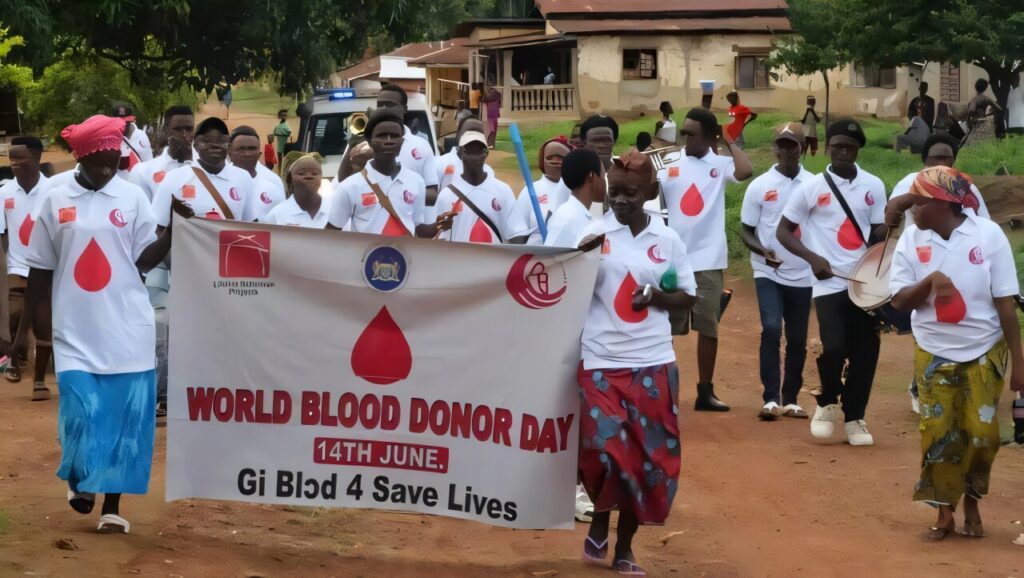
The “Gi4SaveLife” initiative, led by grassroots organization Lifeline Nehemiah Projects with support from King’s College London, places ownership of blood donation drives in the hands of the local community. Over an eight-month study period, the initiative collected 539 units from 376 donors, increasing from zero voluntary donations before the initiative began.
In the new study, published in BMJ Global Health to coincide with World Blood Donor Day, the team piloted Gi4SaveLife across the Kono and Kenema districts of Sierra Leone. Sierra Leone has critically low levels of voluntary blood donation, contributing to high rates of maternal mortality. Bleeding after childbirth (postpartum hemorrhage) is one of the leading causes of maternal death in the country. For blood transfusions, clinics often rely on blood donated by family members in emergency situations or on paid donations.
Several barriers exist to voluntary blood donation, including a lack of public awareness, as well as cultural myths and fears. Therefore, traditional blood drives led by external health organizations often fail to generate long-term trust or commitment.
To address this challenge, Lifeline Nehemiah Projects developed the Gi4SaveLife initiative to flip this model on its head, shifting ownership directly to local community champions organized into community “hubs.” All hub members were nominated by their local communities, based on their social standing and influence, and were responsible for leading monthly blood drives.
Over an eight-month trial period, the initiative generated 539 units of blood from 376 unique donors, increasing local baseline statistics from zero voluntary donations to a reliable, consistent supply. Importantly, 43% of these were repeat donations, demonstrating a crucial cultural shift toward regular giving. Key motivators for donating blood included altruism, with 71% of donors stating a “desire to save lives,” and social recognition, with 52% of donors stating they “enjoyed being known as a blood donor.” In addition, the initiative allowed the team to reduce the cost per unit of blood by 40% compared with standard hospital-led drives.
Dr. Cristina Fernandez Turienzo, senior research fellow at King’s College London and lead author of the study, said, “There is an urgent need to champion local solutions to local problems when tackling global health challenges. Gi4SaveLife demonstrates the power of building local capacity.”
Lucy November, midwife research fellow from King’s College London and co-author, added, “By empowering trusted community champions to dismantle deep-rooted myths with facts, Gi4SaveLife created a sustainable, cost-effective pipeline of voluntary donors and helped to bridge the gap between communities and health facilities.”
Prince Tommy Williams, executive director of Lifeline Nehemiah Projects and co-author of the study, said, “We developed Gi4SaveLife as part of our mission to equip individuals and communities for sustainable development. By investing in local leadership and designing an approach rooted in trust, relationship-building and mutual respect, our volunteers have transformed blood donation from a feared procedure into a meaningful, empowering and community-driven act of solidarity that can strengthen the national blood transfusion service. A medical doctor can only save lives when blood is available, because doctors do not manufacture blood.”
One of the community stakeholders, Shek Osma Koroma, said, “I used to believe and say that blood donation was demonic until my wife was due to deliver twins and was severely anemic. The blood donated by community volunteers was used to save the lives of my wife and our twins. That experience completely changed my mindset and perception about blood donation.”
Publication details
Cristina Fernandez Turienzo et al, Gi4SaveLife: a community-led model for sustainable voluntary blood donation in rural Sierra Leone, BMJ Global Health (2026). DOI: 10.1136/bmjgh-2026-023974
Journal information:
BMJ Global Health
Key medical concepts
Clinical categories
Who’s behind this story?


Citation:
Community-led initiative addresses blood donation shortages in rural Sierra Leone (2026, June 17)
retrieved 18 June 2026
from https://medicalxpress.com/news/2026-06-community-blood-donation-shortages-rural.html
This document is subject to copyright. Apart from any fair dealing for the purpose of private study or research, no
part may be reproduced without the written permission. The content is provided for information purposes only.

Khamrah by Lattafa for Men - 3.4 oz EDP Spray
4% Off
Ghost Sweetheart Eau de Toilette | Pineapple, Jasmine and Sandalwood | Perfume for Women 50 ml
50% Off
Marc Jacobs Dot Eau De Parfum for Women, 100 ml
42% Off
Ted Baker W Eau de Toilette for Her, Fig Leaf, White Peony and Violet Top Notes, Pink Orchid and Raspberry Middle Notes, 75ml
£11.77 (£15.69 / 100 ml) (as of 02/09/2026 04:57 GMT +01:00 - More infoProduct prices and availability are accurate as of the date/time indicated and are subject to change. Any price and availability information displayed on [relevant Amazon Site(s), as applicable] at the time of purchase will apply to the purchase of this product.)
Ted Baker Woman Pink Eau de Toilette Spray Floral Green Feminine Fragrance, Opening Notes are Fresh Peach, Bergamot and Tangerine with Warm Musk, Vanilla and Vetiver Base, 100ml
11% Off
Vera Wang Princess Eau de Toilette - 30 ml

Choco Musk 50ml Eau De Parfum for men and women | Chocolate Musk by Jannat Aromas
17% Off
Christina Aguilera Signature Eau de Parfum (50ml) Floral, Fruity & Exotic Scent, Luxury Fragrance for Women
9% Off
Calvin Klein - Eau De Toilette CKIN2U - Calvin Klein Women, Ladies Perfume, Women's Perfume, Calvin Klein Perfume, Calvin Klein One - 150 ml
5% Off
Jimmy Choo Flash Eau de Parfum, 60 ml (Pack of 1)
3% Off
Fruit of the Loom Men's Heavy T Shirt, White, XL UK
28% Off
ATNKE LED Lighted Beanie Cap,USB Rechargeable Running Hat Ultra Bright 4 LED Waterproof Light Winter Warm Gifts for Men and Women/Pink
17% Off
Men's 1/4 Zip Pullover UK Sale Clearance, Fleece Sweatshirt Casual Jumper Long Sleeve T-shirt Top Stand Collar Sweater Plain Pullover Sports Leisure Workwear Quarter Zip Sweater Lightweight Jumpers
£5.88 (as of 12/11/2025 00:52 GMT +01:00 - More infoProduct prices and availability are accurate as of the date/time indicated and are subject to change. Any price and availability information displayed on [relevant Amazon Site(s), as applicable] at the time of purchase will apply to the purchase of this product.)
Crevice Cleaning Brush, Bathroom Tile Groove Gap Cleaning Brush,Premium Crevice Cleaning Tool Aluminum Support with 15° Angle Magic Brush, Thin Brush for Home Kitchen
19% Off
Wireless Earbuds, Bluetooth 5.3 Headphones in Ear with HiFi Stereo Deep Bass, 4 ENC Noise Cancelling Mic Wireless Earphones 40H Playtime, Bluetooth Earbuds Dual LED Display, IP7 Waterproof, USB-C
42% Off