[
[
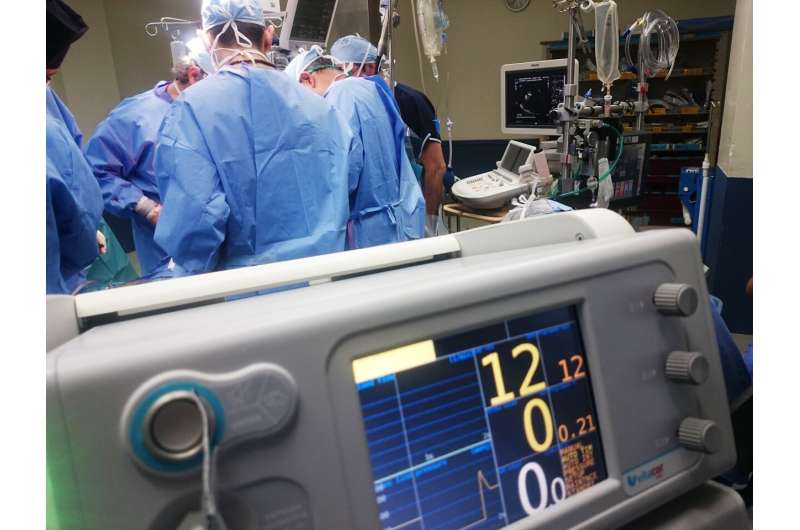
From the emergency department (ED) to the intensive care unit (ICU), a clear, collaborative admission process at a Tennessee hospital cut in half the time newly admitted critically ill patients waited to receive specialized care, even as they waited in the ED for an ICU bed to become available.
Nurse practitioners at Ascension Saint Thomas West Hospital in Nashville, Tennessee, developed a multipronged interdepartmental care model that prioritized rapid assessment and treatment of patients admitted to the 28-bed medical intensive care unit (MICU) from the ED and awaiting an assigned bed.
As part of the hospital’s transition to a closed ICU model, an intensivist-led team began to fully manage the care of critically ill patients from admission to discharge, instead of being called in for a consulting role when requested by an attending hospitalist. The shift in clinician roles required changing the long-standing admission process and provided an opportunity to clarify responsibilities and resolve variations between departments and among clinicians.
“Critical Care Consultations for Patients Boarding in the Emergency Department” details the development and implementation of the new MICU Admission Management Process (MAMP) for patients admitted to the MICU directly from the ED. The article is published in AACN Advanced Critical Care.
Co-authors Whitney Haley, DNP, APRN, AGACNP-BC, and Rachel Smith, DNP, APRN, AGACNP-BC, CCRN, are pulmonary critical care nurse practitioners at the hospital. They led the quality improvement project as part of the Doctor of Nursing Practice degree program at the University of Alabama at Birmingham School of Nursing and were mentored by Assistant Professor Dana Mitchell, DNP, ACNP-BC, CHFN.
“The updated admissions process alleviates any uncertainty about which medical team is managing a patient’s care and ensures that definitive care and assessment by the critical care team aren’t hampered by delays in transfer to the MICU,” Haley said. “In essence, it brings MICU-level expertise to the patient during a high-risk transition period.”
As part of the new admissions process, the MICU and ED teams collaborated to ensure that patients who were not promptly transferred to the MICU did not experience delays in care. Critical care consultations and initial assessments occurred before the patient’s arrival in the MICU and enabled triage of patients being boarded in the ED.
After the MAMP protocol was implemented, patients spent less time waiting for critical care team involvement, from a preintervention mean of 113.9 minutes to a postintervention mean of 56 minutes (a 50.8% reduction).
The study also examined ICU length of stay and the number of patients who spent fewer than 24 hours in the MICU after being admitted from the ED. Although ICU length of stay increased from a mean of 2.8 days before implementation to 3.4 days afterward, short-stay admissions decreased slightly from 23.3% before implementation to 19.2% afterward. The combination signaled an unanticipated benefit of the MAMP protocol—by providing critical care expertise while patients were in the ED, the team was able to improve allocation of MICU resources and prioritize transfer for the most critically ill patients.
MAMP also led to ongoing interactions and greater collaboration between ED and ICU nursing staff and providers, which improved the patient care experience.
The study involved 275 adult patients who met established inclusion criteria and were admitted directly from the ED to the MICU. Retrospective data from medical records were used to establish the preintervention sample, which included 150 patients admitted between Feb. 1 and April 30, 2024. During the intervention period, from Aug. 15 to Oct. 20, 2024, 125 patients who met the inclusion criteria were admitted to the MICU from the ED.
More information
Whitney Haley et al, Critical Care Consultations for Patients Boarding in the Emergency Department, AACN Advanced Critical Care (2026). DOI: 10.4037/aacnacc2026243
Clinical categories
Who’s behind this story?


Citation:
Collaborative process clarifies ICU admissions from ED (2026, July 15)
retrieved 15 July 2026
from https://medicalxpress.com/news/2026-07-collaborative-icu-admissions-ed.html
This document is subject to copyright. Apart from any fair dealing for the purpose of private study or research, no
part may be reproduced without the written permission. The content is provided for information purposes only.

Khamrah by Lattafa for Men - 3.4 oz EDP Spray
4% Off
Ghost Sweetheart Eau de Toilette | Pineapple, Jasmine and Sandalwood | Perfume for Women 50 ml
50% Off
Marc Jacobs Dot Eau De Parfum for Women, 100 ml
42% Off
Ted Baker W Eau de Toilette for Her, Fig Leaf, White Peony and Violet Top Notes, Pink Orchid and Raspberry Middle Notes, 75ml
£11.77 (£15.69 / 100 ml) (as of 15/07/2026 03:57 GMT +01:00 - More infoProduct prices and availability are accurate as of the date/time indicated and are subject to change. Any price and availability information displayed on [relevant Amazon Site(s), as applicable] at the time of purchase will apply to the purchase of this product.)
Ted Baker Woman Pink Eau de Toilette Spray Floral Green Feminine Fragrance, Opening Notes are Fresh Peach, Bergamot and Tangerine with Warm Musk, Vanilla and Vetiver Base, 100ml
11% Off
Vera Wang Princess Eau de Toilette - 30 ml

Choco Musk 50ml Eau De Parfum for men and women | Chocolate Musk by Jannat Aromas
17% Off
Christina Aguilera Signature Eau de Parfum (50ml) Floral, Fruity & Exotic Scent, Luxury Fragrance for Women
9% Off
Calvin Klein - Eau De Toilette CKIN2U - Calvin Klein Women, Ladies Perfume, Women's Perfume, Calvin Klein Perfume, Calvin Klein One - 150 ml
5% Off
Jimmy Choo Flash Eau de Parfum, 60 ml (Pack of 1)
3% Off
Fruit of the Loom Men's Heavy T Shirt, White, XL UK
28% Off
ATNKE LED Lighted Beanie Cap,USB Rechargeable Running Hat Ultra Bright 4 LED Waterproof Light Winter Warm Gifts for Men and Women/Pink
17% Off
Men's 1/4 Zip Pullover UK Sale Clearance, Fleece Sweatshirt Casual Jumper Long Sleeve T-shirt Top Stand Collar Sweater Plain Pullover Sports Leisure Workwear Quarter Zip Sweater Lightweight Jumpers
£5.88 (as of 12/11/2025 00:52 GMT +01:00 - More infoProduct prices and availability are accurate as of the date/time indicated and are subject to change. Any price and availability information displayed on [relevant Amazon Site(s), as applicable] at the time of purchase will apply to the purchase of this product.)
Crevice Cleaning Brush, Bathroom Tile Groove Gap Cleaning Brush,Premium Crevice Cleaning Tool Aluminum Support with 15° Angle Magic Brush, Thin Brush for Home Kitchen
19% Off
Wireless Earbuds, Bluetooth 5.3 Headphones in Ear with HiFi Stereo Deep Bass, 4 ENC Noise Cancelling Mic Wireless Earphones 40H Playtime, Bluetooth Earbuds Dual LED Display, IP7 Waterproof, USB-C
42% Off