
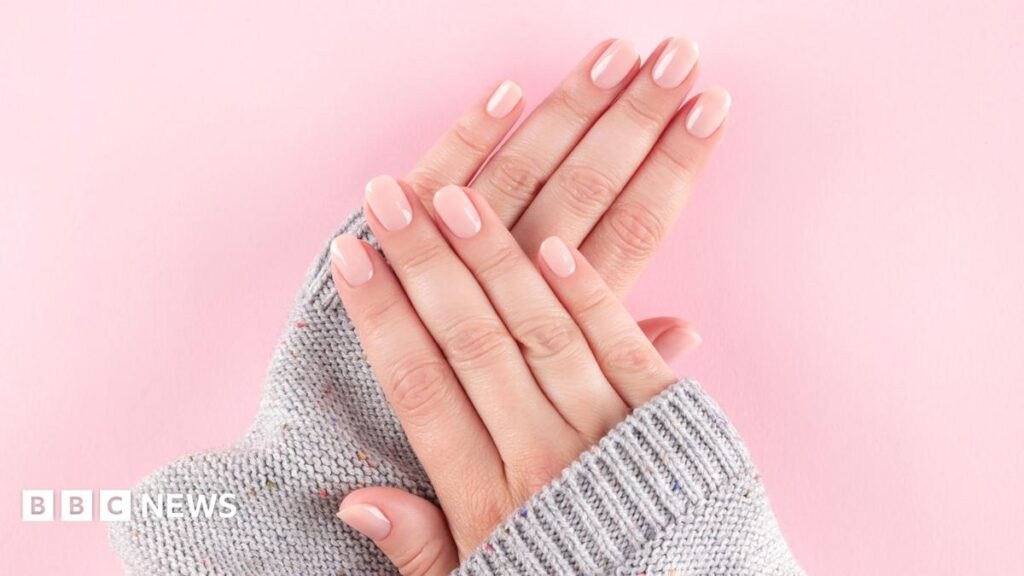

Manicures have been whispering messages about the wearer’s position in society for as long as they have existed, according to fashion journalist Suzanne E. Shapiro.
“Women’s bodies – and sense of self-presentation – have always held huge political and cultural significance,” Shapiro, who wrote Nails: The Story of The Modern Manicure, tells the BBC.
Even back in 13th century Imperial China, the lengthy talons grown by nobility and the delicately carved brass nail shields which usually guarded them were a symbol of a life unmarred by manual labour.
A single layer of the rose-tinted waxy salves which were popular in the 1800s was a sign of vigour and health, but two layers – in an era when cosmetics and artificial beauty were tied to virtue – was the mark of a vain or “loose” woman.
And the red at-home nail lacquer, released by Revlon in the early 1930s, was a badge of honour for modern women rebelling against that kind of oppressive judgement.
But it was women of colour who really made manicures an accessible and fashionable form of self-expression, historians say.
Entertainer Josephine Baker, disco icons Dianna Ross and Donna Summer, and Olympic gold-medal-winning sprinter Florence Griffith-Joyner – whose dramatic acrylic sets often distracted headline writers from her record-setting performances – have all pioneered nail art.
“These were times that it was hard for black women to be able to express themselves,” says celebrity nail artist Celeste Hampton.
“[Nail art] allowed black women to express our form of softness, our form of femininity, our form of beauty.”
And when waves of Vietnamese refugees gave rise to the nail bar in the 1970s, professional manicures were no longer the preserve of the rich.
But, like many luxuries, as they became more popular and more accessible to the masses, the wealthy began pivoting – a textbook example of behaviour known as “counter signalling”, Rudolfo says.
“The same way that logo bags are considered gauche or quiet luxury is more aspirational, bare nails are considered the trend now.
“The examples are almost always white women or celebrities… [and] they’ll often conflate class and taste with that bareness.”
Others point out bare nails often demand their own time-consuming and costly routine.
“The irony in all this is these natural nails are not natural either,” Shapiro says. “They also require a lot of grooming and sometimes pretty premiere services.”
Few would argue there aren’t valid feminist questions for the beauty industry to answer, around unrealistic standards for example, but the largely female-run nail sector also feels empowering for many women.
“I feel like nail care has very much had a ‘for women, by women’ sort of ethos around it,” Shapiro says. “The first salon opened in New York City was owned by a woman, and she was a remarkably independent one… a lot of the first entrepreneurs offering product lines, opening salons were women.”
Hampton admits she’s saddened by the way trends have been – and continue to be – weaponised.
“We’re taking the fun out of nails… Anyone should be able to wear what they like – nail polish or bare nails,” she says.
“Why is there an argument? Why is there beef?”
Scanlon too is a little baffled.
“For me, it’s like just stop judging ourselves and everybody else… Some people like to have the nails done, some people don’t,” she says.
“I suppose the question that I was posing was, is it doing anything for you?
“The truth of it is: it’s not that deep.”
BBC News

Khamrah by Lattafa for Men - 3.4 oz EDP Spray
4% Off
Ghost Sweetheart Eau de Toilette | Pineapple, Jasmine and Sandalwood | Perfume for Women 50 ml
50% Off
Marc Jacobs Dot Eau De Parfum for Women, 100 ml
42% Off
Ted Baker W Eau de Toilette for Her, Fig Leaf, White Peony and Violet Top Notes, Pink Orchid and Raspberry Middle Notes, 75ml
£11.77 (£15.69 / 100 ml) (as of 25/09/2026 05:07 GMT +01:00 - More infoProduct prices and availability are accurate as of the date/time indicated and are subject to change. Any price and availability information displayed on [relevant Amazon Site(s), as applicable] at the time of purchase will apply to the purchase of this product.)
Ted Baker Woman Pink Eau de Toilette Spray Floral Green Feminine Fragrance, Opening Notes are Fresh Peach, Bergamot and Tangerine with Warm Musk, Vanilla and Vetiver Base, 100ml
11% Off
Vera Wang Princess Eau de Toilette - 30 ml

Choco Musk 50ml Eau De Parfum for men and women | Chocolate Musk by Jannat Aromas
17% Off
Christina Aguilera Signature Eau de Parfum (50ml) Floral, Fruity & Exotic Scent, Luxury Fragrance for Women
9% Off
Calvin Klein - Eau De Toilette CKIN2U - Calvin Klein Women, Ladies Perfume, Women's Perfume, Calvin Klein Perfume, Calvin Klein One - 150 ml
5% Off
Jimmy Choo Flash Eau de Parfum, 60 ml (Pack of 1)
3% Off
Fruit of the Loom Men's Heavy T Shirt, White, XL UK
28% Off
ATNKE LED Lighted Beanie Cap,USB Rechargeable Running Hat Ultra Bright 4 LED Waterproof Light Winter Warm Gifts for Men and Women/Pink
17% Off
Men's 1/4 Zip Pullover UK Sale Clearance, Fleece Sweatshirt Casual Jumper Long Sleeve T-shirt Top Stand Collar Sweater Plain Pullover Sports Leisure Workwear Quarter Zip Sweater Lightweight Jumpers
£5.88 (as of 12/11/2025 00:52 GMT +01:00 - More infoProduct prices and availability are accurate as of the date/time indicated and are subject to change. Any price and availability information displayed on [relevant Amazon Site(s), as applicable] at the time of purchase will apply to the purchase of this product.)
Crevice Cleaning Brush, Bathroom Tile Groove Gap Cleaning Brush,Premium Crevice Cleaning Tool Aluminum Support with 15° Angle Magic Brush, Thin Brush for Home Kitchen
19% Off
Wireless Earbuds, Bluetooth 5.3 Headphones in Ear with HiFi Stereo Deep Bass, 4 ENC Noise Cancelling Mic Wireless Earphones 40H Playtime, Bluetooth Earbuds Dual LED Display, IP7 Waterproof, USB-C
42% Off