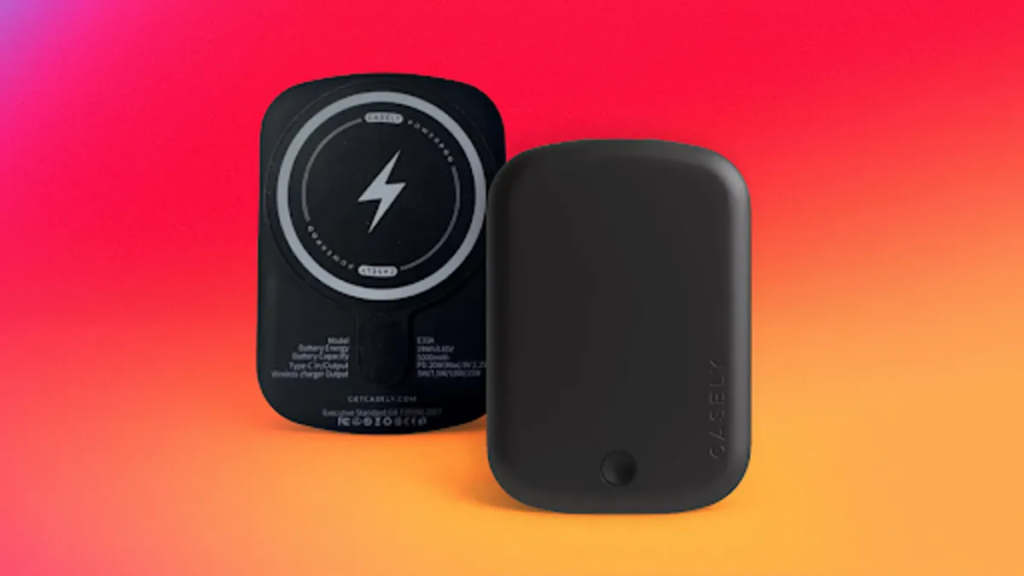
Casely, a company that makes phone cases and other mobile accessories, is again recalling its 5,000-mAh MagSafe Power Pods with the model number E33A, a year after an initial recall. The Power Pods, sold between March 2022 and September 2024, pose a serious risk of fire and burns and resulted in the death of a 75-year-old woman in 2024.
The US Consumer Product Safety Commission said that since the initial recall in April 2025, an additional 28 incidents of overheating and fires have been reported, including one on a plane. Overall, it’s estimated that as many as 429,200 of these Power Pods, manufactured in China, are potentially affected.
The Power Pods contain lithium-ion batteries, which can overheat and combust. Other companies, such as Anker, have had similar recalls in the last few years over portable battery products.
Following numerous incidents of power banks and portable chargers overheating, Southwest Airlines has changed its policies and will implement restrictions on April 20. The airline is allowing customers to carry only one portable battery pack per flight and restricting where the pack can be stored and how it can be charged during the flight.
Casely and the CPSC are asking those who still own the Power Pods to stop using them immediately and submit a claim for a free replacement at Casely’s website.
The science of why this keeps happening
Lithium-ion batteries, the kind used in the Casely power pods, are the most commonly used rechargeable battery type. They’re used in phones, EVs, electric bikes and scooters, smartwatches, laptops, portable speakers, even toys and vaping devices. They became popular because they’re cheap, energy-dense and have a fairly long lifecycle.
However, they can go wrong when they overheat and combust, and that can be caused by a number of factors. If they short-circuit, that can generate high temperatures and, when coupled with high pressure in some types of cells or devices, can even trigger an explosion.
Some of those precipitating factors include problems at the manufacturing stage, such as inconsistencies or imperfections in the cells’ construction, especially if components are faulty or not reinforced.
Burcu Gurkan, a professor of chemistry at Case Western Reserve University’s Case School of Engineering, said that lithium-ion batteries have “several layers of complications” that can lead to problems.
When, say, components in a lithium-ion cell come into contact because the separators are too thin or damaged, it can cause a short circuit and lead to overheating. The overheating can lead to combustion.
“These batteries have flammable organic components such as carbonate electrolytes, and they can catch on fire in the presence of high temperatures,” Gurkan said.
Solutions to overheating lithium-ion batteries
One way to avoid the danger of fiery batteries is to avoid products that have been recalled. You should also keep an eye on battery-powered devices when they’re in potentially unsafe environments, such as airplanes or extreme climates. But some are hoping improved materials or entirely different types of batteries will help mitigate risks in the future.
Gurkan’s research aims to eliminate hazardous materials from these and other types of batteries. Two of her research projects “have the common goal of developing alternative electrolytes that are not flammable.”
The battery industry is interested in developing better predictive and diagnostic tools to prevent fires and explosions, Gurkan said.

Khamrah by Lattafa for Men - 3.4 oz EDP Spray
4% Off
Ghost Sweetheart Eau de Toilette | Pineapple, Jasmine and Sandalwood | Perfume for Women 50 ml
50% Off
Marc Jacobs Dot Eau De Parfum for Women, 100 ml
42% Off
Ted Baker W Eau de Toilette for Her, Fig Leaf, White Peony and Violet Top Notes, Pink Orchid and Raspberry Middle Notes, 75ml
£11.77 (£15.69 / 100 ml) (as of 08/09/2026 05:00 GMT +01:00 - More infoProduct prices and availability are accurate as of the date/time indicated and are subject to change. Any price and availability information displayed on [relevant Amazon Site(s), as applicable] at the time of purchase will apply to the purchase of this product.)
Ted Baker Woman Pink Eau de Toilette Spray Floral Green Feminine Fragrance, Opening Notes are Fresh Peach, Bergamot and Tangerine with Warm Musk, Vanilla and Vetiver Base, 100ml
11% Off
Vera Wang Princess Eau de Toilette - 30 ml

Choco Musk 50ml Eau De Parfum for men and women | Chocolate Musk by Jannat Aromas
17% Off
Christina Aguilera Signature Eau de Parfum (50ml) Floral, Fruity & Exotic Scent, Luxury Fragrance for Women
9% Off
Calvin Klein - Eau De Toilette CKIN2U - Calvin Klein Women, Ladies Perfume, Women's Perfume, Calvin Klein Perfume, Calvin Klein One - 150 ml
5% Off
Jimmy Choo Flash Eau de Parfum, 60 ml (Pack of 1)
3% Off
Fruit of the Loom Men's Heavy T Shirt, White, XL UK
28% Off
ATNKE LED Lighted Beanie Cap,USB Rechargeable Running Hat Ultra Bright 4 LED Waterproof Light Winter Warm Gifts for Men and Women/Pink
17% Off
Men's 1/4 Zip Pullover UK Sale Clearance, Fleece Sweatshirt Casual Jumper Long Sleeve T-shirt Top Stand Collar Sweater Plain Pullover Sports Leisure Workwear Quarter Zip Sweater Lightweight Jumpers
£5.88 (as of 12/11/2025 00:52 GMT +01:00 - More infoProduct prices and availability are accurate as of the date/time indicated and are subject to change. Any price and availability information displayed on [relevant Amazon Site(s), as applicable] at the time of purchase will apply to the purchase of this product.)
Crevice Cleaning Brush, Bathroom Tile Groove Gap Cleaning Brush,Premium Crevice Cleaning Tool Aluminum Support with 15° Angle Magic Brush, Thin Brush for Home Kitchen
19% Off
Wireless Earbuds, Bluetooth 5.3 Headphones in Ear with HiFi Stereo Deep Bass, 4 ENC Noise Cancelling Mic Wireless Earphones 40H Playtime, Bluetooth Earbuds Dual LED Display, IP7 Waterproof, USB-C
42% Off