[
[
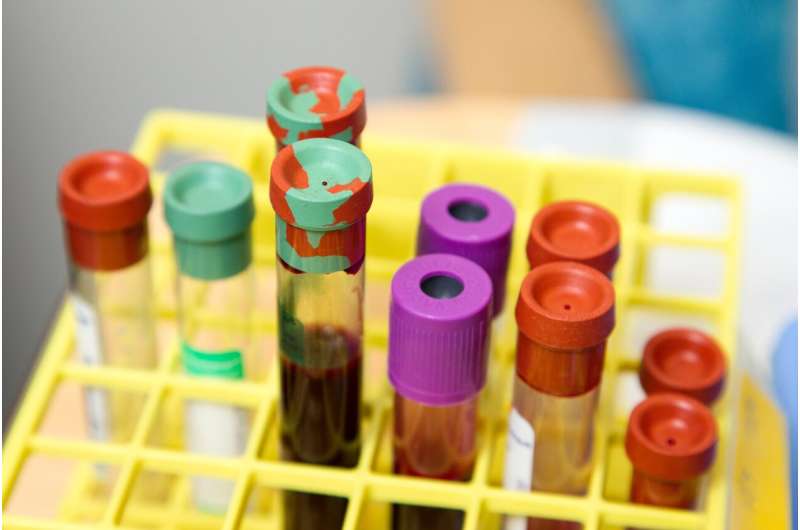
Mayo Clinic researchers have developed a blood-based method that may help detect germ cell tumors, the most common type of testicular cancer, including cases that do not show up on standard blood tests, according to a study published in Nature Communications.
Testicular cancer most often affects adolescents and young adults, and it is highly treatable, especially when found early. However, diagnosis can be challenging when tumors do not produce enough of the usual blood-based substances—called tumor markers—to show up on standard tests, which can make diagnosis harder.
To help solve this, researchers used a method that analyzes thousands of immune system signals in the blood at once. Using this approach, they developed a new test called GCT-iSIGN. In a study of 427 blood samples, the test identified 93% of individuals who had germ cell tumors and correctly ruled out cancer in 99% of people who did not. The test also detected 23 of 24 cases that standard blood tests missed. This gives doctors another way to find these cancers, especially in younger patients.
Researchers also developed a second test, called Sem-iSIGN, designed to distinguish between two main types of testicular cancer. This distinction matters because each type can require a different treatment approach.
The findings build on earlier work by the same research teams using immune profiling to identify biomarkers linked to paraneoplastic neurologic syndrome associated with testicular cancer, including KLHL11 IgG, which was described previously in The New England Journal of Medicine.
“When standard blood markers are negative, diagnosis and treatment planning can be delayed,” says Divyanshu Dubey, M.B.B.S., senior and corresponding author of the study and a professor of laboratory medicine and pathology and a professor of neurology at Mayo Clinic. “Our findings show a promising path toward a more sensitive blood test approach, but additional studies are needed before it can be used routinely in patient care.”
Publication details
M. Bakri Hammami et al, Whole-proteome phage immunoprecipitation sequencing reveals germ cell tumor–specific immunosignature, Nature Communications (2026). DOI: 10.1038/s41467-026-71174-9
Journal information:
Nature Communications
Key medical concepts
Citation:
Blood test shows promise for detecting testicular cancer when standard markers miss (2026, May 3)
retrieved 4 May 2026
from https://medicalxpress.com/news/2026-04-blood-testicular-cancer-standard-markers.html
This document is subject to copyright. Apart from any fair dealing for the purpose of private study or research, no
part may be reproduced without the written permission. The content is provided for information purposes only.

Khamrah by Lattafa for Men - 3.4 oz EDP Spray
4% Off
Ghost Sweetheart Eau de Toilette | Pineapple, Jasmine and Sandalwood | Perfume for Women 50 ml
50% Off
Marc Jacobs Dot Eau De Parfum for Women, 100 ml
42% Off
Ted Baker W Eau de Toilette for Her, Fig Leaf, White Peony and Violet Top Notes, Pink Orchid and Raspberry Middle Notes, 75ml
£11.77 (£15.69 / 100 ml) (as of 25/06/2026 03:50 GMT +01:00 - More infoProduct prices and availability are accurate as of the date/time indicated and are subject to change. Any price and availability information displayed on [relevant Amazon Site(s), as applicable] at the time of purchase will apply to the purchase of this product.)
Ted Baker Woman Pink Eau de Toilette Spray Floral Green Feminine Fragrance, Opening Notes are Fresh Peach, Bergamot and Tangerine with Warm Musk, Vanilla and Vetiver Base, 100ml
11% Off
Vera Wang Princess Eau de Toilette - 30 ml

Choco Musk 50ml Eau De Parfum for men and women | Chocolate Musk by Jannat Aromas
17% Off
Christina Aguilera Signature Eau de Parfum (50ml) Floral, Fruity & Exotic Scent, Luxury Fragrance for Women
9% Off
Calvin Klein - Eau De Toilette CKIN2U - Calvin Klein Women, Ladies Perfume, Women's Perfume, Calvin Klein Perfume, Calvin Klein One - 150 ml
5% Off
Jimmy Choo Flash Eau de Parfum, 60 ml (Pack of 1)
3% Off
Fruit of the Loom Men's Heavy T Shirt, White, XL UK
28% Off
ATNKE LED Lighted Beanie Cap,USB Rechargeable Running Hat Ultra Bright 4 LED Waterproof Light Winter Warm Gifts for Men and Women/Pink
17% Off
Men's 1/4 Zip Pullover UK Sale Clearance, Fleece Sweatshirt Casual Jumper Long Sleeve T-shirt Top Stand Collar Sweater Plain Pullover Sports Leisure Workwear Quarter Zip Sweater Lightweight Jumpers
£5.88 (as of 12/11/2025 00:52 GMT +01:00 - More infoProduct prices and availability are accurate as of the date/time indicated and are subject to change. Any price and availability information displayed on [relevant Amazon Site(s), as applicable] at the time of purchase will apply to the purchase of this product.)
Crevice Cleaning Brush, Bathroom Tile Groove Gap Cleaning Brush,Premium Crevice Cleaning Tool Aluminum Support with 15° Angle Magic Brush, Thin Brush for Home Kitchen
19% Off
Wireless Earbuds, Bluetooth 5.3 Headphones in Ear with HiFi Stereo Deep Bass, 4 ENC Noise Cancelling Mic Wireless Earphones 40H Playtime, Bluetooth Earbuds Dual LED Display, IP7 Waterproof, USB-C
42% Off