 [
[

“Peacemaker” immune cells could help treat diseases ranging from type 1 diabetes to neurodegeneration by restoring immune tolerance, according to a new paper in Frontiers in Science.
From cancer, diabetes and chronic infections to cardiovascular, neurodegenerative and reproductive conditions, inflammation is increasingly cited as a driver of a broad range of diseases. Immune cells called regulatory T cells (Tregs)—originally defined as “suppressor” cells that stop other immune cells from attacking the body—are being explored as “living drugs” that could eventually be adapted to target many diseases with an inflammatory component.
Such an approach, which aims to tailor Treg therapies to specific diseases and tissues, could support more precise control of immune responses. In autoimmune diseases and transplant rejection, Tregs could even help shift treatment from broad immunosuppression, which brings myriad risks, toward restored immune tolerance and longer-term disease control.
Joint lead author Dr. Jeffrey Bluestone, co-founder and scientific adviser to Sonoma Biotherapeutics, said, “Uncontrolled inflammation sits at the root of so many human diseases, so Tregs that can tackle this offer some of the most exciting opportunities in modern medicine.
“Tregs can also help control immunity far beyond their classical suppressor role—helping repair tissue, stabilize metabolism and keep inflammation in check. That makes them incredibly powerful as living medicines.”
Joint lead author Dr. Fred Ramsdell, who won the 2025 Nobel Prize in physiology or medicine for his discoveries around immune tolerance and is also a co-founder and adviser to Sonoma Biotherapeutics, said, “With emerging genetic engineering and smart combination approaches, we’re on the cusp of transforming how immune tolerance is restored and maintained. This really is only the beginning.”
Personalized, precision treatments
Researchers are investigating Tregs in a broad range of conditions linked to dysregulated immune tolerance in autoimmune diseases and chronic inflammation, as well as cancer, severe COVID-19, neurodegeneration, metabolic disease, fibrosis, aging, pregnancy-related disorders and autoimmunity.
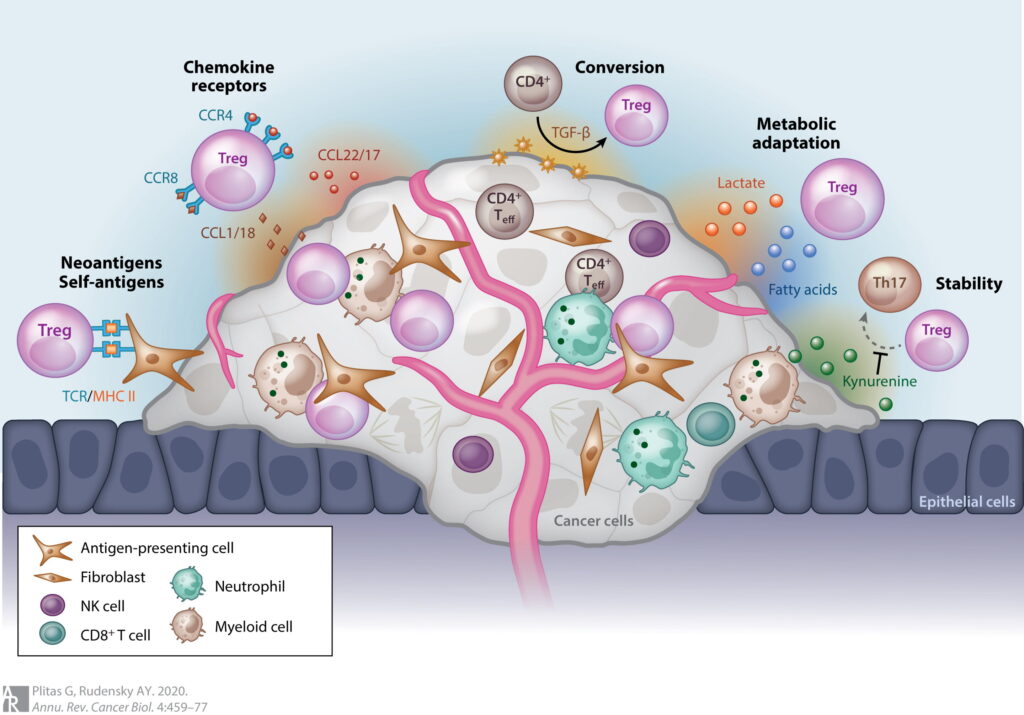
However, the role of Tregs differs across diseases. While they can suppress damaging inflammation to prevent autoimmune and degenerative conditions, cancers can exploit these same immune tolerance mechanisms to evade immune attack.
The paper describes how next-generation engineered Treg therapies could eventually be designed either to restore tolerance or selectively disrupt it, depending on the disease context.
Current standard of care for autoimmune conditions and transplant rejection typically focuses on suppressing the immune system with powerful drugs—often targeting dangerous immune responses long after tissue damage has occurred. Restoring immune tolerance, rather than simply managing symptoms, is therefore highly appealing.
Early evaluations of Tregs in autoimmunity and transplant rejection have shown good tolerance and safety profiles, as well as early signs of clinical benefit.
The next frontier, the researchers say, is achieving true precision by tailoring treatments with three layers of specificity:
- Precision in the therapy itself: designing agents that affect the right target and stay stable and effective over time
- Precision in tissue activity and timing
- Precision in patient selection: matching patients to therapies based on immune subtype, disease stage or predictive biomarkers.
Ramsdell said, “Ultimately, success will come down to precision: the right Treg, delivered in the right way, to the right tissue, at the right time. That’s the foundation that could extend tolerance-based medicine across an extraordinary range of human diseases.”
Unlocking tolerance medicine for patients
Maximizing impact for many patients depends on successfully enhancing Treg function—strengthening the response of these cells to environmental cues and reinforcing their natural role in tissue repair.
New engineering tools are speeding progress, allowing scientists to develop off-the-shelf Treg therapies and explore gene-based approaches that could program these cells inside the body. Together, the authors say, these innovations are laying the foundation for a new generation of precision tolerance-restoring medicines.
Moving tolerance medicine forward will require several approaches to advance at the same time, the authors stress. Combination strategies offer the most immediate path, pairing Tregs with cytokines or immunomodulatory agents that boost their persistence, strengthen function or reduce inflammatory pressure.
As engineering, metabolic tuning and tissue-targeting technologies mature, these elements could be added to existing therapeutic platforms to improve stability, enhance homing and reinforce tissue repair, according to the paper.
Co-author Qizhi Tang, from the University of California, San Francisco, said, “The technical foundations have been laid, and we may soon be able to transform treatment from broad immunosuppression to restoring true precision tolerance.”
Finally, the authors highlight how strategic investment will be crucial to move tolerance medicine from concept to reality—powering cross-disciplinary collaboration, regulatory partnership and sustained funding as both development and clinical access scale.
Co-author Megan Levings, from the University of British Columbia and BC Children’s Hospital Research Institute, said, “With continued investment, cell-based therapies like Tregs could become a new pillar of medicine—standing alongside small molecules, biologics and gene therapies, and unlocking treatments for diseases once thought incurable.”
Publication details
Regulatory T cells: master orchestrators of immune tolerance and tissue homeostasis, Frontiers in Science (2026). DOI: 10.3389/fsci.2026.1792210
Journal information:
Frontiers in Science


Citation:
How ‘peacemakers’ of the immune system could unlock long-term disease remission (2026, June 25)
retrieved 25 June 2026
from https://medicalxpress.com/news/2026-06-peacemakers-immune-term-disease-remission.html
This document is subject to copyright. Apart from any fair dealing for the purpose of private study or research, no
part may be reproduced without the written permission. The content is provided for information purposes only.

Khamrah by Lattafa for Men - 3.4 oz EDP Spray
4% Off
Ghost Sweetheart Eau de Toilette | Pineapple, Jasmine and Sandalwood | Perfume for Women 50 ml
50% Off
Marc Jacobs Dot Eau De Parfum for Women, 100 ml
42% Off
Ted Baker W Eau de Toilette for Her, Fig Leaf, White Peony and Violet Top Notes, Pink Orchid and Raspberry Middle Notes, 75ml
£11.77 (£15.69 / 100 ml) (as of 04/10/2026 05:09 GMT +01:00 - More infoProduct prices and availability are accurate as of the date/time indicated and are subject to change. Any price and availability information displayed on [relevant Amazon Site(s), as applicable] at the time of purchase will apply to the purchase of this product.)
Ted Baker Woman Pink Eau de Toilette Spray Floral Green Feminine Fragrance, Opening Notes are Fresh Peach, Bergamot and Tangerine with Warm Musk, Vanilla and Vetiver Base, 100ml
11% Off
Vera Wang Princess Eau de Toilette - 30 ml

Choco Musk 50ml Eau De Parfum for men and women | Chocolate Musk by Jannat Aromas
17% Off
Christina Aguilera Signature Eau de Parfum (50ml) Floral, Fruity & Exotic Scent, Luxury Fragrance for Women
9% Off
Calvin Klein - Eau De Toilette CKIN2U - Calvin Klein Women, Ladies Perfume, Women's Perfume, Calvin Klein Perfume, Calvin Klein One - 150 ml
5% Off
Jimmy Choo Flash Eau de Parfum, 60 ml (Pack of 1)
3% Off
Fruit of the Loom Men's Heavy T Shirt, White, XL UK
28% Off
ATNKE LED Lighted Beanie Cap,USB Rechargeable Running Hat Ultra Bright 4 LED Waterproof Light Winter Warm Gifts for Men and Women/Pink
17% Off
Men's 1/4 Zip Pullover UK Sale Clearance, Fleece Sweatshirt Casual Jumper Long Sleeve T-shirt Top Stand Collar Sweater Plain Pullover Sports Leisure Workwear Quarter Zip Sweater Lightweight Jumpers
£5.88 (as of 12/11/2025 00:52 GMT +01:00 - More infoProduct prices and availability are accurate as of the date/time indicated and are subject to change. Any price and availability information displayed on [relevant Amazon Site(s), as applicable] at the time of purchase will apply to the purchase of this product.)
Crevice Cleaning Brush, Bathroom Tile Groove Gap Cleaning Brush,Premium Crevice Cleaning Tool Aluminum Support with 15° Angle Magic Brush, Thin Brush for Home Kitchen
19% Off
Wireless Earbuds, Bluetooth 5.3 Headphones in Ear with HiFi Stereo Deep Bass, 4 ENC Noise Cancelling Mic Wireless Earphones 40H Playtime, Bluetooth Earbuds Dual LED Display, IP7 Waterproof, USB-C
42% Off