[
[
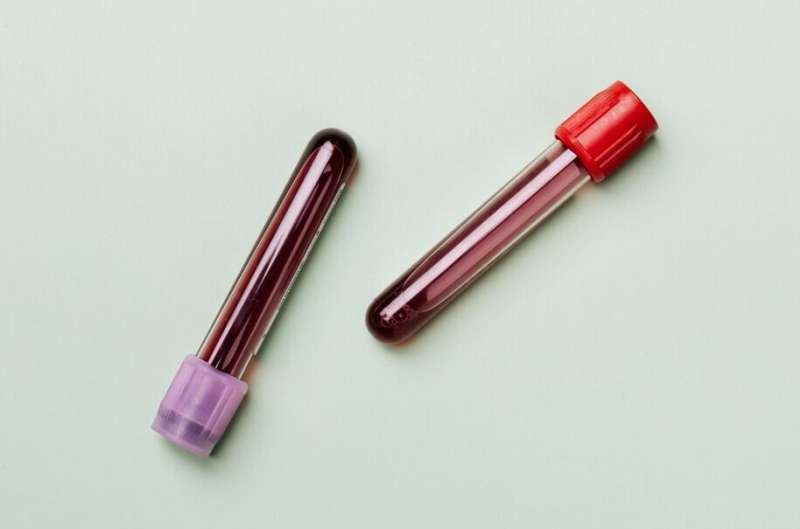
A new blood test can identify which individuals of African ancestry carrying high-risk APOL1 gene variants are most likely to develop kidney failure, years before clinical disease becomes apparent. Findings on the new test, developed by a team from the Perelman School of Medicine at the University of Pennsylvania, are published in Nature Medicine.
“What has been missing is a way to identify early disease activity before we see changes in standard clinical measures,” said senior author Katalin Susztak, MD, Ph.D., a professor in Renal Electrolyte and Hypertension and director of the Penn/CHOP Kidney Innovation Center. “This approach allows us to intervene early enough and lessen the severity of, or even prevent, kidney disease in some patients.”
African Americans develop kidney failure at nearly four times the rate of those of European ancestry, driven in part by variants in the APOL1 gene. The APOL1 gene helps protect against certain infections, but some versions of it can also increase the risk of serious kidney disease.
An estimated 4–5 million people in the United States carry these high-risk variants. However, most will never develop kidney disease, and until now there has been no reliable way to determine who is truly at risk before kidney function begins to decline.
Substantial findings after analyzing blood samples
Researchers analyzed blood samples from more than 850 people of African ancestry enrolled in the Penn Medicine BioBank, all of whom carried APOL1 high-risk variants and had normal kidney function at the start of the study.
Using a small panel of circulating proteins measured from a routine blood draw, the team developed a risk score that predicts the likelihood of kidney failure, significant decline in kidney function, or death over the following ten years.
The differences between groups were substantial. More than 60% of individuals in the highest-risk category experienced renal failure requiring the need for dialysis or transplantation within ten years, compared to fewer than 1% in the lowest-risk group.
The proteins included in the score are linked to pathways involved in kidney injury and fibrosis, suggesting that the test captures early biological changes that precede measurable loss of kidney function.
Two samples show similar results
The findings were validated in two independent cohorts in the United States and the United Kingdom. Across all populations studied, the risk score consistently outperformed existing clinical prediction tools.
The work is aligned with a growing body of research demonstrating that circulating protein markers can reflect underlying tissue-level injury and disease progression. Together, these approaches are helping to move risk assessment in kidney disease beyond traditional clinical measures toward more direct readouts of disease biology.
Researchers say the test could be incorporated into routine care to guide monitoring and treatment decisions, particularly as therapies targeting APOL1-associated disease continue to advance. Several such therapies are currently in development, like experimental drugs designed to block the harmful effects of high-risk APOL1 variants in the kidney, with the goal of slowing or preventing kidney damage.
“One of the challenges in developing new therapies has been identifying the right patients early enough,” Susztak said. “This provides a way to focus treatment on those most likely to benefit.”
The team is now working toward bringing the test into the clinic and evaluating how patients’ scores could support both individual patient care and the design of future clinical trials.
Publication details
Nature Medicine (2026). www.nature.com/articles/s41591-026-04337-2
Journal information:
Nature Medicine
Key medical concepts
Citation:
Blood test predicts kidney failure risk to Black Americans years before onset (2026, April 15)
retrieved 15 April 2026
from https://medicalxpress.com/news/2026-04-blood-kidney-failure-black-americans.html
This document is subject to copyright. Apart from any fair dealing for the purpose of private study or research, no
part may be reproduced without the written permission. The content is provided for information purposes only.

Khamrah by Lattafa for Men - 3.4 oz EDP Spray
4% Off
Ghost Sweetheart Eau de Toilette | Pineapple, Jasmine and Sandalwood | Perfume for Women 50 ml
50% Off
Marc Jacobs Dot Eau De Parfum for Women, 100 ml
42% Off
Ted Baker W Eau de Toilette for Her, Fig Leaf, White Peony and Violet Top Notes, Pink Orchid and Raspberry Middle Notes, 75ml
£11.77 (£15.69 / 100 ml) (as of 30/05/2026 03:24 GMT +01:00 - More infoProduct prices and availability are accurate as of the date/time indicated and are subject to change. Any price and availability information displayed on [relevant Amazon Site(s), as applicable] at the time of purchase will apply to the purchase of this product.)
Ted Baker Woman Pink Eau de Toilette Spray Floral Green Feminine Fragrance, Opening Notes are Fresh Peach, Bergamot and Tangerine with Warm Musk, Vanilla and Vetiver Base, 100ml
11% Off
Vera Wang Princess Eau de Toilette - 30 ml

Choco Musk 50ml Eau De Parfum for men and women | Chocolate Musk by Jannat Aromas
17% Off
Christina Aguilera Signature Eau de Parfum (50ml) Floral, Fruity & Exotic Scent, Luxury Fragrance for Women
9% Off
Calvin Klein - Eau De Toilette CKIN2U - Calvin Klein Women, Ladies Perfume, Women's Perfume, Calvin Klein Perfume, Calvin Klein One - 150 ml
5% Off
Jimmy Choo Flash Eau de Parfum, 60 ml (Pack of 1)
3% Off
Fruit of the Loom Men's Heavy T Shirt, White, XL UK
28% Off
ATNKE LED Lighted Beanie Cap,USB Rechargeable Running Hat Ultra Bright 4 LED Waterproof Light Winter Warm Gifts for Men and Women/Pink
17% Off
Men's 1/4 Zip Pullover UK Sale Clearance, Fleece Sweatshirt Casual Jumper Long Sleeve T-shirt Top Stand Collar Sweater Plain Pullover Sports Leisure Workwear Quarter Zip Sweater Lightweight Jumpers
£5.88 (as of 12/11/2025 00:52 GMT +01:00 - More infoProduct prices and availability are accurate as of the date/time indicated and are subject to change. Any price and availability information displayed on [relevant Amazon Site(s), as applicable] at the time of purchase will apply to the purchase of this product.)
Crevice Cleaning Brush, Bathroom Tile Groove Gap Cleaning Brush,Premium Crevice Cleaning Tool Aluminum Support with 15° Angle Magic Brush, Thin Brush for Home Kitchen
19% Off
Wireless Earbuds, Bluetooth 5.3 Headphones in Ear with HiFi Stereo Deep Bass, 4 ENC Noise Cancelling Mic Wireless Earphones 40H Playtime, Bluetooth Earbuds Dual LED Display, IP7 Waterproof, USB-C
42% Off