 [
[
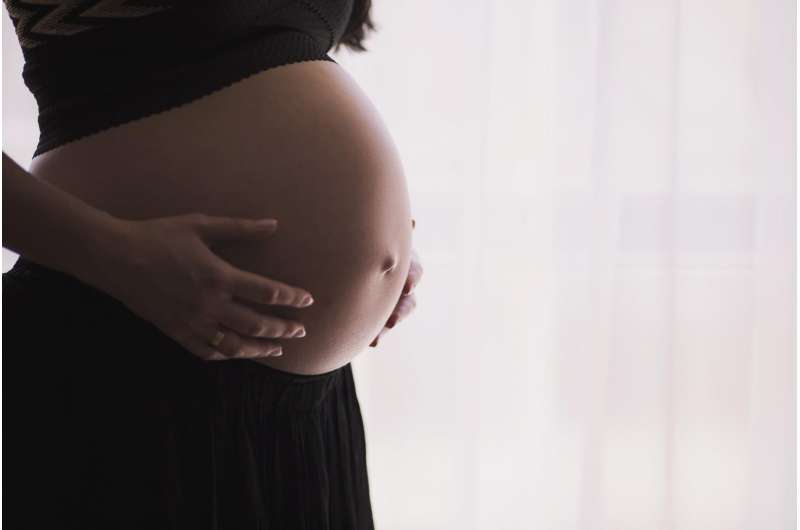
In an early test of how AI can be used to decipher large amounts of health data, researchers at UC San Francisco and Wayne State University found that generative AI tools could perform orders of magnitude faster—and in some cases better than computer science teams that had spent months poring over the data.
Teams of scientists and scientists paired with AI were given the same task: predict preterm birth based on data from more than 1,000 pregnant women.
Even a junior research duo composed of a master’s student at UCSF, Reuben Sarwal, and a high school student, Victor Tarca, made viable prediction models with AI assistance. They generated working computer code in minutes—a task that would have taken experienced programmers at least a few hours and up to a few days.
The AI’s strength came from its ability to write code to analyze health data based on a short but highly specialized prompt. Not all the AIs were helpful—just four of the eight AI chatbots produced usable code. But they didn’t require a village of experts to help them do it.
This enabled the junior scientists to quickly run the experiments, make sure they were correct, and write and submit their findings to a journal in just a few months.
“These AI tools could relieve one of the biggest bottlenecks in data science: building our analysis pipelines,” said Marina Sirota, Ph.D., a professor of Pediatrics who is the interim director of the Bakar Computational Health Sciences Institute (BCHSI) at UCSF and the principal investigator of the March of Dimes Prematurity Research Center at UCSF. “The speed-up couldn’t come sooner for patients who need help now.”
Sirota is co-senior author of the paper, which appears in Cell Reports Medicine.
Can big data make pregnancy safer?
A faster path from data to discovery could lead to more reliable diagnostic testing for preterm birth—the leading cause of newborn death and a leading cause of long-term motor and cognitive impairment in children. About 1,000 babies are born too soon in the United States every day.
Scientists still don’t know much about what leads to preterm birth. To search for clues, Sirota’s team has amassed microbiome data from about 1,200 pregnant women whose birth outcomes were tracked across nine studies.
“This kind of work is only possible with open data sharing, pooling the experiences of many women and the expertise of many researchers,” said Tomiko T. Oskotsky MD, co-director of the March of Dimes Preterm Birth Data Repository, associate professor in UCSF BCHSI, and co-author of the paper.
But the immense quantity of data was still hard to analyze. So, the team crowdsourced help from data scientists through a competition called DREAM (Dialogue on Reverse Engineering Assessment and Methods).
Sirota co-led one of three DREAM challenges on pregnancy; hers was devoted to analyzing data from the vaginal microbiome. More than 100 groups from around the world competed to create machine learning algorithms to identify patterns in the data that could indicate preterm birth. Most of the groups achieved this goal in the three months set by the challenge. But compiling the results and publishing them took nearly two years.
AI gives pregnancy data analysis a welcome boost
Sirota’s team wanted to see if AI could do it faster. They partnered with a team led by Adi L. Tarca, Ph.D., co-senior author and professor in the Center for Molecular Medicine and Genetics at Wayne State University in Detroit, MI, who had led the two other DREAM challenges, which were about finding better ways to date pregnancy.
Together, they instructed eight AI tools to build algorithms to make pregnancy assessments using the same data from the three DREAM challenges, but with no human input.
The AI chatbots were given natural language prompts to accomplish this. It was much like the way ChatGPT works, but the prompts were carefully phrased to guide the AI to assess the human health data the way the DREAM teams had.
The goal mirrored the DREAM challenges: analyze vaginal microbiome data for signs of preterm birth; and analyze samples of blood or placental tissues to determine the stage of pregnancy. This is almost always an estimate, and it determines the type of care women receive as pregnancies proceed. When the estimate is off, it’s hard to prepare for the onset of labor.
The scientists ran the AI-crafted code on the DREAM challenge data. Only four of the eight AI tools produced prediction models that performed as well as those made by the DREAM teams, but sometimes the AI outperformed the human teams. And the entire generative AI project—from inception to submission of a paper—took just six months.
Scientists still need to be on guard for misleading results, a persistent problem, and step in when the AI fails. And the technology is no replacement for human expertise. But its power could enable scientists to quickly parse massive amounts of data—freeing them up to think more deeply.
“Thanks to generative AI, researchers with a limited background in data science won’t always need to form wide collaborations or spend hours debugging code,” Tarca said. “They can focus on answering the right biomedical questions.”
Publication details
Benchmarking Large Language Models for Predictive Modeling in Biomedical Research With a Focus on Reproductive Health, Cell Reports Medicine (2026). DOI: 10.1016/j.xcrm.2026.102594. www.cell.com/cell-reports-medi … 2666-3791(26)00011-X
Journal information:
Cell Reports Medicine
Citation:
With the right prompts, AI chatbots can analyze biomedical big data accurately (2026, February 17)
retrieved 17 February 2026
from https://medicalxpress.com/news/2026-02-prompts-ai-chatbots-biomedical-big.html
This document is subject to copyright. Apart from any fair dealing for the purpose of private study or research, no
part may be reproduced without the written permission. The content is provided for information purposes only.

Khamrah by Lattafa for Men - 3.4 oz EDP Spray
4% Off
Ghost Sweetheart Eau de Toilette | Pineapple, Jasmine and Sandalwood | Perfume for Women 50 ml
50% Off
Marc Jacobs Dot Eau De Parfum for Women, 100 ml
42% Off
Ted Baker W Eau de Toilette for Her, Fig Leaf, White Peony and Violet Top Notes, Pink Orchid and Raspberry Middle Notes, 75ml
£11.77 (£15.69 / 100 ml) (as of 06/09/2026 04:59 GMT +01:00 - More infoProduct prices and availability are accurate as of the date/time indicated and are subject to change. Any price and availability information displayed on [relevant Amazon Site(s), as applicable] at the time of purchase will apply to the purchase of this product.)
Ted Baker Woman Pink Eau de Toilette Spray Floral Green Feminine Fragrance, Opening Notes are Fresh Peach, Bergamot and Tangerine with Warm Musk, Vanilla and Vetiver Base, 100ml
11% Off
Vera Wang Princess Eau de Toilette - 30 ml

Choco Musk 50ml Eau De Parfum for men and women | Chocolate Musk by Jannat Aromas
17% Off
Christina Aguilera Signature Eau de Parfum (50ml) Floral, Fruity & Exotic Scent, Luxury Fragrance for Women
9% Off
Calvin Klein - Eau De Toilette CKIN2U - Calvin Klein Women, Ladies Perfume, Women's Perfume, Calvin Klein Perfume, Calvin Klein One - 150 ml
5% Off
Jimmy Choo Flash Eau de Parfum, 60 ml (Pack of 1)
3% Off
Fruit of the Loom Men's Heavy T Shirt, White, XL UK
28% Off
ATNKE LED Lighted Beanie Cap,USB Rechargeable Running Hat Ultra Bright 4 LED Waterproof Light Winter Warm Gifts for Men and Women/Pink
17% Off
Men's 1/4 Zip Pullover UK Sale Clearance, Fleece Sweatshirt Casual Jumper Long Sleeve T-shirt Top Stand Collar Sweater Plain Pullover Sports Leisure Workwear Quarter Zip Sweater Lightweight Jumpers
£5.88 (as of 12/11/2025 00:52 GMT +01:00 - More infoProduct prices and availability are accurate as of the date/time indicated and are subject to change. Any price and availability information displayed on [relevant Amazon Site(s), as applicable] at the time of purchase will apply to the purchase of this product.)
Crevice Cleaning Brush, Bathroom Tile Groove Gap Cleaning Brush,Premium Crevice Cleaning Tool Aluminum Support with 15° Angle Magic Brush, Thin Brush for Home Kitchen
19% Off
Wireless Earbuds, Bluetooth 5.3 Headphones in Ear with HiFi Stereo Deep Bass, 4 ENC Noise Cancelling Mic Wireless Earphones 40H Playtime, Bluetooth Earbuds Dual LED Display, IP7 Waterproof, USB-C
42% Off