[
[
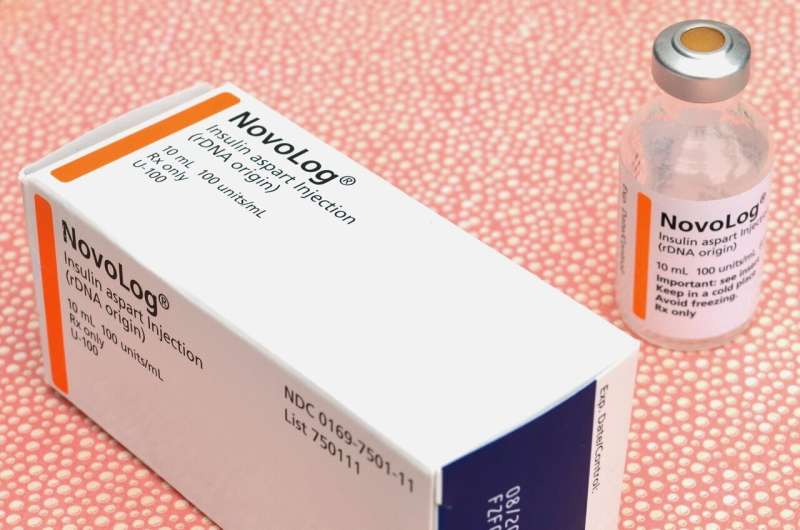
The discovery of insulin in 1921 revolutionized diabetes care. Type 1 diabetes went from being a death sentence to a manageable chronic condition.
To ensure access to this vital medicine for as many people as possible, the researchers who discovered insulin sold the patent to their university for one symbolic dollar. Yet, a century later, a significant proportion of people with diabetes still cannot obtain this essential medicine.
In 2021, the World Health Assembly highlighted the importance of insulin access in its resolution to strengthen diabetes prevention and control. Yet since then, little has changed at the global level.
The 4th UN General Assembly on the Prevention and Control of Noncommunicable diseases (NCDs), held Sept. 25, 2025, in New York, highlighted how crucial government action is in ensuring that all people who need insulin can actually access the supplies they need.
Governments play a key role in achieving this, and key takeaways from our work are presented below. Some of these conclusions extend beyond access to insulin and highlight key issues regarding the role of governments in global health challenges.
A vital medication that is still out of reach
Discovered more than a century ago, in 1921, insulin’s first therapeutic use in 1922 to treat a child was hailed as a medical miracle. Since then, insulin has transformed the lives of millions of people with diabetes.
Insulin is a hormone synthesized in certain specialized cells of the pancreas (the beta cells of the islets of Langerhans). It regulates blood sugar—in other words, glucose levels in the blood. Insulin promotes the entry of this sugar into cells, which decreases its concentration in the blood.
There are two distinct types of diabetes: type 1 diabetes mellitus—T1DM (which is due to insufficient insulin production) and type 2 diabetes mellitus—T2DM (resulting from reduced insulin sensitivity or beta-cell failure).
Lack of access to insulin and treatment results in chronic hyperglycemia (high blood sugar). The consequences of chronic hyperglycemia affect the heart and blood vessels, with potentially catastrophic complications, such as an increased risk of atherosclerosis, infarction (a threefold to fivefold increase), stroke or arteritis (inflammation of the arteries) in the lower limbs, which can lead to amputation, as well as severe kidney failure and blindness.
Both types of diabetes may require insulin, but for type 1 diabetes it is a matter of survival because, without insulin, the condition is a death sentence. The discovery of the role of this hormone, and then of how it could be used as a drug, revolutionized the management of the disease. So much so that, as early as 1923, the team of scientists behind it—Frederick Banting, Charles Best, John Macleod and James Collip—were awarded the Nobel Prize in Physiology or Medicine. Since then, the prestigious award has never been given so quickly after a breakthrough.
In 2026, however, this medication, which is essential for the survival of 9 million people living with type 1 diabetes and contributes to better care for 63 million people living with type 2 diabetes, remains inaccessible to a significant portion of the global population.
Significant public health consequences
Overall, it is estimated that only one in two people worldwide with type 2 diabetes has access to the insulin they need.
In Africa, this proportion is even worse, as it is estimated that only one person out of seven can obtain the insulin needed for their care.
In recent years, this situation, which mainly affected low- and middle-income countries, has also affected the United States. It is estimated that insulin has become so costly there that it is forcing about 16.5% of people who need it to “ration” its use, for example by delaying or reducing the dose. This amounts to approximately 1.3 million adults.
It is important to note that this issue of access to insulin concerns not only type 1 diabetes but also type 2 diabetes, a form of the disease that is rapidly increasing worldwide.
In 2020, it was estimated that approximately 445 million adults ages 20–79 were living with type 2 diabetes. According to the most optimistic assessments, that figure had reached at least 730 million by 2025, with 15.5% of them needing insulin.
This access problem is mainly due to the price of insulin, but also to the lack of availability of the medication in many health systems. However, determining why insulin is available or not is not always straightforward because accessibility depends on a complex chain in which each step can fail.
To address this, the World Health Organization suggests considering eight factors in the analysis: research and innovation, manufacturing, regulation, market uptake and reimbursement, procurement and supply, prescription, dispensing, and use. In the case of insulin access, this analytical framework shows that at each step, governments have an important role to play.
Research and innovation: ensuring that the public good does not shift toward the market
At the global level, governments invest large amounts of money in research. This funding, often given to universities, promotes the discovery of innovative treatments, and the history of insulin illustrates the importance of academia’s role. The insulin patent was sold by the researchers who discovered it to their university for one symbolic dollar to ensure universal access. One of them, Frederick Banting, is said to have declared: “Insulin does not belong to me, it belongs to the world.”
However, once in the hands of the pharmaceutical industry, prices soared, illustrating the tensions among patents, innovation and accessibility. Today, insulin production is dominated by three manufacturers—Sanofi, Eli Lilly and Novo Nordisk—which control 90% of a market estimated at $29.4 billion (€25.2 billion) in 2024.
This situation limits competition and neutralizes the effect on prices that could result from the introduction of biosimilar insulin—in other words, “generics” of insulin, since it is a biological product. For this reason, governments must rethink their support for innovation.
It is not only a question of funding research for new technologies and considering local and public production, but also of promoting “smart innovations.” These less spectacular solutions are often overlooked by the private sector, but can still be well adapted to real needs.
For example, new approaches to patient therapeutic education can be developed based on new technologies, or artificial intelligence tools can be used to make better use of data generated by health systems.
Regulation and market uptake: harmonizing and simplifying
Marketing authorization is the responsibility of national or regional agencies, such as the European Medicines Agency, or EMA, in Europe or the U.S. Food and Drug Administration in the United States. These institutions are essential for ensuring the quality and safety of medicines, but their procedures remain complex, especially when it comes to introducing biosimilars.
In response, the WHO launched a pre-qualification program for insulin in 2019, aimed at making it easier for new manufacturers to enter the market. Yet to date, few manufacturers have submitted a dossier. To increase competition, governments still need to harmonize and simplify procedures while supporting the entry of new manufacturers into markets, in parallel with guaranteeing safe, quality-assured medicines.
The question of pricing is equally crucial. In some countries, medicine prices are set by governments. In others, this is done after negotiations between the state and the private sector. But in most low- and middle-income countries, such policies do not exist.
Lack of price transparency hampers bargaining power, leading to price inflation not only for individuals but also for the health care system. To address the problem, governments must develop price-setting mechanisms. They must also ensure affordability for the health system and, ideally, make medication free of charge for their populations.
Supply and distribution: the logistical challenge
The fact that a medicine is manufactured and has marketing authorization is not enough to ensure access. There must also be logistics chains that allow it to be stored properly and transported under appropriate conditions, particularly with respect to cold-chain management, which is important for a biological product such as insulin.
The supply chain must also be efficient and inexpensive in order to have as little impact as possible on the final price of the medicine. In many countries, however, infrastructure problems or high logistical costs add to the final price paid by individuals.
Again, the role of governments is central. They must make the right investments to ensure that supply-chain infrastructure is efficient. At the same time, they must ensure that it does not result in additional costs for the system or for people.
Recent notifications of insulin shortages and product withdrawals globally require governments to intervene to ensure that sustainable insulin supplies remain available worldwide.
Insulin prescription and use: strengthening health systems
Insulin only saves lives if it is prescribed, dispensed and used properly.
However, people with diabetes may face barriers to use because of a variety of factors, such as a weak health care system, a shortage of health professionals, or unreliable availability of medicines in pharmacies.
Governments must invest in improving health systems and ensuring comprehensive, holistic diabetes care within the universal health care agenda.
Rebalancing the power struggle with the private sector
To use the metaphor of the Canadian economist Henry Mintzberg, society is like a three-legged stool, represented by government, civil society and the private sector. If the three legs are not at the same level, the balance is disrupted. Yet this is exactly what happens in the case of insulin. The private sector often imposes its rules, to the detriment of the public interest.
In response, governments must fully assume their role as countervailing powers. They have the levers in their hands to change the situation. They must invest in research and innovation, regulate an overly concentrated market, fund strong health systems, and protect their populations from predatory pricing.
Without firm action, inequality will continue to grow.
Insulin is a symbol. It embodies both the promise of modern medicine and the glaring inequalities in access to care. Ensuring its accessibility is not just a public health issue; it is an issue of social justice and human rights.
More than a century after its discovery, it is time for insulin to finally become what it should always have been: a global public good, accessible to all.
Clinical categories


This article is republished from The Conversation under a Creative Commons license. Read the original article.
Citation:
Why insulin, the core element of diabetes treatment remains inaccessible for millions of people (2026, June 4)
retrieved 4 June 2026
from https://medicalxpress.com/news/2026-06-insulin-core-element-diabetes-treatment.html
This document is subject to copyright. Apart from any fair dealing for the purpose of private study or research, no
part may be reproduced without the written permission. The content is provided for information purposes only.

Khamrah by Lattafa for Men - 3.4 oz EDP Spray
4% Off
Ghost Sweetheart Eau de Toilette | Pineapple, Jasmine and Sandalwood | Perfume for Women 50 ml
50% Off
Marc Jacobs Dot Eau De Parfum for Women, 100 ml
42% Off
Ted Baker W Eau de Toilette for Her, Fig Leaf, White Peony and Violet Top Notes, Pink Orchid and Raspberry Middle Notes, 75ml
£11.77 (£15.69 / 100 ml) (as of 13/07/2026 03:57 GMT +01:00 - More infoProduct prices and availability are accurate as of the date/time indicated and are subject to change. Any price and availability information displayed on [relevant Amazon Site(s), as applicable] at the time of purchase will apply to the purchase of this product.)
Ted Baker Woman Pink Eau de Toilette Spray Floral Green Feminine Fragrance, Opening Notes are Fresh Peach, Bergamot and Tangerine with Warm Musk, Vanilla and Vetiver Base, 100ml
11% Off
Vera Wang Princess Eau de Toilette - 30 ml

Choco Musk 50ml Eau De Parfum for men and women | Chocolate Musk by Jannat Aromas
17% Off
Christina Aguilera Signature Eau de Parfum (50ml) Floral, Fruity & Exotic Scent, Luxury Fragrance for Women
9% Off
Calvin Klein - Eau De Toilette CKIN2U - Calvin Klein Women, Ladies Perfume, Women's Perfume, Calvin Klein Perfume, Calvin Klein One - 150 ml
5% Off
Jimmy Choo Flash Eau de Parfum, 60 ml (Pack of 1)
3% Off
Fruit of the Loom Men's Heavy T Shirt, White, XL UK
28% Off
ATNKE LED Lighted Beanie Cap,USB Rechargeable Running Hat Ultra Bright 4 LED Waterproof Light Winter Warm Gifts for Men and Women/Pink
17% Off
Men's 1/4 Zip Pullover UK Sale Clearance, Fleece Sweatshirt Casual Jumper Long Sleeve T-shirt Top Stand Collar Sweater Plain Pullover Sports Leisure Workwear Quarter Zip Sweater Lightweight Jumpers
£5.88 (as of 12/11/2025 00:52 GMT +01:00 - More infoProduct prices and availability are accurate as of the date/time indicated and are subject to change. Any price and availability information displayed on [relevant Amazon Site(s), as applicable] at the time of purchase will apply to the purchase of this product.)
Crevice Cleaning Brush, Bathroom Tile Groove Gap Cleaning Brush,Premium Crevice Cleaning Tool Aluminum Support with 15° Angle Magic Brush, Thin Brush for Home Kitchen
19% Off
Wireless Earbuds, Bluetooth 5.3 Headphones in Ear with HiFi Stereo Deep Bass, 4 ENC Noise Cancelling Mic Wireless Earphones 40H Playtime, Bluetooth Earbuds Dual LED Display, IP7 Waterproof, USB-C
42% Off