
Marta LeshykBBC Scotland News

 Getty Images
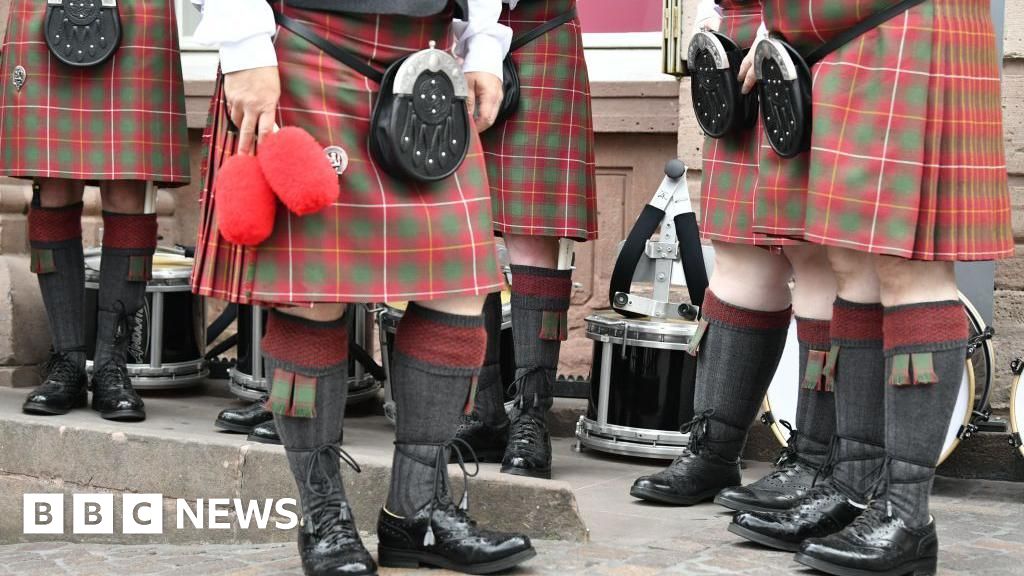
From haggis to Hogmanay, there are some traditions that are intrinsically linked to Scotland.
Now a new project has been set up to record the diverse crafts, folklore, arts and events which have been passed down through the generations.
The Living Heritage Inventory for Scotland wants people to suggest traditions to include so efforts can be made to safeguard the practices.
It could include events like Shetland’s Up Helly Aa, products like Harris Tweed, and haaf net fishing which is unique to the Solway Firth.
BBC Scotland News has taken a look at other traditions that may be considered.
Stonehaven’s fiery new year tradition
 Getty Images
Every Hogmanay the high street of Stonehaven in Aberdeenshire fills with hundreds of locals and tourists.
They go there to watch a procession of people swinging fireballs – a tradition started by fishers in the 19th Century.
It symbolises burning out the bad spirits of the year gone by, making way for a fresh new year and bring everybody good luck.
Ross Milne, one of more than 100 volunteers who take part in the ceremony every year, is also vice-chair of the Stonehaven Fireballs Association.
He said the ceremony was “unique”.
“It’s just something that needs to be carried on. It’s hard to put a reason on that, other than a sort of passion of it,” he said.
“It just speaks to the heart of the Scottish people really, to the Scottish mindset.
“It’s the uniqueness of it, no one else does it like we do. So it’s just something to be very proud of.”
A sweet treat from Dumfries and Galloway
 Alamy
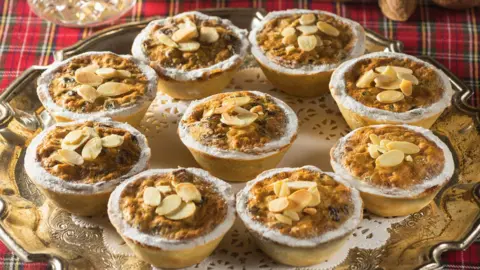
AlamyThe Ecclefachan tart is named after the village in Dumfries and Galloway.
The delicacy was first invented in the 19th Century by the local baker when sugar, dried fruit and spices became more affordable as trade started with the sugar industry in the Caribbean.
The tart has since became a regional specialty, associated with special occasions like weddings or Christmas.
Sarah Rankin, a Scottish chef and a finalist in BBC’s MasterChef said: “Food is intrinsic in all cultures.
“Regional dishes like this are really important in kind of cementing culture within very small geographical areas.
“It would be something that everyone would have a family recipe for, something that people would create.
“We are known in Scotland for having a very sweet tooth and it is something that we really enjoy the flavour of.”
Shinty: ‘For the love of the game’
 Camanachd Association
Shinty is known as camanachd in Gaelic – it literally means “a game played with a stick”.
Hugely popular in the Highlands, the game is played on a grass pitch with camans (sticks) and a small hard ball.
Two teams of 12 players aim to score goals into their opponent’s net.
Aaron Duncan-McLeod, a volunteer coach, said: “People don’t get paid to play shinty, coaches don’t get paid to coach in shinty.
“It’s just purely for the love of the game, for the love of your community and the heritage of your country.”
He said it was a “vital keystone” of Scottish culture.
“This tradition is one that is ancient, that belongs to Scotland, and one that has endured through really challenging circumstances,” he added.
“So that’s why people want to make sure that it continues and doesn’t die.”
Shaetlan language: ‘It’s enriched my life’
 Mark Craig
Shetland-based fiddler and songwriter Claire White grew up speaking Shaetlan at home.
Now she is raising her children with the language in the hope that they will pass it on to the next generation.
Shaeltan used to be a considered a dialect of Scots but in October last year it was officially recognised as a distinct language in its own right.
Claire told BBC Scotand News: “It’s like biodiversity, you wish to preserve that that exists for future generations.
“You kaen (know) how it’s enriched your own life, you kaen how it enables you to express things that aren’t easily expressed in other words, from which there are no equivalents.
“You wish future generations and people nowadays to have those words, that way of expressing themselves at their disposal to enable people to be their authentic selves. “
The Living Heritage Inventory is managed by the UK government and the UNESCO UK National Commission.
Peter Hewitt, intangible cultural heritage coordinator from Museum Galleries Scotland, said: “It’s about understanding what communities need and what their requirements are for making sure that that cultural heritage is passed on and remains viable for them.
“We’re trying to understand how the culture operates in the real world.”
People are asked to make expressions of interest before 27 March using this form.
BBC News

Khamrah by Lattafa for Men - 3.4 oz EDP Spray
4% Off
Ghost Sweetheart Eau de Toilette | Pineapple, Jasmine and Sandalwood | Perfume for Women 50 ml
50% Off
Marc Jacobs Dot Eau De Parfum for Women, 100 ml
42% Off
Ted Baker W Eau de Toilette for Her, Fig Leaf, White Peony and Violet Top Notes, Pink Orchid and Raspberry Middle Notes, 75ml
£11.77 (£15.69 / 100 ml) (as of 01/06/2026 03:25 GMT +01:00 - More infoProduct prices and availability are accurate as of the date/time indicated and are subject to change. Any price and availability information displayed on [relevant Amazon Site(s), as applicable] at the time of purchase will apply to the purchase of this product.)
Ted Baker Woman Pink Eau de Toilette Spray Floral Green Feminine Fragrance, Opening Notes are Fresh Peach, Bergamot and Tangerine with Warm Musk, Vanilla and Vetiver Base, 100ml
11% Off
Vera Wang Princess Eau de Toilette - 30 ml

Choco Musk 50ml Eau De Parfum for men and women | Chocolate Musk by Jannat Aromas
17% Off
Christina Aguilera Signature Eau de Parfum (50ml) Floral, Fruity & Exotic Scent, Luxury Fragrance for Women
9% Off
Calvin Klein - Eau De Toilette CKIN2U - Calvin Klein Women, Ladies Perfume, Women's Perfume, Calvin Klein Perfume, Calvin Klein One - 150 ml
5% Off
Jimmy Choo Flash Eau de Parfum, 60 ml (Pack of 1)
3% Off
Fruit of the Loom Men's Heavy T Shirt, White, XL UK
28% Off
ATNKE LED Lighted Beanie Cap,USB Rechargeable Running Hat Ultra Bright 4 LED Waterproof Light Winter Warm Gifts for Men and Women/Pink
17% Off
Men's 1/4 Zip Pullover UK Sale Clearance, Fleece Sweatshirt Casual Jumper Long Sleeve T-shirt Top Stand Collar Sweater Plain Pullover Sports Leisure Workwear Quarter Zip Sweater Lightweight Jumpers
£5.88 (as of 12/11/2025 00:52 GMT +01:00 - More infoProduct prices and availability are accurate as of the date/time indicated and are subject to change. Any price and availability information displayed on [relevant Amazon Site(s), as applicable] at the time of purchase will apply to the purchase of this product.)
Crevice Cleaning Brush, Bathroom Tile Groove Gap Cleaning Brush,Premium Crevice Cleaning Tool Aluminum Support with 15° Angle Magic Brush, Thin Brush for Home Kitchen
19% Off
Wireless Earbuds, Bluetooth 5.3 Headphones in Ear with HiFi Stereo Deep Bass, 4 ENC Noise Cancelling Mic Wireless Earphones 40H Playtime, Bluetooth Earbuds Dual LED Display, IP7 Waterproof, USB-C
42% Off


