The UK’s unemployment rate has risen further, in a surprise deterioration that boosts the case for a Bank of England interest rate cut.
The Office for National Statistics (ONS) reported a rise in the jobless rate from 4.6% to 4.7% in the three months to May.
Its data, which still comes with a health warning due to poor participation rates, also showed a reduction in the pace of wage rises, with average weekly earnings rising by 5%. That was down from the 5.2% level reported a month ago.
Money latest: The rising cost of airport drop-off fees
The data was released 24 hours after a surprise rise in the rate of inflation, to 3.6%, was revealed by the ONS.
It was seen as muddying the waters as the Bank considers the timing of its next interest rate cut.
But a quarter point reduction, to 4%, is widely expected at the next meeting of the rate-setting committee in early August,
The Bank, experts say, will be looking past the headline inflation numbers and see scope to introduce the third cut of the year due to the softening labour market seen in 2025 – a factor the Bank’s governor Andrew Bailey had suggested would come more into focus in a recent interview with The Times.
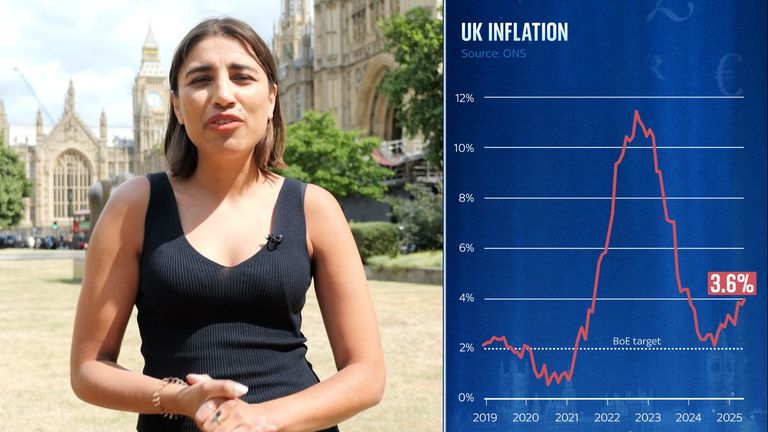
What does ‘inflation is rising’ mean?
Weaker pay awards remain a compulsory element to bringing down borrowing costs as there are fears the UK’s difficulties in bringing down inflation are partly linked to wage growth outpacing price hikes since August 2023.
Add to that the slowdown in economic growth and you have a Bank seemingly grappling the effects of so-called stagflation – as scenario of weak growth with inflation persistently well above the Bank’s 2% target.
While there are conflicting forces at play for the Bank’s interest rate deliberations, rising inflation, coupled with weakening growth and jobs data, are all unwelcome for a chancellor under growing pressure.
Rachel Reeves was accused on Wednesday of contributing to inflation through taxes on employment deployed from April – with industry bodies in the grocery sector claiming an element of rising food price growth was down to businesses passing on those extra costs, alongside hikes to minimum pay requirements.
At the same time, those budget measures have clearly held back hiring since the spring.
One crumb of comfort for her is that the prospect of a rate cut next month remains on – with any reduction helping bring down the cost of servicing government debt as the headroom she has within the public finances remains under severe pressure.
Government U-turns on winter fuel payment curbs and welfare reforms have squeezed her fiscal rules, leaving her to cover likely at the autumn budget to cover shortfalls either through further tax hikes or spending cuts.
Source link

Khamrah by Lattafa for Men - 3.4 oz EDP Spray
4% Off
Ghost Sweetheart Eau de Toilette | Pineapple, Jasmine and Sandalwood | Perfume for Women 50 ml
50% Off
Marc Jacobs Dot Eau De Parfum for Women, 100 ml
42% Off
Ted Baker W Eau de Toilette for Her, Fig Leaf, White Peony and Violet Top Notes, Pink Orchid and Raspberry Middle Notes, 75ml
£11.77 (£15.69 / 100 ml) (as of 25/04/2026 03:01 GMT +01:00 - More infoProduct prices and availability are accurate as of the date/time indicated and are subject to change. Any price and availability information displayed on [relevant Amazon Site(s), as applicable] at the time of purchase will apply to the purchase of this product.)
Ted Baker Woman Pink Eau de Toilette Spray Floral Green Feminine Fragrance, Opening Notes are Fresh Peach, Bergamot and Tangerine with Warm Musk, Vanilla and Vetiver Base, 100ml
11% Off
Vera Wang Princess Eau de Toilette - 30 ml

Choco Musk 50ml Eau De Parfum for men and women | Chocolate Musk by Jannat Aromas
17% Off
Christina Aguilera Signature Eau de Parfum (50ml) Floral, Fruity & Exotic Scent, Luxury Fragrance for Women
9% Off
Calvin Klein - Eau De Toilette CKIN2U - Calvin Klein Women, Ladies Perfume, Women's Perfume, Calvin Klein Perfume, Calvin Klein One - 150 ml
5% Off
Jimmy Choo Flash Eau de Parfum, 60 ml (Pack of 1)
3% Off
Fruit of the Loom Men's Heavy T Shirt, White, XL UK
28% Off
ATNKE LED Lighted Beanie Cap,USB Rechargeable Running Hat Ultra Bright 4 LED Waterproof Light Winter Warm Gifts for Men and Women/Pink
17% Off
Men's 1/4 Zip Pullover UK Sale Clearance, Fleece Sweatshirt Casual Jumper Long Sleeve T-shirt Top Stand Collar Sweater Plain Pullover Sports Leisure Workwear Quarter Zip Sweater Lightweight Jumpers

Crevice Cleaning Brush, Bathroom Tile Groove Gap Cleaning Brush,Premium Crevice Cleaning Tool Aluminum Support with 15° Angle Magic Brush, Thin Brush for Home Kitchen
19% Off
Wireless Earbuds, Bluetooth 5.3 Headphones in Ear with HiFi Stereo Deep Bass, 4 ENC Noise Cancelling Mic Wireless Earphones 40H Playtime, Bluetooth Earbuds Dual LED Display, IP7 Waterproof, USB-C
42% Off