 [
[

New Edith Cowan University (ECU) research suggests virtual reality (VR) may play a meaningful role in future mental-health support, and the design of the virtual space itself can make a surprising difference to how comfortable people feel opening up.
Two studies led by ECU psychology researcher Dr. Shane Rogers show that VR can support personal self-disclosure by offering both a sense of anonymity through avatars and the calming effect of well-designed virtual environments. Together, the findings suggest VR is not just a novelty but a promising communication tool that could boost access to psychological support, particularly when traditional face-to-face therapy is unavailable.
The first study (Journal of Technology in Behavioral Science) compared self-disclosure across video chat, text chat, and VR. While video chat remained the preferred option overall, VR matched video for feelings of calmness and presence, and around 20% of participants actually preferred VR for discussing their personal experiences.
“One reason people like VR is that the sense of anonymity offered by avatars can help them feel more relaxed,” Dr. Rogers said.
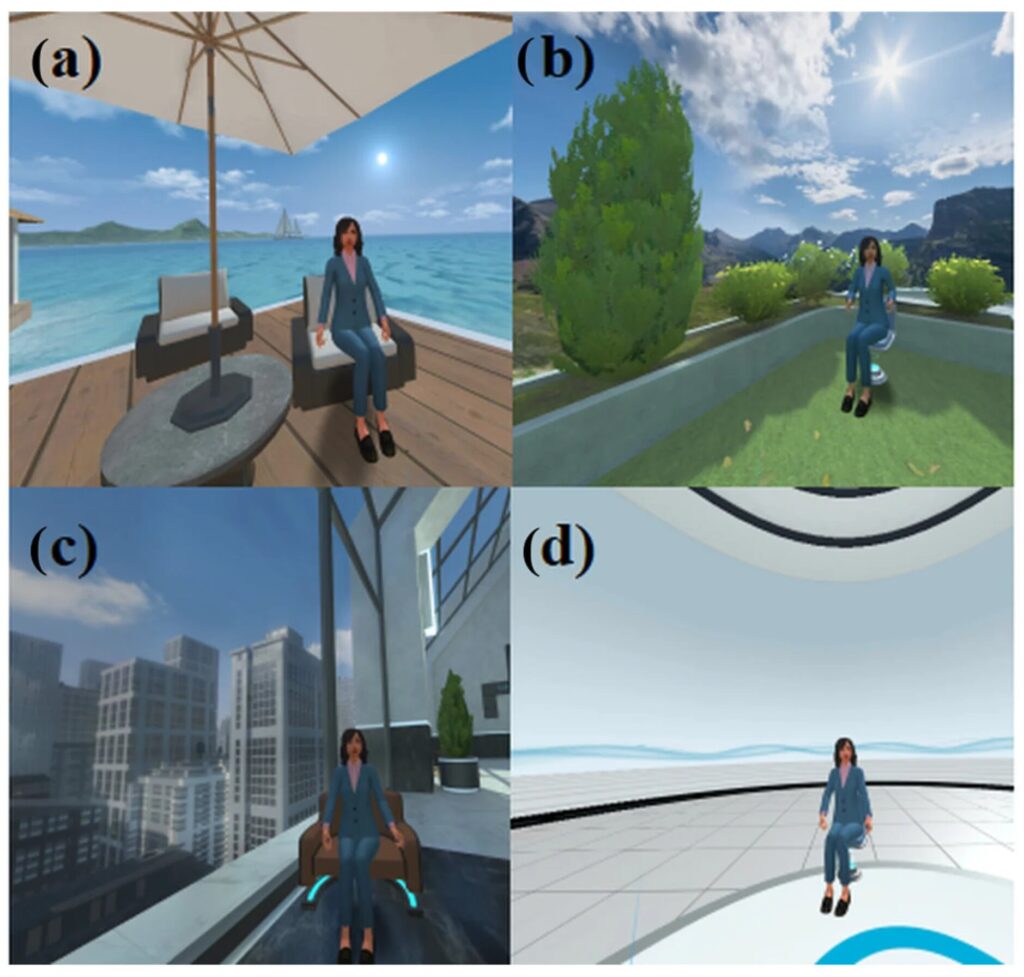
The second study (Applied Sciences) focused on something often overlooked in VR research; the environment itself. Participants disclosed personal experiences in four virtual settings: seaside, garden, urban office, and sci-fi. They consistently rated the nature-based environments as more comfortable, calming and suitable for therapeutic conversation than non-nature settings.
Dr. Rogers said VR isn’t just about avatars and headsets, the space you’re in matters.
“We found that natural VR environments, especially coastal or garden settings, helped people feel more at ease when talking about personal experiences.
“That has real implications for designing future mental health tools,” he said.
Dr. Rogers said the findings highlight VR’s potential as a complementary telehealth option, especially for people who prefer greater anonymity or who feel more comfortable outside traditional therapeutic settings.
“These studies show that VR can offer unique benefits that sit somewhere between video chat and face-to-face sessions. With continued improvements in avatar realism and environmental design, VR could become an important part of the mental-health toolkit.”
More information
Shane L. Rogers et al, Virtual Reality for Self-Disclosure: Comparing User Experiences Across VR, Video and Text Chat, Journal of Technology in Behavioral Science (2025). DOI: 10.1007/s41347-025-00574-3
Shane L. Rogers et al, User Experience in Virtual Self-Disclosure: Appraising Natural, Urban, and Artificial VR Environments, Applied Sciences (2025). DOI: 10.3390/app16010033
Citation:
Virtual reality emerges as a supportive space for self-disclosure, with nature settings leading the way (2026, January 15)
retrieved 15 January 2026
from https://medicalxpress.com/news/2026-01-virtual-reality-emerges-space-disclosure.html
This document is subject to copyright. Apart from any fair dealing for the purpose of private study or research, no
part may be reproduced without the written permission. The content is provided for information purposes only.

Khamrah by Lattafa for Men - 3.4 oz EDP Spray
4% Off
Ghost Sweetheart Eau de Toilette | Pineapple, Jasmine and Sandalwood | Perfume for Women 50 ml
50% Off
Marc Jacobs Dot Eau De Parfum for Women, 100 ml
42% Off
Ted Baker W Eau de Toilette for Her, Fig Leaf, White Peony and Violet Top Notes, Pink Orchid and Raspberry Middle Notes, 75ml
£11.77 (£15.69 / 100 ml) (as of 15/09/2026 05:03 GMT +01:00 - More infoProduct prices and availability are accurate as of the date/time indicated and are subject to change. Any price and availability information displayed on [relevant Amazon Site(s), as applicable] at the time of purchase will apply to the purchase of this product.)
Ted Baker Woman Pink Eau de Toilette Spray Floral Green Feminine Fragrance, Opening Notes are Fresh Peach, Bergamot and Tangerine with Warm Musk, Vanilla and Vetiver Base, 100ml
11% Off
Vera Wang Princess Eau de Toilette - 30 ml

Choco Musk 50ml Eau De Parfum for men and women | Chocolate Musk by Jannat Aromas
17% Off
Christina Aguilera Signature Eau de Parfum (50ml) Floral, Fruity & Exotic Scent, Luxury Fragrance for Women
9% Off
Calvin Klein - Eau De Toilette CKIN2U - Calvin Klein Women, Ladies Perfume, Women's Perfume, Calvin Klein Perfume, Calvin Klein One - 150 ml
5% Off
Jimmy Choo Flash Eau de Parfum, 60 ml (Pack of 1)
3% Off
Fruit of the Loom Men's Heavy T Shirt, White, XL UK
28% Off
ATNKE LED Lighted Beanie Cap,USB Rechargeable Running Hat Ultra Bright 4 LED Waterproof Light Winter Warm Gifts for Men and Women/Pink
17% Off
Men's 1/4 Zip Pullover UK Sale Clearance, Fleece Sweatshirt Casual Jumper Long Sleeve T-shirt Top Stand Collar Sweater Plain Pullover Sports Leisure Workwear Quarter Zip Sweater Lightweight Jumpers
£5.88 (as of 12/11/2025 00:52 GMT +01:00 - More infoProduct prices and availability are accurate as of the date/time indicated and are subject to change. Any price and availability information displayed on [relevant Amazon Site(s), as applicable] at the time of purchase will apply to the purchase of this product.)
Crevice Cleaning Brush, Bathroom Tile Groove Gap Cleaning Brush,Premium Crevice Cleaning Tool Aluminum Support with 15° Angle Magic Brush, Thin Brush for Home Kitchen
19% Off
Wireless Earbuds, Bluetooth 5.3 Headphones in Ear with HiFi Stereo Deep Bass, 4 ENC Noise Cancelling Mic Wireless Earphones 40H Playtime, Bluetooth Earbuds Dual LED Display, IP7 Waterproof, USB-C
42% Off