 [
[

A study just published in the journal Microbiome, describes for the first time the intestinal microbiome and metabolome in patients with (genetically acquired) CTLA4 deficiency. CTLA4 is an immune checkpoint, a key element in cancer mechanisms whose discovery has revolutionized the field.
The research was led by Dr. Emilia Liana Falcone’s laboratory—clinical professor at Université de Montréal, researcher and director of the Microbiome and Mucosal Defense Research Unit at the Montreal Clinical Research Institute (IRCM), and carried out in collaboration with Dr. Uzel (NIH) and Dr. Grimbacher (University of Freiburg).
In the study, two cohorts of patients from two different continents with genetically acquired CTLA4 deficiency were evaluated. Interestingly, these patients show clinical similarities with patients having side effects associated with treatment with immune checkpoint inhibitors used to treat certain cancers.

Key observations
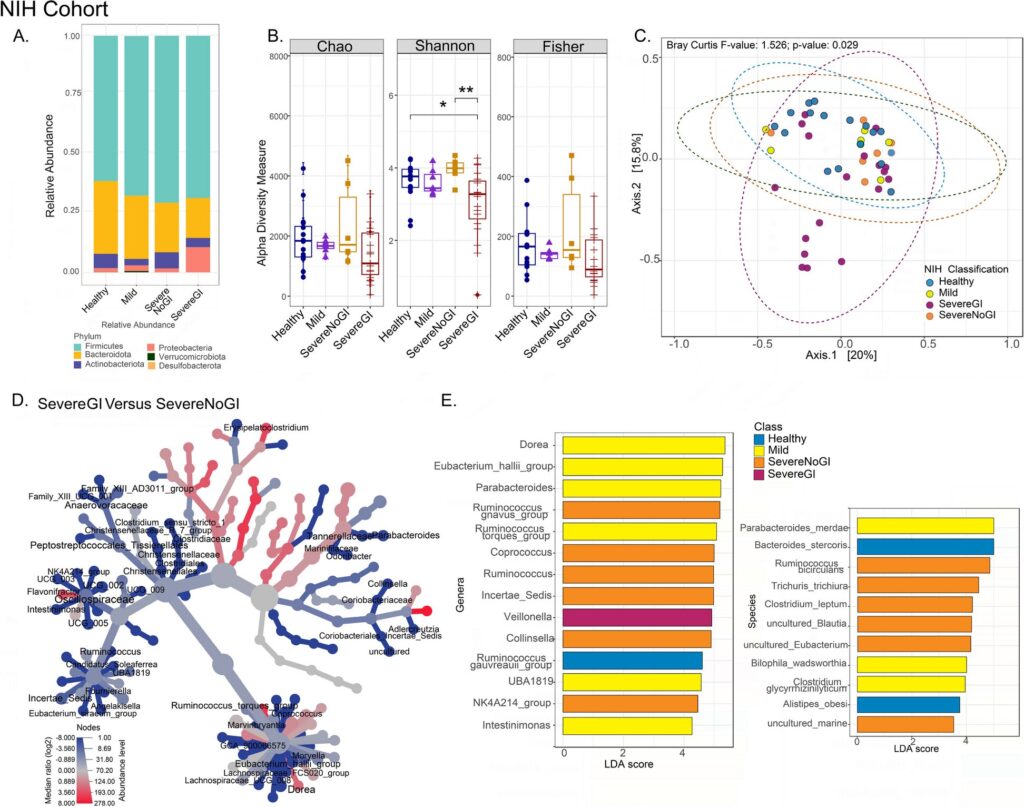
Two bacterial genera have emerged as biomarkers to distinguish patients with inherited CTLA4 deficiency from healthy individuals, from both the National Institutes of Health (NIH) in the U.S. and a geographically distinct cohort from the Center for Chronic Immunodeficiency (CCI) at the Medical Center—University of Freiburg in Germany.
Since inborn errors of immunity in general can be associated with disturbances of the microbiota, a disease-control cohort of individuals with common variable immunodeficiency (CVID) was also included in the study.
Despite common changes in the microbiome associated with inborn errors of immunity, both bacterial genera retained their specificity as biomarkers of CTLA4 deficiency. The researchers also identified gut microbiome and metabolome signatures that distinguished CTLA4-deficient patients with severe disease from those with mild disease.
Changes in the microbiome were associated with distinct metabolomic profiles. These differences were influenced by the presence of gastrointestinal manifestations and were partially reversed by treatment with certain immune modulators.
Conclusions
Disturbances in the gut microbiome leading to metabolomic changes have been observed in patients with hereditary CTLA4 deficiency. Although some of these features were associated with another inborn error of immunity, the distinct changes associated with CTLA4 deficiency underline the fact that microbiome changes associated with inborn errors of immunity probably reflect underlying immune dysregulation.
Identified candidate gut microbial and metabolic biomarkers that distinguish CTLA4-deficient individuals according to disease severity should be further prospectively studied to determine their predictive value and investigated as potential therapeutic targets.
More information:
Prabha Chandrasekaran et al, The intestinal microbiome and metabolome discern disease severity in cytotoxic T-lymphocyte-associated protein 4 deficiency, Microbiome (2025). DOI: 10.1186/s40168-025-02028-7
Citation:
A quantum leap: Understanding the links between immunity and the microbiome (2025, February 19)
retrieved 19 February 2025
from https://medicalxpress.com/news/2025-02-quantum-links-immunity-microbiome.html
This document is subject to copyright. Apart from any fair dealing for the purpose of private study or research, no
part may be reproduced without the written permission. The content is provided for information purposes only.

Khamrah by Lattafa for Men - 3.4 oz EDP Spray
4% Off
Ghost Sweetheart Eau de Toilette | Pineapple, Jasmine and Sandalwood | Perfume for Women 50 ml
50% Off
Marc Jacobs Dot Eau De Parfum for Women, 100 ml
42% Off
Ted Baker W Eau de Toilette for Her, Fig Leaf, White Peony and Violet Top Notes, Pink Orchid and Raspberry Middle Notes, 75ml
£11.77 (£15.69 / 100 ml) (as of 18/07/2026 03:59 GMT +01:00 - More infoProduct prices and availability are accurate as of the date/time indicated and are subject to change. Any price and availability information displayed on [relevant Amazon Site(s), as applicable] at the time of purchase will apply to the purchase of this product.)
Ted Baker Woman Pink Eau de Toilette Spray Floral Green Feminine Fragrance, Opening Notes are Fresh Peach, Bergamot and Tangerine with Warm Musk, Vanilla and Vetiver Base, 100ml
11% Off
Vera Wang Princess Eau de Toilette - 30 ml

Choco Musk 50ml Eau De Parfum for men and women | Chocolate Musk by Jannat Aromas
17% Off
Christina Aguilera Signature Eau de Parfum (50ml) Floral, Fruity & Exotic Scent, Luxury Fragrance for Women
9% Off
Calvin Klein - Eau De Toilette CKIN2U - Calvin Klein Women, Ladies Perfume, Women's Perfume, Calvin Klein Perfume, Calvin Klein One - 150 ml
5% Off
Jimmy Choo Flash Eau de Parfum, 60 ml (Pack of 1)
3% Off
Fruit of the Loom Men's Heavy T Shirt, White, XL UK
28% Off
ATNKE LED Lighted Beanie Cap,USB Rechargeable Running Hat Ultra Bright 4 LED Waterproof Light Winter Warm Gifts for Men and Women/Pink
17% Off
Men's 1/4 Zip Pullover UK Sale Clearance, Fleece Sweatshirt Casual Jumper Long Sleeve T-shirt Top Stand Collar Sweater Plain Pullover Sports Leisure Workwear Quarter Zip Sweater Lightweight Jumpers
£5.88 (as of 12/11/2025 00:52 GMT +01:00 - More infoProduct prices and availability are accurate as of the date/time indicated and are subject to change. Any price and availability information displayed on [relevant Amazon Site(s), as applicable] at the time of purchase will apply to the purchase of this product.)
Crevice Cleaning Brush, Bathroom Tile Groove Gap Cleaning Brush,Premium Crevice Cleaning Tool Aluminum Support with 15° Angle Magic Brush, Thin Brush for Home Kitchen
19% Off
Wireless Earbuds, Bluetooth 5.3 Headphones in Ear with HiFi Stereo Deep Bass, 4 ENC Noise Cancelling Mic Wireless Earphones 40H Playtime, Bluetooth Earbuds Dual LED Display, IP7 Waterproof, USB-C
42% Off