
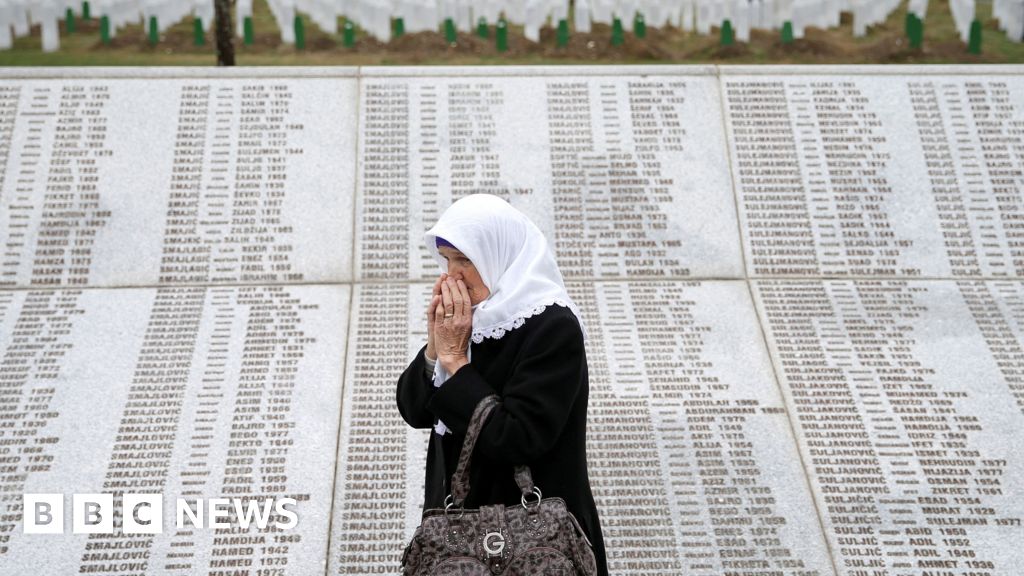

Even in Serbia, however, some wonder why their government had been so strongly opposed to the resolution. After all, the proposal explicitly stated that only individuals had been convicted of genocide, and that guilt “cannot be attributed to any ethnic, religious or other group or community as a whole”.
In 2007, the International Court of Justice ruled that genocide was committed at Srebrenica, but found that Serbia was not directly responsible or complicit. Judges did, however, rule that Serbia had failed to prevent the massacre. Three years later, Serbia’s National Assembly passed a resolution condemning the massacre and apologising that more had not been done to prevent it.
In 2015, Mr Vucic – at that point prime minister – paid his respects in Srebrenica on the 20th anniversary of the massacre. Some protesters threw bottles and stones at him, but he promised he would “continue with [his] policy of reconciliation”.
Serbia – and its president – have shown consistency in some ways. Mr Vucic has called the massacre “a horrible crime”. Neither he nor his country have ever conceded that it was genocide – but nor have they contested the genocide convictions of Bosnian-Serb leaders Radovan Karadzic and Ratko Mladic at The Hague.
The president of Bosnia’s majority-Serb Republika Srpska region, Milorad Dodik, is a different matter. He has repeatedly denied that genocide took place at Srebrenica, even though Bosnia has a law criminalising genocide denial. Other Serb nationalists have been delighted to take the same approach – and even glorify Mladic as a Serb hero.
Mr Dodik’s offensive antics may have prompted the UN resolution, as a way of reasserting that the massacre was indeed genocide – and that the anguish of the victims’ families should not be used for ethno-nationalist grandstanding.
The Republika Srpska president tried anyway. He threatened “the end of Bosnia and Herzegovina” if the resolution passed, with the “peaceful separation” of Republika Srpska. Those familiar with Mr Dodik’s regular secessionist outbursts rolled their eyes.
Following the vote, the Bosnian-Serb leader claimed victory. It was “not even an absolute majority,” he said. “Their plan to accuse the Serbs of being a genocidal nation failed”.
There never had been any such plan. But for politicians relying on nationalist support, pretending there had been was a convenient fiction.
Source link

Khamrah by Lattafa for Men - 3.4 oz EDP Spray
4% Off
Ghost Sweetheart Eau de Toilette | Pineapple, Jasmine and Sandalwood | Perfume for Women 50 ml
50% Off
Marc Jacobs Dot Eau De Parfum for Women, 100 ml
42% Off
Ted Baker W Eau de Toilette for Her, Fig Leaf, White Peony and Violet Top Notes, Pink Orchid and Raspberry Middle Notes, 75ml
£11.77 (£15.69 / 100 ml) (as of 30/09/2026 05:08 GMT +01:00 - More infoProduct prices and availability are accurate as of the date/time indicated and are subject to change. Any price and availability information displayed on [relevant Amazon Site(s), as applicable] at the time of purchase will apply to the purchase of this product.)
Ted Baker Woman Pink Eau de Toilette Spray Floral Green Feminine Fragrance, Opening Notes are Fresh Peach, Bergamot and Tangerine with Warm Musk, Vanilla and Vetiver Base, 100ml
11% Off
Vera Wang Princess Eau de Toilette - 30 ml

Choco Musk 50ml Eau De Parfum for men and women | Chocolate Musk by Jannat Aromas
17% Off
Christina Aguilera Signature Eau de Parfum (50ml) Floral, Fruity & Exotic Scent, Luxury Fragrance for Women
9% Off
Calvin Klein - Eau De Toilette CKIN2U - Calvin Klein Women, Ladies Perfume, Women's Perfume, Calvin Klein Perfume, Calvin Klein One - 150 ml
5% Off
Jimmy Choo Flash Eau de Parfum, 60 ml (Pack of 1)
3% Off
Fruit of the Loom Men's Heavy T Shirt, White, XL UK
28% Off
ATNKE LED Lighted Beanie Cap,USB Rechargeable Running Hat Ultra Bright 4 LED Waterproof Light Winter Warm Gifts for Men and Women/Pink
17% Off
Men's 1/4 Zip Pullover UK Sale Clearance, Fleece Sweatshirt Casual Jumper Long Sleeve T-shirt Top Stand Collar Sweater Plain Pullover Sports Leisure Workwear Quarter Zip Sweater Lightweight Jumpers
£5.88 (as of 12/11/2025 00:52 GMT +01:00 - More infoProduct prices and availability are accurate as of the date/time indicated and are subject to change. Any price and availability information displayed on [relevant Amazon Site(s), as applicable] at the time of purchase will apply to the purchase of this product.)
Crevice Cleaning Brush, Bathroom Tile Groove Gap Cleaning Brush,Premium Crevice Cleaning Tool Aluminum Support with 15° Angle Magic Brush, Thin Brush for Home Kitchen
19% Off
Wireless Earbuds, Bluetooth 5.3 Headphones in Ear with HiFi Stereo Deep Bass, 4 ENC Noise Cancelling Mic Wireless Earphones 40H Playtime, Bluetooth Earbuds Dual LED Display, IP7 Waterproof, USB-C
42% Off